


JINYUAN
JINYUAN
JINYUAN
JINYUAN
JINYUAN
JINYUAN
JINYUAN
JINYUAN
JINYUAN
JINYUAN
JINYUAN
JINYUAN
JINYUAN
JINYUAN
JINYUAN
JINYUAN
Content
Kelvin is one of those numbers that appears on every LED datasheet, and yet it is also one of the most misunderstood. Buyers often assume a higher number means a brighter lamp, or that a "6000K" fixture will somehow outperform a "3000K" one. In practice, Kelvin says nothing at all about brightness. It describes how the light looks — warm and amber, neutral and clean, or cool and crisp.
We have spent more than two decades building street lights, high masts, and solar lighting systems for roads, ports, and sports grounds. In that time, we have learned that getting the Kelvin value right is often the difference between a project that feels comfortable at night and one that generates complaints. This guide walks through what Kelvin means in LED lighting, how the scale works, and how to choose sensibly for outdoor applications.
What Kelvin Actually Measures in LED Lighting
The Kelvin scale (written as K) originated in physics. When a black metal object is heated, it first glows dull red, then orange, then yellow-white, and eventually bluish-white. That relationship between temperature and color became the basis for describing light sources. Strictly speaking, modern LEDs do not glow from heat at all — they produce light through a semiconductor and a phosphor layer — so the correct technical term is correlated color temperature, or CCT. Everyone still calls it Kelvin, and the meaning is the same: it is a description of tone, not of power, output, or efficiency.
Three things are worth keeping separate in your head:
- Kelvin (K) — the color appearance of the white light.
- Lumens (lm) — how much light the fixture emits.
- Watts (W) — how much electricity it consumes.
A 3000K lamp and a 5700K lamp can both deliver 12,000 lumens. They simply look very different while doing it.
The Kelvin Scale at a Glance
The scale runs from roughly 1,000K to 10,000K, but practical lighting lives in a much narrower band. Here is how the values usually map to real products and real places.
| Kelvin Range | Appearance | Common Outdoor Use |
|---|---|---|
| 2000K – 2200K | Deep amber, candle-like | Eco-sensitive zones, coastal areas, decorative promenades |
| 2700K – 3000K | Warm white | Residential streets, parks, garden and landscape lighting |
| 3500K – 4000K | Neutral white | Urban roads, tunnels, parking areas, general area lighting |
| 5000K – 5700K | Cool white to daylight | High masts, ports, airports, sports fields, industrial yards |
| 6000K – 6500K | Crisp daylight | Specialised inspection areas, some transitional tunnel zones |
These are conventions rather than rules. Local standards, client preferences, and site context always take priority.
Why LEDs Make Kelvin Both Easier and Harder
On the easy side, LED technology lets one fixture platform cover an entire CCT range. The same housing, heatsink, and optical design can be tuned with different phosphor blends to deliver 3000K for a residential road or 5000K for a container terminal. That flexibility is genuinely useful when a municipality wants a consistent look across a whole city.
The harder part is consistency. Two fixtures labelled 4000K may not match exactly if they come from different production batches, different phosphor suppliers, or different binning tolerances. On a long road, a visible patchwork of slightly different whites looks careless even when every fixture technically meets spec. In our experience, the practical fixes are straightforward:
- Order a single project in one production batch where possible.
- Ask for the CCT binning range, not just the nominal value.
- Confirm how much color shift is expected over the rated life.
- Request a sample pair and compare them side by side before mass production.
Good manufacturers track this routinely. It is a manufacturing discipline issue more than a technology limit.
Matching Kelvin to Outdoor Applications
Color temperature choices in outdoor lighting are rarely about aesthetics alone. Visibility, safety, ecology, and maintenance all play a part. Here is how we usually advise project teams.
Roadways and residential streets
For most urban roads, 3500K to 4000K offers a good balance: neutral enough for clear facial recognition and obstacle detection, without the slightly harsh edge of 5000K. On residential streets, 3000K is often preferred because it feels calmer and reduces the blue content that can disturb sleep and wildlife. Many ecological guidelines now recommend 3000K or lower near sensitive habitats. If you are specifying luminaires for a full corridor, it helps to look at the whole LED luminaire range rather than picking models one by one.
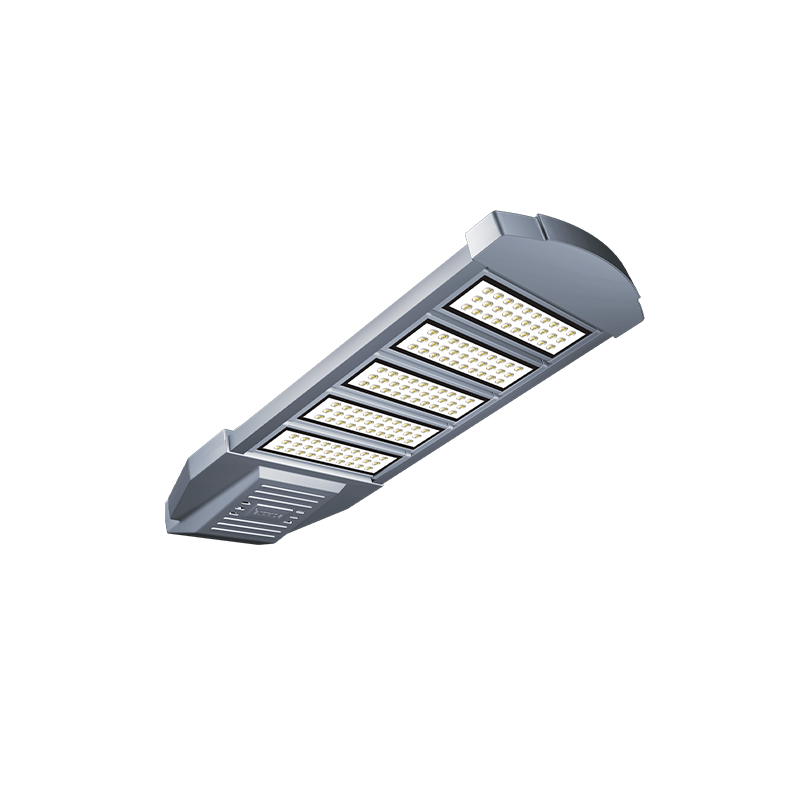
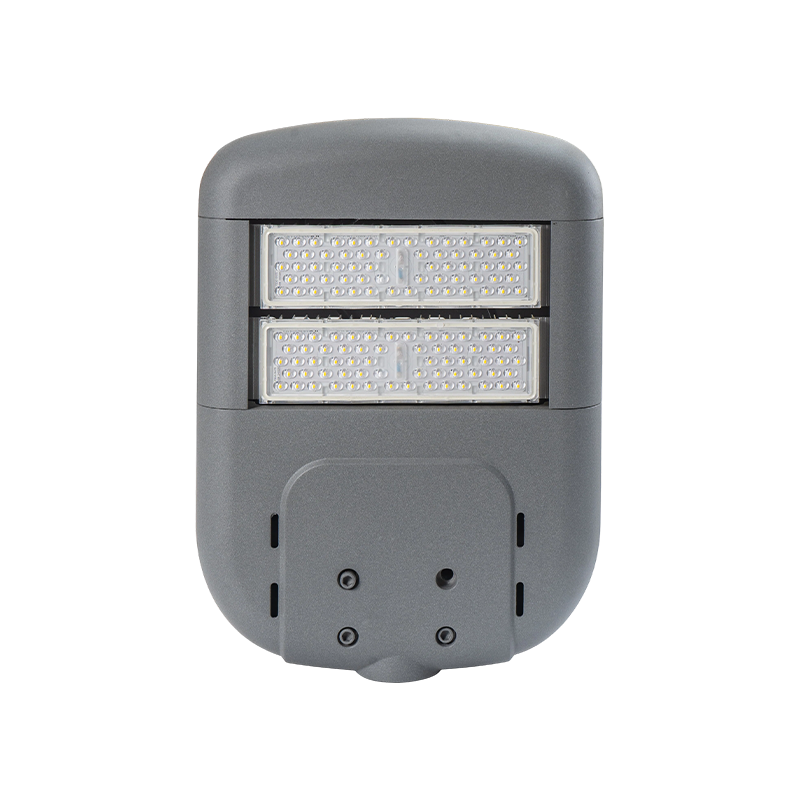
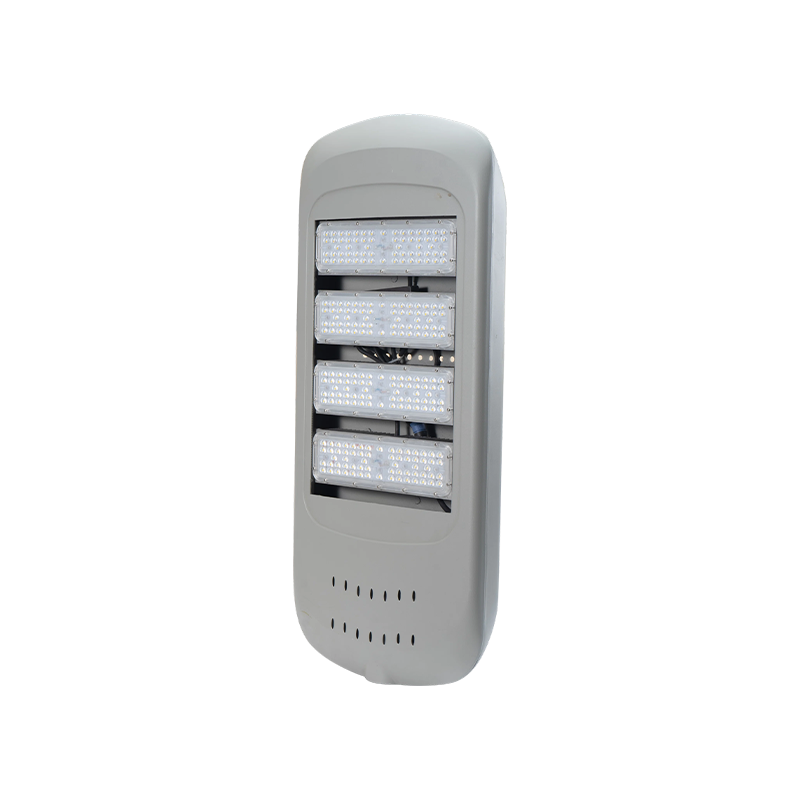
 Modular Anti-Glare LED Street Luminaire for Road LightingA modular street luminaire with 3000–6000K CCT options, anti-glare PC lenses, dimming, and IP-rated housing for urban and expressway road lighting.View Product →
Tunnels and underpasses
Tunnel lighting is where Kelvin becomes an engineering question rather than a comfort question. Drivers approaching a portal need their eyes to adjust gradually, so entrance zones are usually lit at a higher CCT that approximates the daylight outside, stepping down to lower values deeper inside. Getting this transition wrong creates a black-hole effect at the entrance, which is a genuine safety issue.
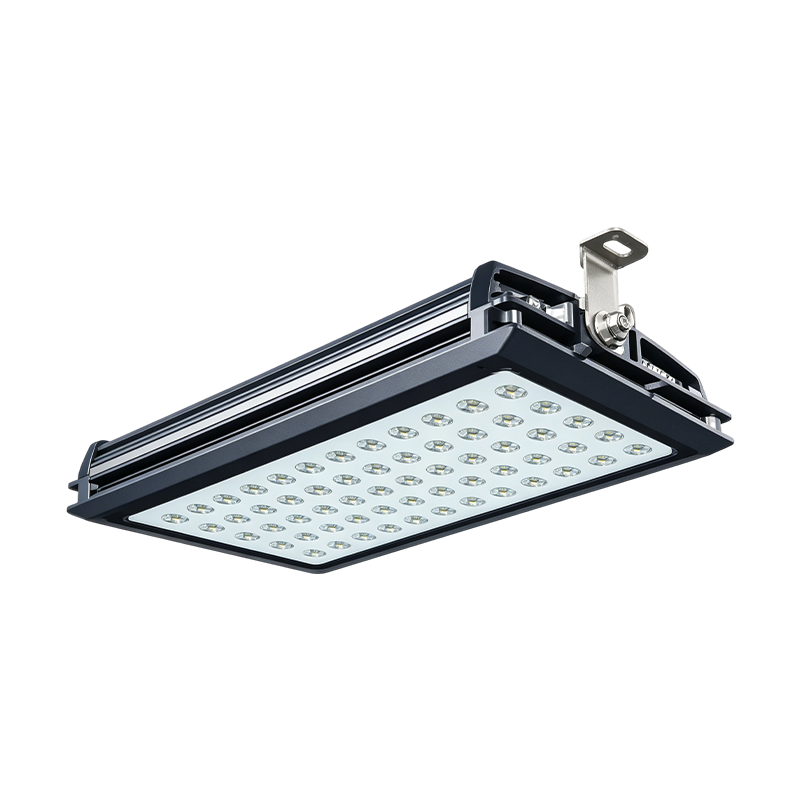 LED Tunnel Lights for Professional Tunnel and Canopy LightingA category of tunnel luminaires covering access-to-exit lighting, adjustable optics, dimming, and robust protection for tunnels, toll stations, and canopies.View Product →
High masts, ports, airports, and sports fields
Large-area applications generally move toward 4000K to 5700K. Higher CCT values pair well with high output and give the crisp, alert feel that operators want in a working environment. For sports fields, color rendering matters as much as Kelvin — players, officials, and broadcast cameras all depend on accurate skin tones under the floodlights. A 5000K fixture with mediocre rendering can look worse than a 4000K fixture with excellent rendering.
Solar and garden lighting
Solar street lights and garden fixtures almost always sit in spaces where people live or walk at night, so 3000K is the default for good reason. It is gentle, it fits landscape design, and it draws less attention from insects and wildlife. Because solar systems are power-limited, the CCT choice should be confirmed together with the panel and battery sizing rather than afterwards.
Kelvin, CRI, and What the Number Doesn't Tell You
Kelvin describes tone. It says nothing about how faithfully colors appear under that light, which is the job of the color rendering index (CRI). Two fixtures can both be 4000K and yet render a red jacket very differently. For roadway lighting, CRI in the 70s is usually acceptable; for sports, architectural, and public-realm lighting, 80 or above is a safer target, with attention to the R9 value that reflects deep reds.
It is also worth remembering that Kelvin does not describe distribution, glare control, or uniformity. A perfectly chosen 3000K fixture with poor optics will still produce dark patches and uncomfortable glare. Modern smart lighting adds another dimension, since tunable and field-selectable fixtures let a single product serve several CCT profiles across the night — a topic we explored in our article on what smart street lighting really involves.
Questions We Hear Most Often
Is 4000K warm or cool?
Neither, really. It sits in the neutral middle of the scale and is the value most people describe as "clean white." Against a 3000K lamp it looks cool; against a 5700K lamp it looks warm.
Can I mix different Kelvin values on one project?
You can, but you should do it deliberately. Mixing 3000K and 5000K along the same road almost always looks like a mistake. Mixing values by zone — warmer in residential areas, cooler on arterial roads — is a legitimate design approach.
Does Kelvin affect sleep and wildlife?
Yes. Blue-rich light at higher CCT suppresses melatonin more strongly and disrupts nocturnal species. This is why many specifications now cap outdoor lighting at 3000K in environmentally sensitive areas.
Are color-selectable fixtures a good idea?
They are useful when a project's requirements may change, or when a distributor wants to reduce stock keeping units. For a fixed, well-defined installation, a single specified CCT is simpler and often slightly more efficient.
Getting the Color Temperature Right the First Time
Kelvin is a small number with a large effect on how an outdoor space feels, how safely it functions, and how much maintenance attention it attracts over the years. The reliable approach is unglamorous: define the application, check the local standard, decide on a CCT and a rendering target, then insist on batch consistency from your supplier.
Our team has walked through this process on roads, ports, stadiums, and village solar projects across many markets, and we are always happy to compare options with you before an order is placed. Send us your site conditions and lighting goals, and we will recommend a color temperature that fits the place rather than a number that merely looks good on paper.