Classification and Application of Traffic Barriers Across Different Road Types
Traffic Barriers are generally categorized into rigid, semi-rigid, and flexible systems, and each category reflects a distinct engineering philosophy related to impact management, deformation characteristics, and installation conditions; rigid Traffic Barriers, typically constructed from reinforced concrete, rely on mass and geometric stability to redirect vehicles with minimal deflection, making us suitable for high-speed corridors, narrow medians, and bridge decks where space constraints limit deformation distance, while semi-rigid Traffic Barriers, such as steel guardrails, provide a controlled level of flexibility that allows us to absorb part of the collision energy through deformation, balancing redirection performance with reduced vehicle damage, and flexible Traffic Barriers, often designed as cable systems, maximize energy dissipation by allowing significant lateral deflection, which reduces deceleration forces on vehicles and enhances occupant safety when adequate clearance is available; in practical engineering applications, the selection of these Traffic Barriers depends on multiple variables including vehicle speed, traffic density, roadside hazard severity, and maintenance considerations, and advanced simulation models are often used to evaluate performance under different collision scenarios; Yangzhou Jinyuan Lamps Co., Ltd., as a China Traffic Barriers Suppliers and Traffic Barriers Manufacturers enterprise, integrates manufacturing precision with engineering validation to ensure that each classification of Traffic Barriers meets standardized safety requirements and adapts to real-world road conditions, while also supporting customization for project-specific demands.
Traffic Barriers installed on highways and expressways must address the challenges associated with high vehicle speeds, large traffic volumes, and increased accident severity, which requires systems that can effectively contain and redirect vehicles without causing secondary collisions; rigid Traffic Barriers are commonly used in central medians to prevent cross-over accidents between opposing traffic flows, and the continuous profile of concrete barriers helps maintain lane discipline while minimizing maintenance needs, while semi-rigid Traffic Barriers are widely applied along road shoulders to shield vehicles from roadside hazards such as slopes, signposts, and drainage structures, providing a balance between flexibility and containment, and flexible Traffic Barriers, especially cable systems, are increasingly deployed in wide medians due to our ability to reduce crash severity by gradually decelerating vehicles; installation practices also include considerations such as barrier height, post spacing, anchorage systems, and transition sections between different barrier types to ensure consistent performance, and reflective elements are often added to improve nighttime visibility; Yangzhou Jinyuan Lamps Co., Ltd. supports highway infrastructure projects by supplying Traffic Barriers that align with international standards and performance testing protocols, while also integrating production efficiency with engineering expertise to deliver reliable solutions for high-speed road networks.
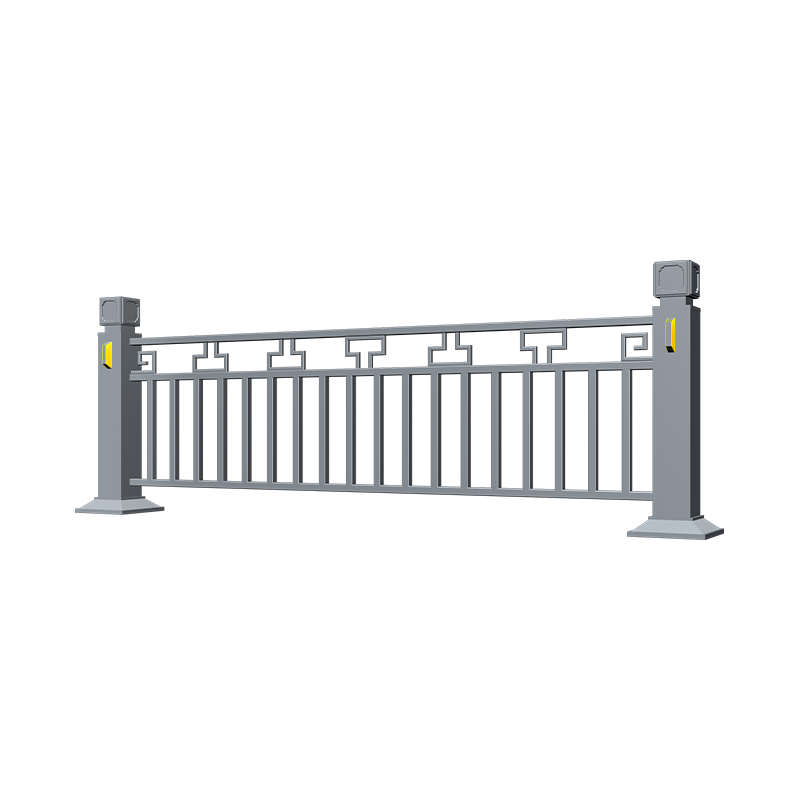
Urban environments require Traffic Barriers that address the interaction between vehicles, pedestrians, cyclists, and public transport systems, and the design focus extends beyond impact resistance to include spatial organization, accessibility, and visual integration with city landscapes; Traffic Barriers in urban roads are often used to separate pedestrian walkways from vehicle lanes, guide traffic at intersections, and prevent illegal parking or lane encroachment, while semi-rigid and flexible systems are frequently preferred due to our ability to reduce injury severity in lower-speed collisions, and aesthetic considerations play a larger role in urban applications, where barrier designs may incorporate decorative finishes, color coatings, or integration with lighting fixtures and greenery; modular designs allow for easier installation and reconfiguration in response to changing traffic patterns, and the inclusion of reflective materials enhances visibility during nighttime and adverse weather conditions; Yangzhou Jinyuan Lamps Co., Ltd., leveraging experience in both Traffic Barriers and lighting systems, provides integrated urban infrastructure solutions that combine safety performance with visual consistency, ensuring that barrier installations align with broader urban planning objectives while maintaining functional efficiency.
Rural roads present a wide range of challenges including uneven terrain, sharp curves, limited visibility, and reduced access to maintenance resources, and Traffic Barriers in these environments are primarily used to protect vehicles from roadside hazards such as embankments, water bodies, and fixed obstacles, while also guiding drivers through complex alignments; semi-rigid Traffic Barriers are commonly installed due to our adaptability to varying road geometries and cost-effective installation, and flexible Traffic Barriers are particularly beneficial in areas where sufficient space allows for deflection, reducing the impact forces experienced during collisions, while rigid systems may be used in locations where strong containment is required, such as near bridges or steep drop-offs; installation strategies often prioritize high-risk zones including curves, intersections, and accident-prone segments, and maintenance considerations include corrosion resistance and durability under environmental exposure; Yangzhou Jinyuan Lamps Co., Ltd. supports rural infrastructure development by manufacturing Traffic Barriers that combine durability with adaptability, ensuring that products perform reliably under diverse environmental conditions while meeting safety standards applicable to less-developed road networks.
Traffic Barriers used on bridges and elevated roadways must meet specific engineering requirements related to load distribution, structural integration, and containment performance, as these environments involve limited space and increased risk associated with vehicle departures; rigid Traffic Barriers, particularly concrete systems, are commonly used due to our ability to provide strong containment and prevent vehicles from leaving the structure, while metal or composite barriers may be used in situations where weight reduction is necessary, and the design of these systems must account for factors such as dynamic loads, thermal expansion, and compatibility with bridge components; transition sections between bridge barriers and approach road barriers are carefully engineered to maintain continuity in performance, and additional features such as pedestrian railings or anti-climb designs may be incorporated; Yangzhou Jinyuan Lamps Co., Ltd. applies engineering expertise and manufacturing precision to produce Traffic Barriers suitable for bridge applications, ensuring that products meet structural requirements while maintaining safety performance and long-term durability.
Construction zones require Traffic Barriers that can be quickly deployed, adjusted, and removed while maintaining adequate protection for workers and road users, and these temporary installations must adapt to changing site conditions and traffic patterns; portable Traffic Barriers, including water-filled and modular plastic systems, are widely used due to our ease of transportation and installation, while maintaining sufficient stability to guide vehicles and create safe work areas, and the design of temporary barriers often emphasizes visibility through bright colors and reflective markings to ensure clear recognition by drivers, especially in low-light conditions; connection systems between barrier segments are designed for rapid assembly while maintaining alignment and continuity, and additional features such as integrated signage or lighting may be included to enhance functionality; Yangzhou Jinyuan Lamps Co., Ltd. supports temporary traffic management by providing Traffic Barriers solutions that combine flexibility with durability, ensuring that safety requirements are met even in dynamic construction environments while facilitating efficient project execution.