


JINYUAN
JINYUAN
JINYUAN
JINYUAN
JINYUAN
JINYUAN
JINYUAN
JINYUAN
JINYUAN
JINYUAN
JINYUAN
JINYUAN
JINYUAN
JINYUAN
JINYUAN
JINYUAN
Content
Walk into any serious conversation about LED lighting, and the term color rendering index is bound to come up. It appears on datasheets, product labels, and specification sheets. But what does CRI actually tell you about an LED light? As a lighting manufacturer that has spent years building street lights, floodlights, and outdoor luminaires, we have seen how easily this single number gets misunderstood, and how much it matters when you get it right.
What Is the Color Rendering Index (CRI)?
The color rendering index is a measure of how faithfully a light source reproduces the colors of objects compared with a reference source of the same color temperature. In simple terms, it tells you whether a red curb looks truly red, whether a green sign looks naturally green, and whether a person's face looks healthy under artificial light rather than washed out or distorted.
CRI is expressed on a scale from 0 to 100. A score of 100 means colors appear as they would under a perfect reference source, such as natural daylight or a classic incandescent lamp. The lower the score, the more unnatural colors become. LED chips with poor CRI can make colors look dull and shifted, often described as flat lighting even when the color temperature is warm.
Most LED products state CRI as a single number, often written as Ra, which is the average of eight standard color samples. A value of Ra 80 is commonly treated as the minimum for general-purpose lighting, while Ra 90 and above is considered high color rendering.
How Is CRI Measured and What Do the Numbers Mean?
CRI is calculated by comparing how a light source renders a set of standardized color samples. The traditional method uses eight pastel swatches, labeled R1 through R8, covering muted tones of blue, yellow, green, and skin-like shades. The difference between the test source and the reference source for each sample becomes a score, and the average of the eight scores is the Ra value.
Some manufacturers also mention R9, which measures how well the source renders saturated red. Red is notoriously difficult for many LED phosphor blends, and a fixture with high Ra but low R9 can still render skin tones, wood, and automotive paint poorly. For applications where strong reds matter, R9 is worth checking alongside Ra.
| CRI Range | Quality Level | Common Applications |
|---|---|---|
| 90 and above | Excellent | Retail displays, museums, hospitals, premium sports venues |
| 80-89 | Good | Offices, schools, streets, parks, most outdoor lighting |
| 60-79 | Fair | Industrial yards, warehouses, security areas |
| Below 60 | Poor | Only where color is not a priority |
For outdoor and infrastructure lighting, 80 CRI is generally a solid benchmark. It keeps road signs, pedestrians, and vehicle colors recognizable while maintaining excellent luminous efficacy. When a project involves plazas or sports facilities, 90 CRI is increasingly specified.
CRI vs. Color Temperature: Two Different Numbers
A common point of confusion is the difference between CRI and correlated color temperature, or CCT. Color temperature, measured in Kelvin, describes whether light looks warm, around 3000K, or cool, around 5000K and above. CRI, on the other hand, describes how accurately colors appear regardless of whether the light is warm or cool.
A warm 3000K light can render colors beautifully, while a cool 6500K light can render them poorly, and vice versa. When specifying fixtures, do not substitute one number for the other. A high CRI rating does not mean the light is bright or cool; it only tells you about color fidelity.
Why CRI Matters in Outdoor and Infrastructure Lighting
Outdoor lighting might seem like an unlikely place to obsess over color rendering, yet streets, ports, stadiums, and gardens all benefit from better CRI.
Roadways and Public Spaces
In roadway lighting, high CRI helps drivers quickly distinguish pedestrians, road markings, and traffic signs. Surveillance cameras also capture more useful images under high-CRI light, which is one reason many smart city projects now request 80 or 90 CRI on main corridors. For street lighting projects, we see increasing demand for fixtures that balance CRI with efficiency.
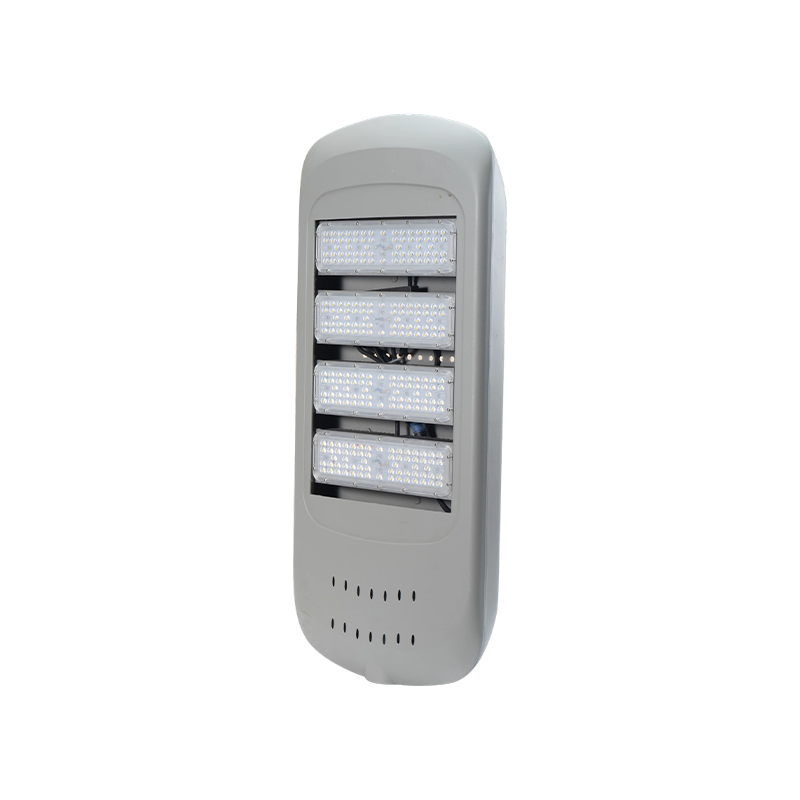
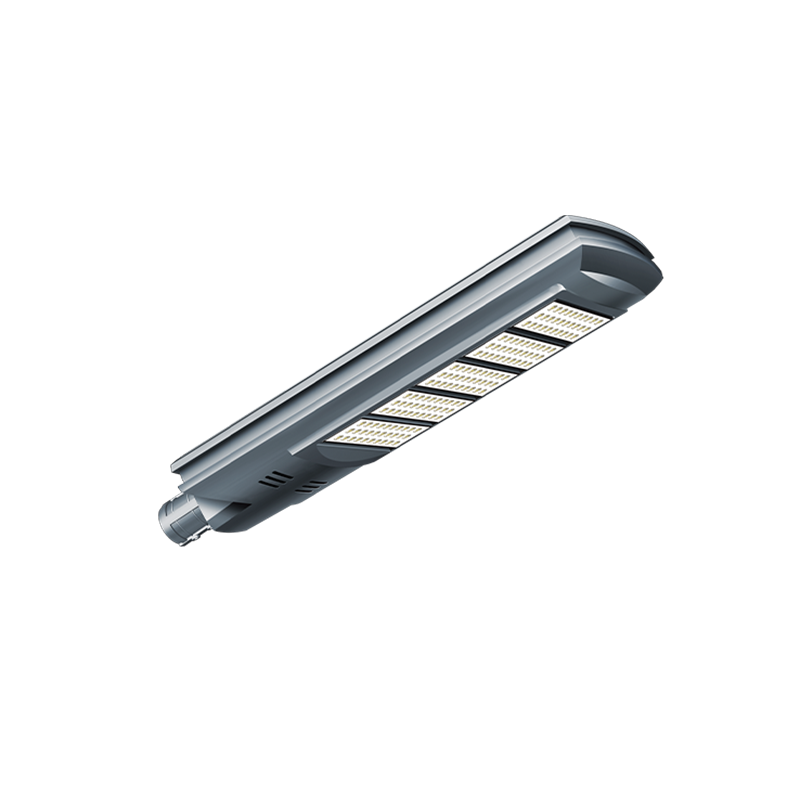
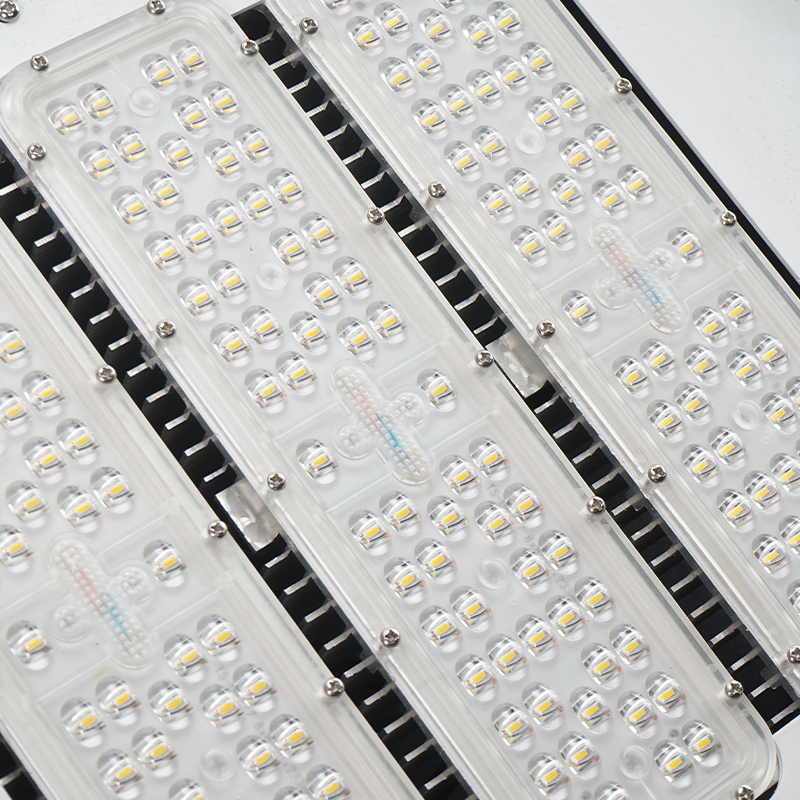
 Modular Anti-Glare High-Lumen LED Street LuminaireThis street luminaire offers high CRI for clear road visibility and energy savings, with a die-cast aluminum housing, IP66 rating, and modular optics for durable, glare-free municipal lighting.View Product →
This fixture was designed to deliver stable color quality at high luminous output, so municipalities do not have to sacrifice rendering for energy savings.
Sports Venues
Sports venues are another case where CRI matters more than people expect. Broadcast cameras rely on accurate color for team kits, skin tones, and pitch markings, and spectators perceive the game better when colors are vivid.
These units combine high CRI with precise optics to cover large playing fields evenly, making a noticeable difference in both televised and live events.
Landscape and Gardens
Landscape and garden lighting rounds out the picture. Foliage green, stone gray, and wood brown all look richer when the light renders them naturally. For residential complexes, hotel gardens, and municipal parks, a small investment in better CRI transforms how the space feels after dark.
 Smart Garden Lighting with Louvered LensesThis garden fixture uses louvered lenses to focus light on paths and reduce spill, while its smart controller slot and waterproof design enhance natural color rendering in parks and complexes.View Product →
This option combines warm, accurate color with flexible control in one practical package.
Ports, Airports, and Smart Infrastructure
Ports and airports also belong on this list. Forklift operators, crane drivers, and dock workers need to identify container colors, safety markings, and equipment status quickly. High-CRI high mast lighting supports both safety and operational efficiency in these demanding environments. As smart infrastructure grows, the conversation expands from simple illumination to better color quality, a topic we explore further in our discussion of what smart street lighting really involves.
How to Choose the Right CRI for LED Lights
Choosing the right CRI does not need to be complicated. A few practical questions will guide the decision:
- What is being viewed under the light? If people, products, or safety colors are involved, choose 80 CRI at minimum and consider 90 CRI for sensitive areas.
- Is the project part of a smart city or camera-monitored environment? Higher CRI improves image quality for both human eyes and electronic sensors.
- What is the maintenance cost of replacing the fixture? Spending slightly more on a high-CRI luminaire is cheaper than reworking a project after color complaints.
- Does the fixture meet the rest of the specification? CRI must coexist with the right color temperature, beam angle, IP rating, and surge protection.
When comparing quotes from different suppliers, ask for photometric reports that show Ra and R9 values, not just the marketing label. Reputable manufacturers can provide test data for every production batch, because CRI claims are only useful if they are backed by real measurement.
Beyond CRI: TM-30 and the Future of Color Quality
As useful as CRI is, it has known limitations. The eight pastel samples used in the classic method cover only a narrow range of colors, and the average can hide a weak performance on a single hue. That is why the lighting industry has developed newer metrics, most notably IES TM-30, which evaluates color rendering using 99 color samples and produces two values: Rf, or fidelity, and Rg, or gamut.
TM-30 gives a more complete picture of how a light source will perform in real settings. Rf indicates overall fidelity, similar to CRI but with a more balanced sample set, while Rg tells you whether colors appear more saturated or more muted. For critical color work, designers increasingly specify both CRI and TM-30 values.
For most practical outdoor projects, however, CRI remains the fastest and most universal way to compare fixtures. It is understood by engineers, contractors, and procurement teams around the world. Our recommendation is to use CRI as the baseline, check R9 for red-sensitive applications, and consult TM-30 data when a project demands the highest possible color quality. High-CRI LED technology is also now efficient enough to support both sustainability and visual quality, a direction our industry calls accelerating the low-carbon transition.
Color rendering index is not just a technical footnote. It determines whether a street feels safe, whether a stadium broadcast looks professional, whether a park invites evening strolls. As a manufacturer, we treat CRI as one of the core parameters in every fixture we build, alongside luminous efficiency, mechanical strength, and long-term reliability. If you are planning a lighting project and need help choosing a sensible CRI specification, the door is open: send us your requirements and we will break down what makes sense for your site.