


JINYUAN
JINYUAN
JINYUAN
JINYUAN
JINYUAN
JINYUAN
JINYUAN
JINYUAN
JINYUAN
JINYUAN
JINYUAN
JINYUAN
JINYUAN
JINYUAN
JINYUAN
JINYUAN
Content
Walk into a well-lit warehouse and you can feel it within a few steps. Labels are readable at a glance, forklift operators see the edge of every pallet, and nobody has to squint near the racking. Walk into a poorly lit one and the same tasks slow down, picking mistakes creep in, and the electricity bill keeps climbing year after year.
Choosing the best LED lighting for warehouses is not about buying the brightest fixture on a specification sheet. It is about matching the optics, the mounting height and the environment of your building, so that the light lands where the work happens and stays there for the next decade.
Start With the Building, Not the Wattage
Before anyone talks about lumens or watts, spend an afternoon walking the floor with a tape measure. Note the ceiling height at the ridge and at the eaves, because a sloping roof changes everything about aiming. Measure the aisle width and the rack height, then look at what people actually do underneath: order picking, pallet handling, dispatch, quality inspection or storage of slow-moving stock.
A ten-metre ceiling and a six-metre ceiling call for very different beam patterns. A dusty timber yard and a clean food-grade cold store call for different sealing and different drivers. And a site that runs three shifts needs a fixture chosen for maintenance access, not just for light output. Once you have those numbers, the product shortlist almost writes itself.
What Matters Most in a Warehouse LED Fixture
After years of supplying outdoor and industrial lighting projects, we still see the same handful of specifications decide whether a warehouse installation feels good in year one and year ten. These are the ones worth checking carefully:
- Efficacy, ideally between 130 and 170 lumens per watt, since this drives the payback period more than the purchase price does.
- Optical control, using precision lenses or well-designed reflectors rather than bare boards, because uncontrolled light at high mounting heights creates glare and wasted spill.
- Glare management, especially above 55 degrees from nadir, so that operators driving under the fixtures are not blinded.
- Thermal design, including finned heat sinks and a driver rated for the real ambient temperature of your building, not a comfortable laboratory figure.
- Ingress protection of IP65 or IP66 for dusty, humid or wash-down areas, plus an impact rating suited to forklift traffic.
- Colour quality, usually 4000K or 5000K with a CRI of at least 70, which keeps labels, wiring colours and packaging distinguishable.
The table below is the rough sorting rule we use when a customer sends us a floor plan and asks what to hang where.
| Warehouse zone | Mounting height | Fixture and beam | Why it works |
|---|---|---|---|
| Racking aisles | 8 to 12 m | Modular LED high bay, 60 to 90 degrees | Aim along the aisle and light the rack faces |
| Open floor and staging | 6 to 10 m | Wide distribution high bay, 90 to 120 degrees | Even uniformity with fewer fixtures |
| Loading docks and aprons | 5 to 8 m | Wide-beam floodlight, asymmetric | Bright working surface, controlled glare for drivers |
| Cold storage | 4 to 8 m | Sealed luminaire with low-temperature driver | Handles condensation and instant start |
| Outdoor yards and container handling | 15 to 30 m | High mast or narrow-beam floodlight | Wide coverage, planned maintenance access |
Matching the Right Fixture to Each Zone
Racking Aisles and High-Bay Rows
Aisles are where most warehouse lighting budgets are won or lost. A fixture with a symmetrical flood pattern throws light onto the floor between the racks and leaves the upper pallet positions in shadow, which is exactly where pickers need to read labels. A modular luminaire with precision optics lets you rotate and aim the beam along the aisle, so the light follows the racking instead of washing the empty floor.
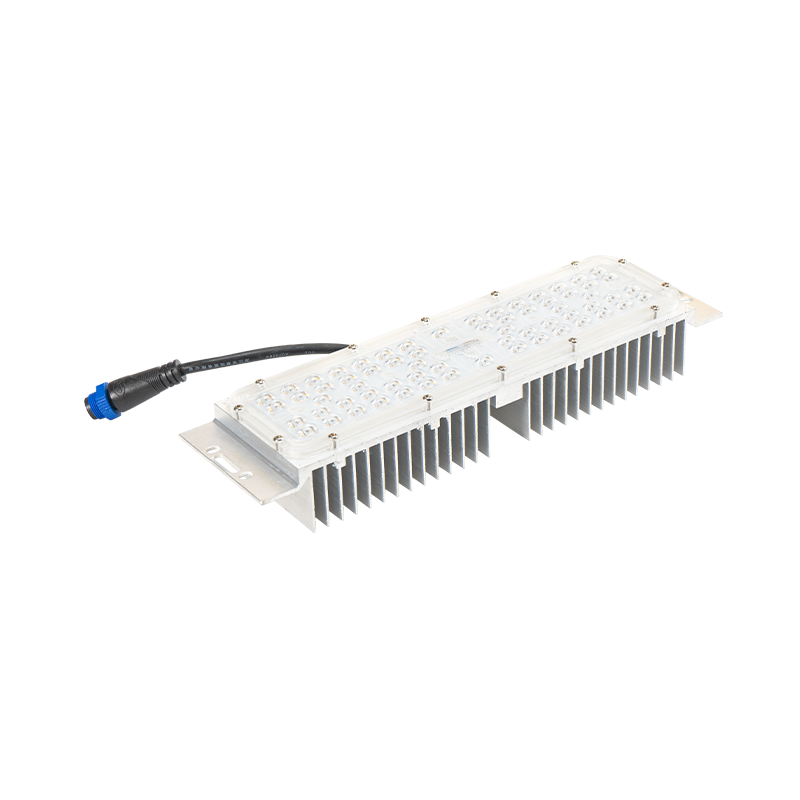
On a typical project we would look for a uniformity ratio of roughly 0.5 to 0.6 across the aisle, with fixtures spaced in a continuous line rather than clustered at the ends. This is the category our industrial-grade LED module luminaires were designed for, with tool-free aiming and replaceable optical modules.
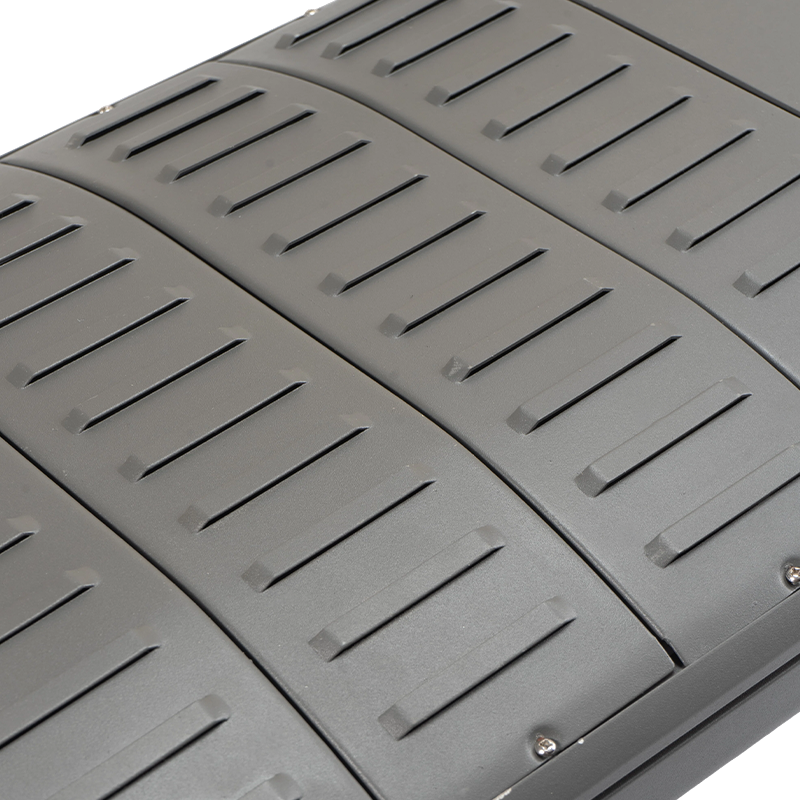 Industrial-Grade LED Module LuminairesModular design with four high-lumen modules and airflow gaps, plus tool-free aiming and replaceable optics, addresses heat and uniformity in industrial settings.View Product →
Thermal Design Decides How Long the Investment Lasts
Heat is the quiet killer of warehouse lighting. A luminaire that runs hot will drift in output, shift in colour and eventually fail long before its rated hours are up. In practice, the difference between a five-year fixture and a fifteen-year fixture usually comes down to the size of the heat sink, the quality of the thermal interface and whether the driver was honestly derated for a roof cavity that can reach 45 degrees Celsius in summer.
It is worth asking for LM-80 data and a genuine lumen maintenance figure rather than a marketing number. Fin-type heat sinks and separated driver compartments cost a little more up front and save a great deal in lift-hire and downtime later.
Docks, Aprons and Outdoor Yards
The lighting job does not stop at the roller door. Loading docks, fuel points, waste compounds and container yards all need light that reaches the working surface without blinding the drivers moving in and out. Wide-beam floodlights with controlled cut-off, mounted at five to eight metres and angled away from approaching vehicles, are the usual answer here.
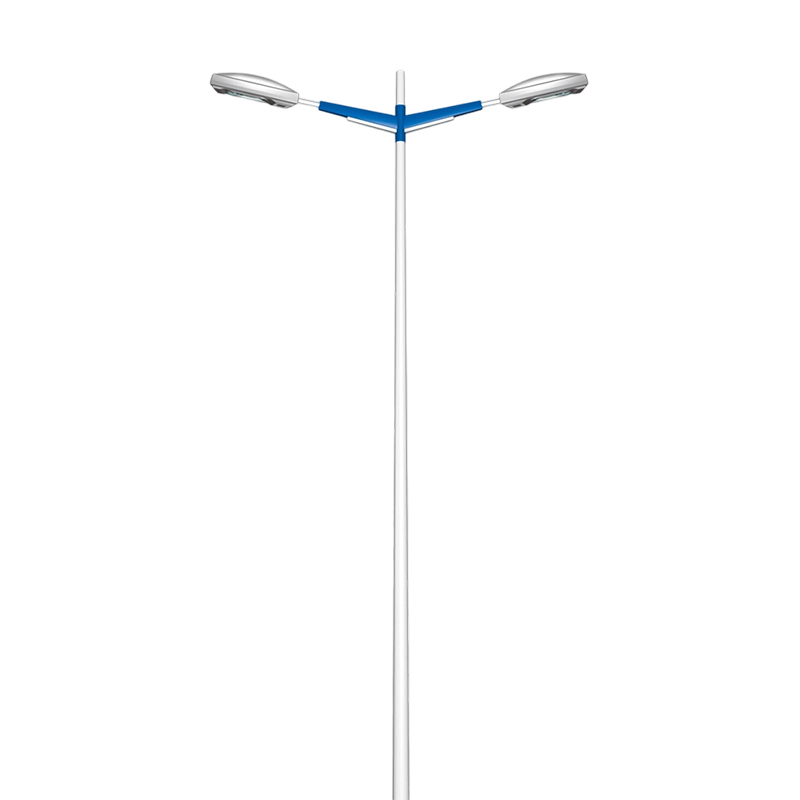
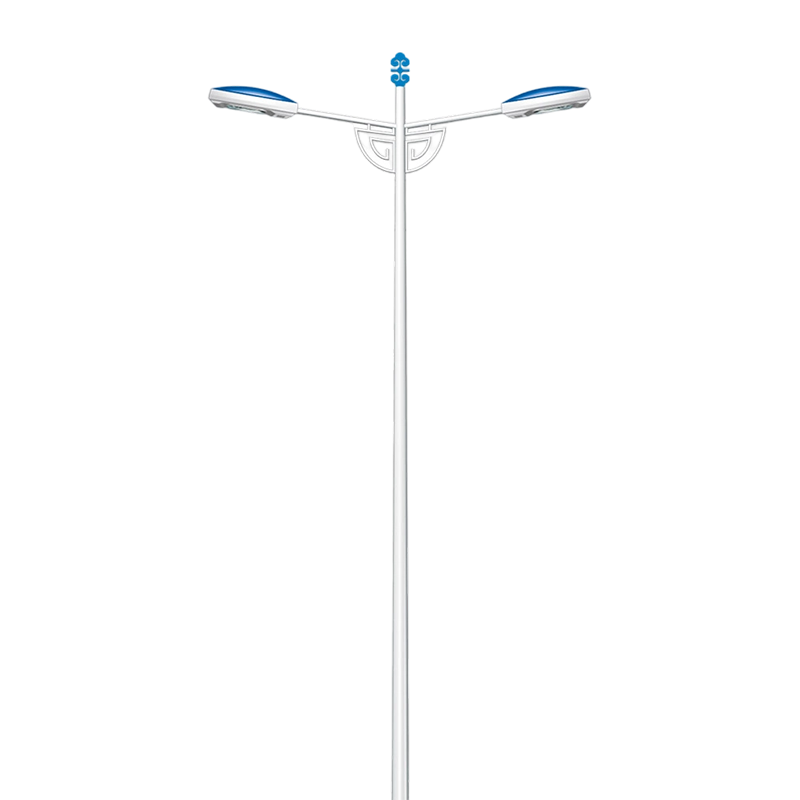
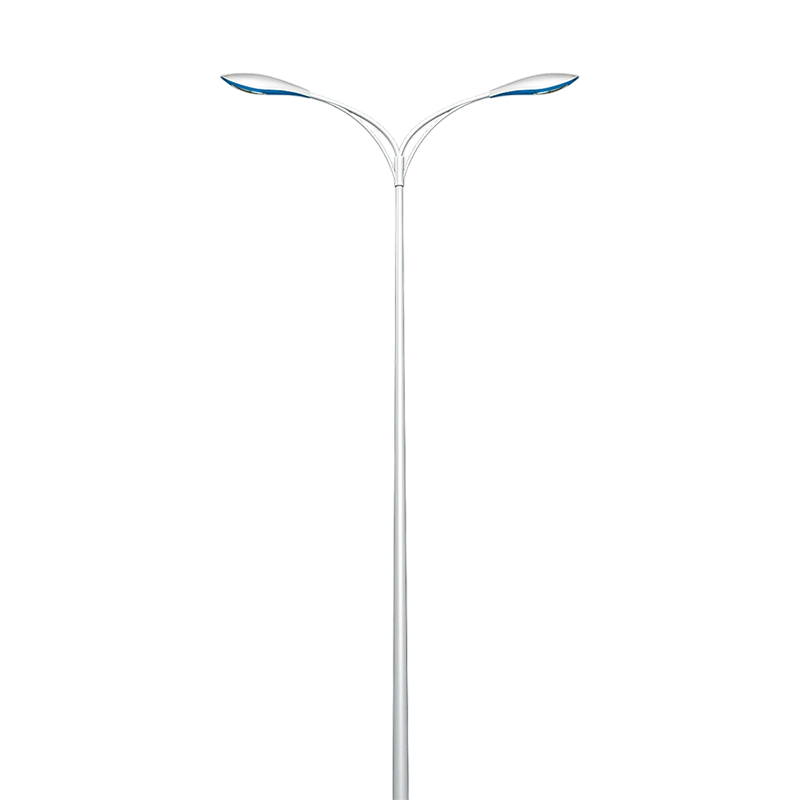
For larger yards with 15 to 30 metre poles, our high mast lighting range combines high-output LED floodlights with either fixed or retractable masts, so maintenance can be carried out safely at ground level instead of from a crane.
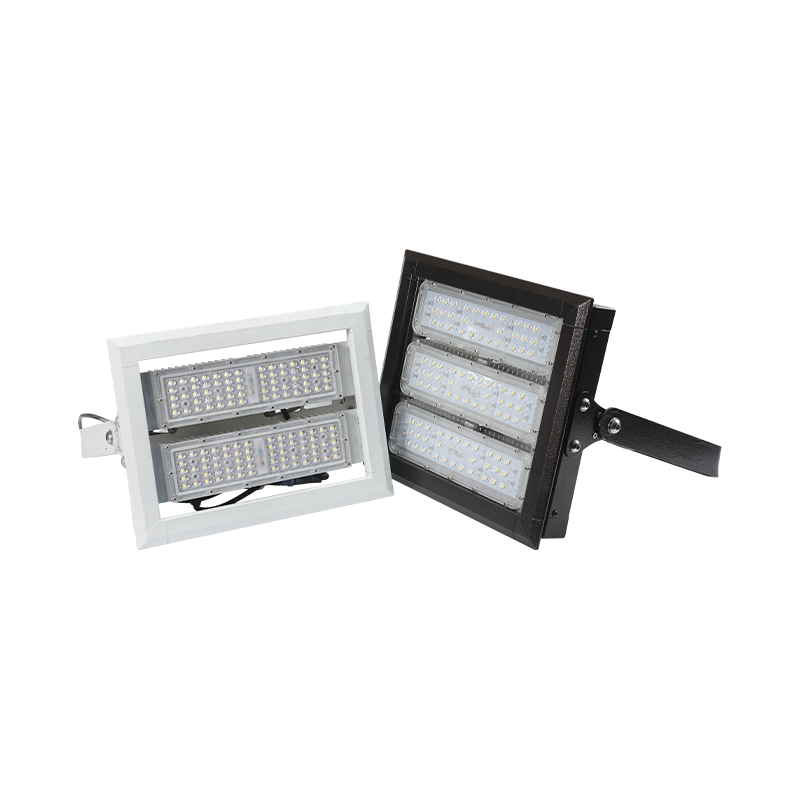 Wide Beam LED Floodlights for Large AreasWide beam LED floodlights offer uniform illumination for warehouses, parking lots, and large yards, with high mast compatibility and smart control options.View Product →
Controls, Dimming and Daylight
A warehouse is rarely at full activity for every hour the lights are on. Occupancy sensing in quiet aisles, daylight dimming under skylights and simple time-based zoning can cut consumption by a third without anyone noticing a change on the floor. The important detail is to set the controls so that light never drops below the level that health and safety rules require on active routes.
Wiring the scheme is usually straightforward if the fixtures support DALI or 1-10V dimming out of the box. If you want the background on how much intelligence is really built into modern lighting infrastructure, our note on what smart lighting really is is a useful starting point before you commit to a platform.
Where Solar and Off-Grid Power Fit
Not every storage site sits next to a substation. Remote depots, quarries, farm storage and construction compounds often need a perimeter lit before the trenching budget exists. Integrated solar luminaires and off-grid photovoltaic systems let those sites run gate lighting, walkway lighting and yard lighting independently of the grid.
They are not a replacement for an indoor high bay, and we would never suggest otherwise. But for external storage, gatehouses and outbuildings, they solve a real problem with no cabling, no meter reading and very little maintenance.
A Short Checklist Before You Sign Off
- Confirm the mounting height and aim of every fixture, not just the total quantity.
- Ask for a lighting layout with predicted lux levels and uniformity across the active aisles.
- Check that drivers and electronics are rated above the real ambient temperature in your roof space.
- Confirm sealing, impact and corrosion ratings for the specific environment, including wash-down and cold stores.
- Review how a fixture is maintained: tool-free access, replaceable modules, common spares.
- Verify certifications and test reports against the standards your insurer or auditor expects.
- Plan the controls zoning at the same time as the fixture order, since retrofitting sensors later is expensive.
Mistakes We See Most Often on Site
- Buying on watts per fixture instead of lumens delivered to the working plane.
- Using one beam type everywhere, then compensating with extra fittings.
- Ignoring uplift and dust depreciation, which quietly reduces output over the first two years.
- Choosing a colour temperature for looks rather than for task visibility.
- Mounting floodlights at eye level, which creates glare for forklift and truck drivers.
Final Thoughts
The best LED lighting for warehouses is the layout that matches your building, your tasks and your maintenance reality. Get the height and the beam right, insist on honest thermal and optical data, and the running costs take care of themselves. If you would like a second opinion on a floor plan or a fixture schedule, send it over. We have been building outdoor and industrial lighting since 2002, and we are happy to work through the numbers with you before you place an order.