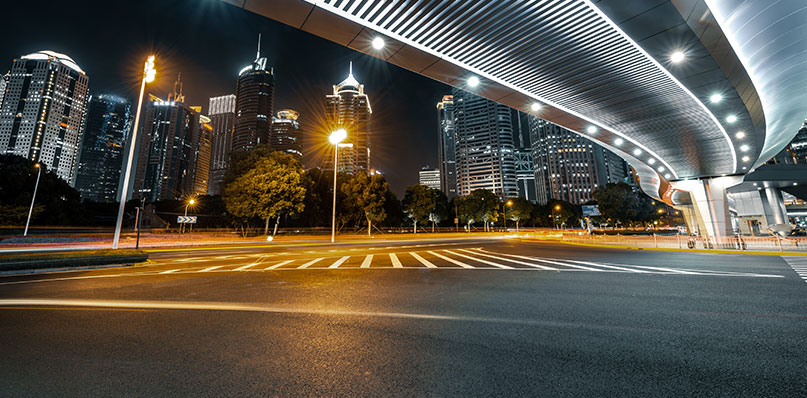
How Are the Lighting Performance and Safety of Smart Street Lighting Ensured?
Advanced LED Technology for Consistent Illumination
Smart street lighting systems typically use LED modules due to their energy efficiency and controllable lighting characteristics. By integrating high-quality LED chips and advanced optics, these systems provide uniform illumination across roadways and pedestrian areas. Factors such as luminous flux, color temperature, and beam angle are carefully selected during the design phase to ensure that light is distributed evenly and glare is minimized, enhancing visibility and safety for both drivers and pedestrians. Regular calibration and testing help maintain consistent performance throughout the lifespan of the installation.
Adaptive Control Systems and Dimming Functions
Intelligent street lighting relies on adaptive control systems that adjust the intensity of light based on environmental conditions, traffic flow, and time of day. Sensors collect real-time data, allowing lights to dim during low-traffic hours and increase brightness when vehicles or pedestrians are detected. These functions contribute to energy management while maintaining adequate visibility for safety. Automated dimming schedules can be programmed to respond to seasonal changes, reducing energy consumption while ensuring that critical areas remain properly illuminated.
Integration of Solar and Backup Power Systems
For solar street lighting, energy storage and backup power play an essential role in maintaining performance and safety. High-capacity lithium or lead-acid batteries store energy collected from photovoltaic panels during the day, enabling consistent operation throughout the night. Monitoring systems track battery status, alerting maintenance teams to low charge or performance degradation. By ensuring that power availability is stable, the system prevents unexpected outages, which could compromise roadway safety.
Structural Safety and Durability of Light Poles
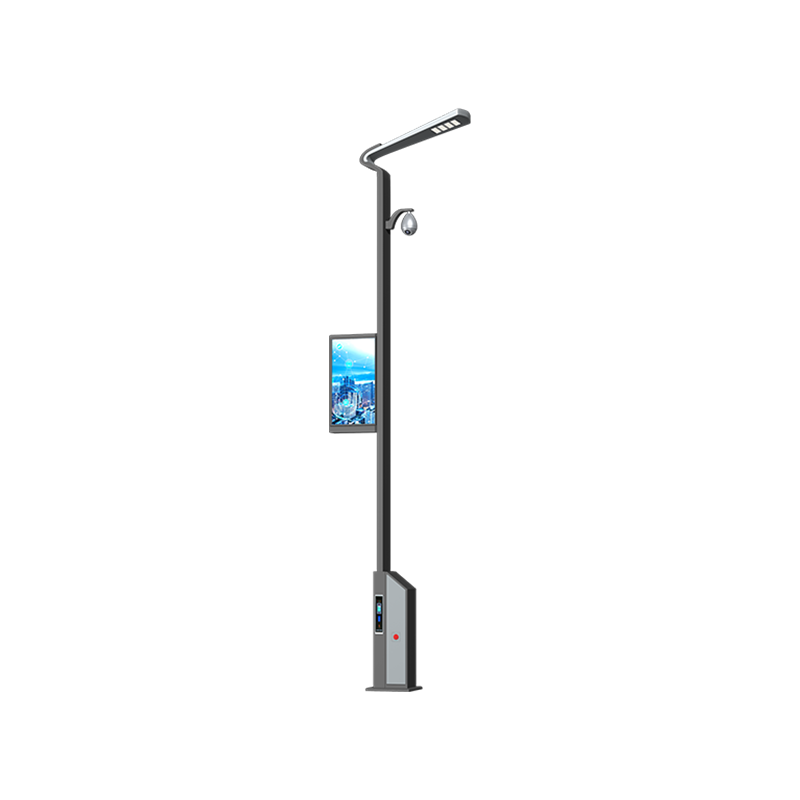
The physical design of street light poles contributes to the overall safety of smart lighting installations. Materials are selected to withstand environmental stressors, including wind, corrosion, and temperature fluctuations. Pole heights, spacing, and mounting angles are designed based on road classification and traffic density to optimize light coverage and minimize blind spots. Regular inspection and maintenance are scheduled to detect structural issues, such as rust or foundation wear, that could pose hazards to road users.
Intelligent Monitoring and Remote Management
Smart street lighting systems often include IoT-based monitoring platforms that provide real-time status of each unit. Parameters such as lamp voltage, current, temperature, and operational status are continuously recorded. Remote management enables technicians to identify malfunctioning units, schedule maintenance, and perform software updates without manual inspection of every light. This proactive approach reduces the risk of failures and enhances the reliability and safety of the street lighting network.
Compliance with Standards and Safety Regulations
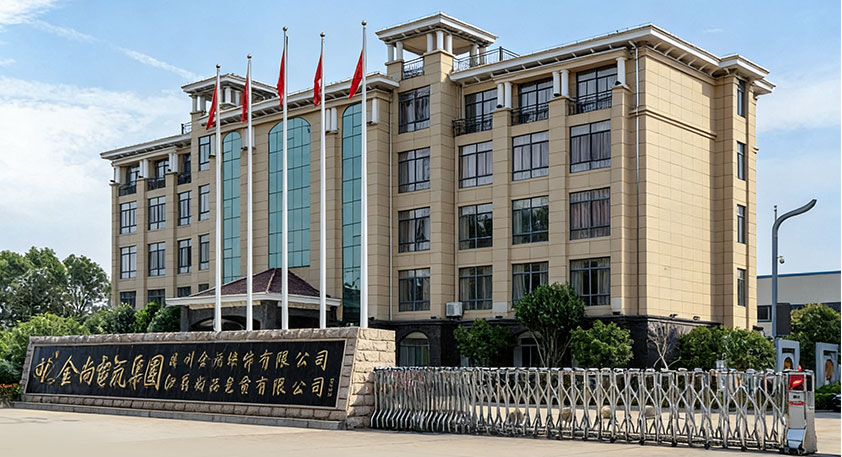
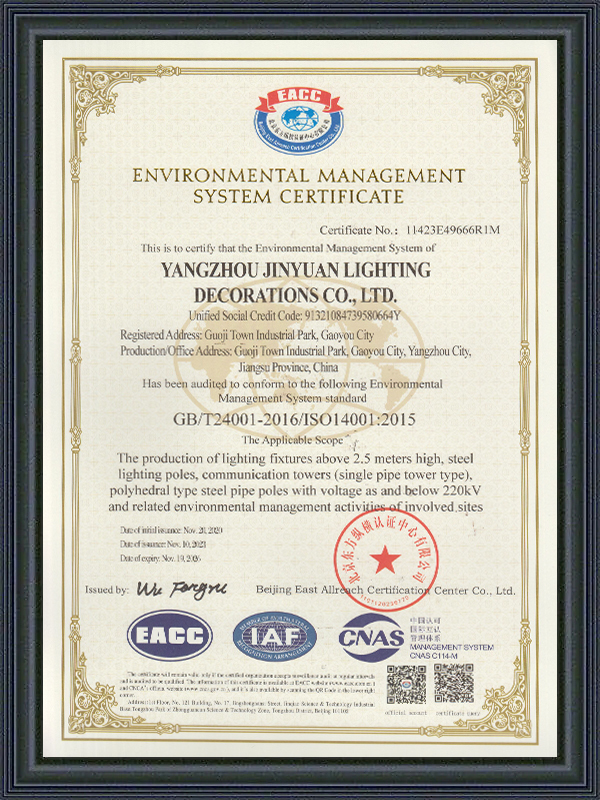
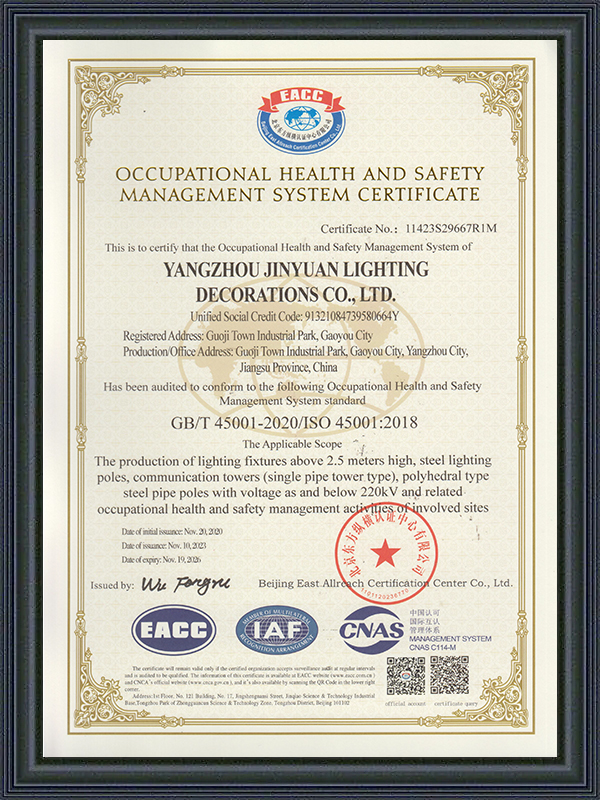
Lighting performance and safety are also ensured through adherence to national and international standards. Products are designed and tested according to guidelines such as EN 13201 for road lighting, which specifies requirements for luminance, illuminance, uniformity, and glare control. Electrical safety standards ensure that systems are properly insulated, protected against short circuits, and resistant to overvoltage conditions. Certification by relevant authorities provides verification that both performance and safety requirements are met.Yangzhou Jinyuan Lamps Co.,Ltd. always feel that all success of our company is directly related to the quality of the products we offer. They meet the highest quality requirements as stipulated in ISO9001, ISO14001, OHSAS18001 and our stringent quality control.
Environmental Adaptation and Weather Resistance
Street lighting installations must operate under diverse environmental conditions. Smart street lights are equipped with weather-resistant housings, conformal coatings, and thermal management solutions to maintain consistent performance in rain, snow, extreme temperatures, or dust exposure. Sensors can adjust lighting based on fog or precipitation, reducing glare while maintaining road visibility. By accounting for environmental factors, these systems maintain operational safety for both the public and maintenance personnel.
Performance and Safety Monitoring Table
The following table summarizes key monitoring parameters that help maintain performance and safety in smart street lighting:
| Monitoring Parameter |
Purpose |
Impact on Safety |
| Luminosity Level |
Ensures consistent light output |
Reduces accidents due to poor visibility |
| Electrical Load |
Monitors power consumption |
Prevents overloading and electrical hazards |
| Pole and Fixture Condition |
Checks for structural integrity |
Reduces risk of collapse or falling components |
| Battery Status |
Monitors backup power availability |
Prevents outages during power interruptions |
FAQ
Q: How does smart street lighting improve operational efficiency in urban areas?
A: Smart street lighting systems collect real-time data from sensors to monitor performance, energy consumption, and traffic patterns. This allows municipal teams to plan maintenance more efficiently, reduce unnecessary energy usage, and allocate resources effectively, improving overall operational management.
Q: In what ways can smart street lighting enhance public safety during nighttime?
A: By automatically adjusting light intensity based on pedestrian and vehicle movement, smart street lights ensure sufficient illumination in critical areas while minimizing dark spots. Integration with emergency response systems can further improve public safety by signaling incidents or hazards through adaptive lighting.
Q: How are energy savings achieved without compromising road visibility?
A: Advanced LED technology combined with adaptive dimming and scheduling enables smart street lighting to maintain appropriate luminance levels while lowering energy consumption. Lights can be dimmed during periods of low activity or in well-lit areas while still providing adequate visibility for safety.
Q: How do smart street lighting systems support environmental sustainability?
A: By reducing energy consumption through efficient LED modules, dimming strategies, and solar-powered options, smart street lighting minimizes greenhouse gas emissions. Long-lasting components also reduce maintenance frequency and material waste, contributing to more sustainable urban infrastructure.
Q: What maintenance practices are recommended to ensure reliability of smart street lights?
A: Remote monitoring and data analytics identify potential failures, while scheduled inspections focus on structural integrity, electrical connections, and lamp performance. Replacing worn components or filters in advance helps maintain uninterrupted operation and avoids unexpected outages.
Q: Can smart street lighting systems be adapted for different road types and urban layouts?
A: Yes, the modular design of LED and solar street lights allows customization of pole height, spacing, and beam angles. Control software can be configured to match varying traffic densities and environmental conditions, ensuring consistent lighting performance across diverse urban environments.
Q: How do integrated sensors contribute to system longevity and performance?
A: Sensors continuously monitor parameters such as voltage, temperature, and luminaire status. Early detection of anomalies allows maintenance teams to address potential issues before they escalate, extending the lifespan of the lighting system and maintaining consistent performance.