How Does an Off-Grid PV System Work?
The fundamental appeal of Off-grid PV systems lies in their ability to function as autonomous "energy islands," completely independent of the national power grid. Understanding how these systems work requires a deep dive into the sophisticated conversion of solar radiation into stable, usable electricity, and the critical management of that energy through various storage and regulation stages. Unlike grid-tied systems that can rely on the utility network as a buffer, an off-grid setup must be self-sufficient, meaning every component must work in perfect mechanical and electrical harmony.
Photovoltaic Conversion: The Primary Energy Source The process begins at the solar array, where silicon-based photovoltaic cells capture photons from sunlight. This triggers the photoelectric effect, generating a Direct Current (DC). The efficiency of this stage is determined by the quality of the solar modules. High-performance Off-grid PV systems utilize monocrystalline or polycrystalline panels with advanced anti-reflective coatings to maximize photon absorption even in low-light conditions. These panels are the primary "engine" of the system, and their durability against UV radiation and thermal stress is paramount for long-term operation.
Charge Regulation and Battery Management Since solar energy is intermittent, the raw DC power cannot be sent directly to sensitive electronics or batteries without regulation. This is the role of the Solar Charge Controller (often using MPPT—Maximum Power Point Tracking technology). The controller acts as a gatekeeper, adjusting the voltage and current to ensure the batteries are charged safely and efficiently. It prevents overcharging, which can lead to battery "gassing" or thermal runaway, and prevents deep discharge, which significantly shortens battery life. In professional Off-grid PV systems, this regulation is handled by microprocessors that constantly monitor the State of Charge (SoC).
Energy Storage: The Chemical Buffer Energy storage is the heart of any off-grid configuration. During daylight hours, excess energy is stored in battery banks—typically utilizing Deep-Cycle Lead-Acid, Gel, or the increasingly popular Lithium Iron Phosphate (LiFePO4) chemistry. This stored chemical energy is what allows the system to provide power during the night or during periods of heavy cloud cover. The capacity of the battery bank determines the "autonomy" of the system—how many days it can run without sun.
Inversion: Bridging DC to AC Most modern appliances and industrial equipment require Alternating Current (AC). Therefore, the stored DC power from the batteries must pass through an Off-Grid Inverter. This device "inverts" the steady DC flow into a sinusoidal AC wave. Premium Off-grid PV systems utilize Pure Sine Wave inverters, which provide electricity of a quality that is often superior to the national grid, ensuring the safe operation of delicate medical equipment, telecommunications hardware, and high-efficiency LED lighting.
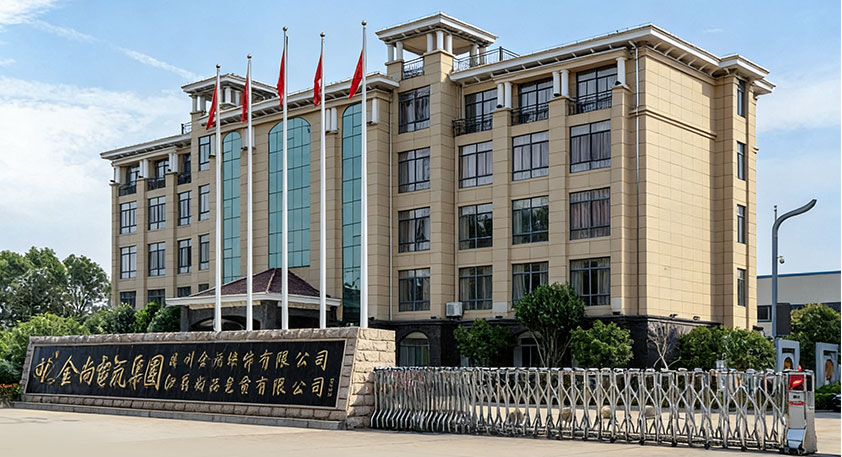
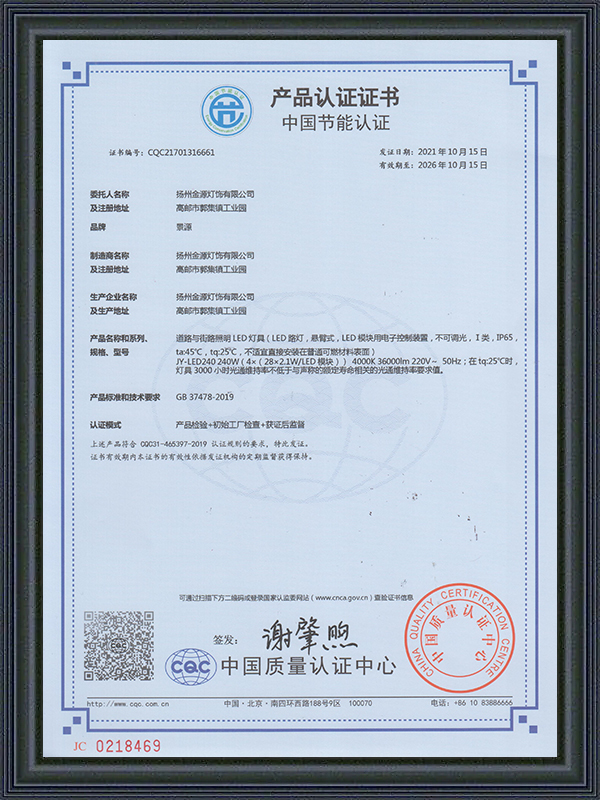
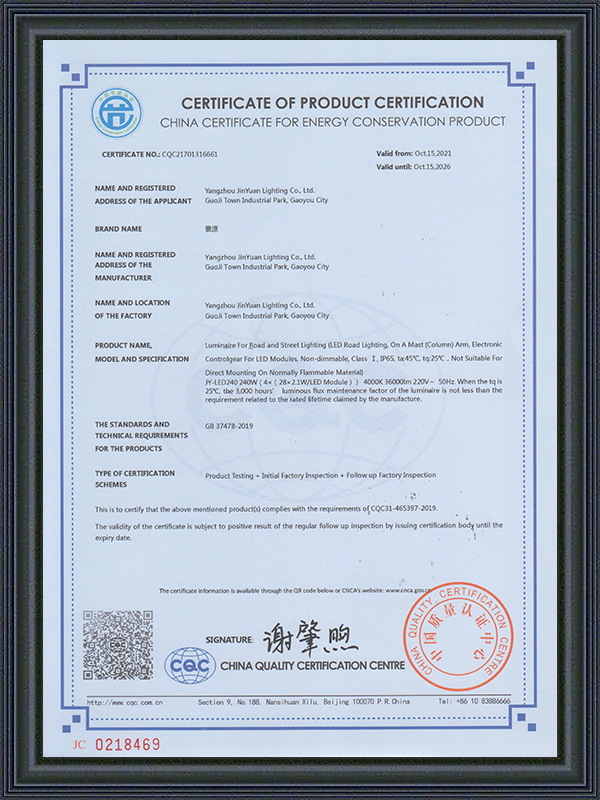
The Manufacturing Expertise of Yangzhou Jinyuan Lamps Co., Ltd. A reliable energy cycle requires components built to the highest industrial standards. This is where the heritage of Yangzhou Jinyuan Lamps Co., Ltd. becomes a decisive factor. Affiliated with the Jinshang Electric Group, Yangzhou Jinyuan has been one of the professional provincial large-sized production, design, and engineering companies in the industry of road illumination in China since 2002. For over two decades, our products—ranging from street light poles and LED street lights to integrated solar street lights—have been highly appreciated by customers in domestic and overseas markets. By applying our twenty years of experience in solar energy integration, we ensure that every component in our Off-grid PV systems is optimized for peak performance and longevity.
How Do Modular Designs Improve Off-Grid PV System Efficiency?
Efficiency in a remote energy context is measured not just by the percentage of sunlight converted to electricity, but by the "operational efficiency" of the entire system lifecycle—from transport and assembly to maintenance and expansion. Modular design is the engineering philosophy that enables Off-grid PV systems to reach their full potential in the field.
Logistical Optimization and Rapid Deployment One of the primary challenges of off-grid energy is the "last mile" of delivery. Systems are often destined for locations without paved roads or heavy lifting equipment. Modular designs allow for the system to be broken down into standardized, manageable units. This detachable nature means that high-capacity PV arrays and heavy battery banks can be transported in smaller, protected crates and assembled on-site. At Yangzhou Jinyuan Lamps Co., Ltd., we utilize modular and detachable designs for our solar street light poles and light fixtures, facilitating on-site installation and significantly reducing the logistical footprint and operational costs for our clients.
Component-Level Maintenance and Reduced Downtime In a monolithic system, a single component failure can paralyze the entire network. In a modular Off-grid PV system, components are treated as independent blocks. If an inverter or a specific battery module requires service, it can be bypassed or replaced without de-energizing the rest of the system. This modularity ensures that "critical loads"—such as emergency lighting or communication links—remain active even during maintenance windows. This is a vital feature for the specialized applications we serve, such as road illumination and remote industrial monitoring.
Scalability: Adapting to Evolving Energy Loads The energy needs of a remote area are rarely static. A village might start with basic solar street lighting and eventually require power for a community center or a water filtration plant. Modular Off-grid PV systems allow for "elastic" capacity. Users can simply add more PV modules or battery racks to the existing framework. This prevents the initial over-sizing of a system (which is a waste of capital) and ensures that the infrastructure remains relevant as energy demand grows.
Standardization and Interoperability By using standardized accessory specifications, modular systems ensure high compatibility. This means that if a customer in a remote area needs a replacement part five years later, they aren't locked into a proprietary, obsolete design. Our focus at Yangzhou Jinyuan has always been on creating products that are highly appreciated for their versatility. Since 2002, our engineering teams have prioritized standardized interfaces for street light poles and LED fixtures, ensuring that our solar solutions can be easily maintained and upgraded regardless of the geographical location.
Environmental Resilience Through Modular Housing Modularity also allows for better protection of sensitive electronics. Components can be housed in specialized, weather-resistant modular enclosures. These structures are made of high-durability materials designed to withstand wind, rain, ultraviolet radiation, and extreme temperatures. By isolating the power electronics from the heat-generating battery bank or the vibrating environment of an industrial site, modularity directly extends the mean time between failures (MTBF).
Why Are Off-Grid PV Systems Suitable for Remote Areas?
The suitability of Off-grid PV systems for remote regions is dictated by a combination of economic reality, environmental adaptability, and the fundamental drive for energy self-sufficiency. In areas where the grid ends, solar power begins, offering a clean and reliable alternative to the expensive and polluting fossil fuel legacy.
Economic Viability and Grid-Extension Avoidance The cost of extending the traditional electricity grid over difficult terrain can reach tens of thousands of dollars per kilometer. For many remote communities, this makes grid power a physical and financial impossibility. Off-grid PV systems eliminate this "distance tax." By generating power at the point of consumption, these systems remove the need for massive infrastructure investments in poles, wires, and transformers. For a provincial large-sized company like Yangzhou Jinyuan Lamps Co., Ltd., providing these self-sufficient solutions is the most effective way to address the road illumination needs of developing regions.
Environmental Adaptability in Harsh Outdoor Conditions Remote areas often coincide with harsh climates—high salinity near coasts, high UV in high-altitude deserts, or extreme moisture in rainforests. Off-grid PV systems are specifically engineered for these "harsh outdoor conditions." Every component is selected for its weather-resistant properties. At Yangzhou Jinyuan, we leverage our 20+ years of experience in manufacturing street light poles and light fixtures to ensure our solar products can withstand the most punishing environments. Our systems are built with protective structures that ensure mechanical integrity despite high and low temperature fluctuations, ensuring that remote areas have reliable light and power year-round.
Energy Self-Sufficiency and Sustainable Development Energy is the prerequisite for all other forms of development—healthcare, education, and commerce. By providing energy self-sufficiency, Off-grid PV systems empower local populations to take control of their economic destiny. This promotes sustainable development by using renewable energy instead of finite resources. It aligns with global trends in energy conservation and emission reduction, helping remote areas leapfrog the fossil-fuel era directly into a green energy future.
Reliability for Specialized and Critical Applications Beyond residential use, remote areas often host critical specialized applications like telecommunications base stations, weather monitoring, and military outposts. These sites require 99.9% uptime. The decentralized nature of an off-grid setup means they are not vulnerable to the "cascading failures" of a central grid. If one system goes down, it does not affect the others. This inherent redundancy is why Off-grid PV systems are the preferred choice for professional engineering projects managed by groups like Jinshang Electric Group.
A Legacy of Trust: Yangzhou Jinyuan’s Role since 2002 Our commitment to providing efficient, reliable, and clean electricity solutions is backed by a legacy that began in 2002. As a professional leader in the industry of road illumination in China, Yangzhou Jinyuan Lamps Co., Ltd. has seen firsthand how solar street lights and PV systems can transform a remote landscape. Our products are not just pieces of hardware; they are tools for progress. Whether it is a single LED street light in a mountain village or a multi-kilowatt off-grid array for a remote industrial site, our focus remains on uncompromising quality and customer appreciation.
Performance Metrics for Off-Grid Systems:
|
Feature
|
Industrial Grade PV System
|
Residential/Consumer Grade
|
|
Material Quality
|
Anodized Aluminum / Hot-Dip Galvanized
|
Painted Steel / Plastic
|
|
Operational Temp
|
-40°C to +85°C
|
-10°C to +45°C
|
|
Ingress Protection
|
IP66 / IP67
|
IP44 / IP54
|
|
System Design
|
Fully Modular / Detachable
|
All-in-One / Non-Expandable
|
|
UV Resistance
|
High-Grade UV Stabilized Polymers
|
Standard Grade Plastic
|
|
Standardization
|
Industry-Standard Accessories
|
Proprietary/Closed Ecosystem
|
The success of Off-grid PV systems in the modern era lies in their ability to combine high-tech energy conversion with low-tech operational simplicity. By choosing a partner like Yangzhou Jinyuan Lamps Co., Ltd., you are choosing over 20 years of proven expertise in the design, engineering, and mass production of outdoor energy and lighting solutions. We continue to innovate, ensuring that our solar street lights and PV components remain the benchmark for reliability in the international market.