

The Scale and Stakes of High-Mast Lighting in Critical Infrastructure
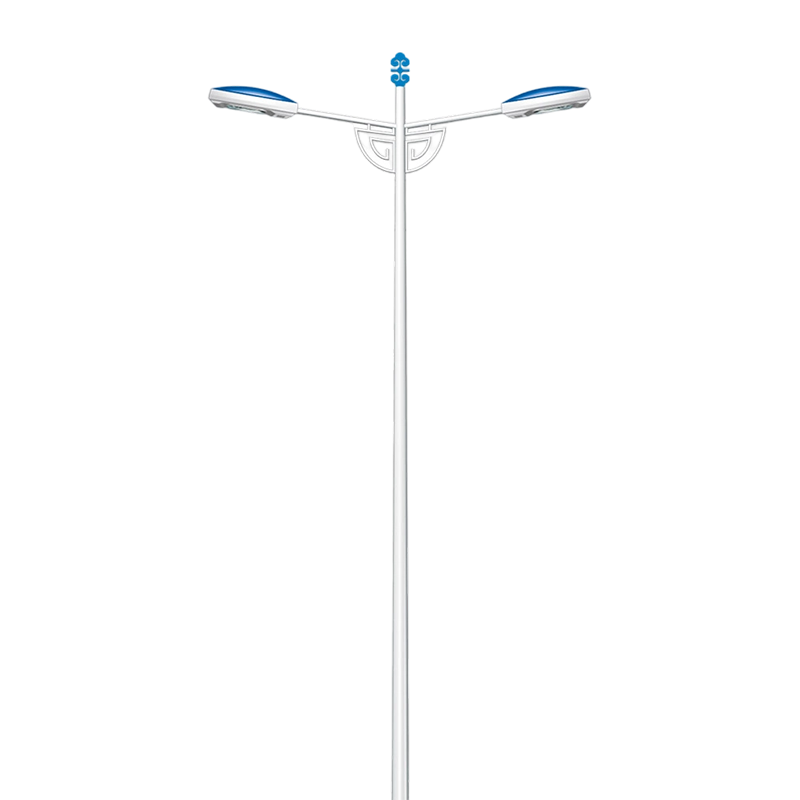
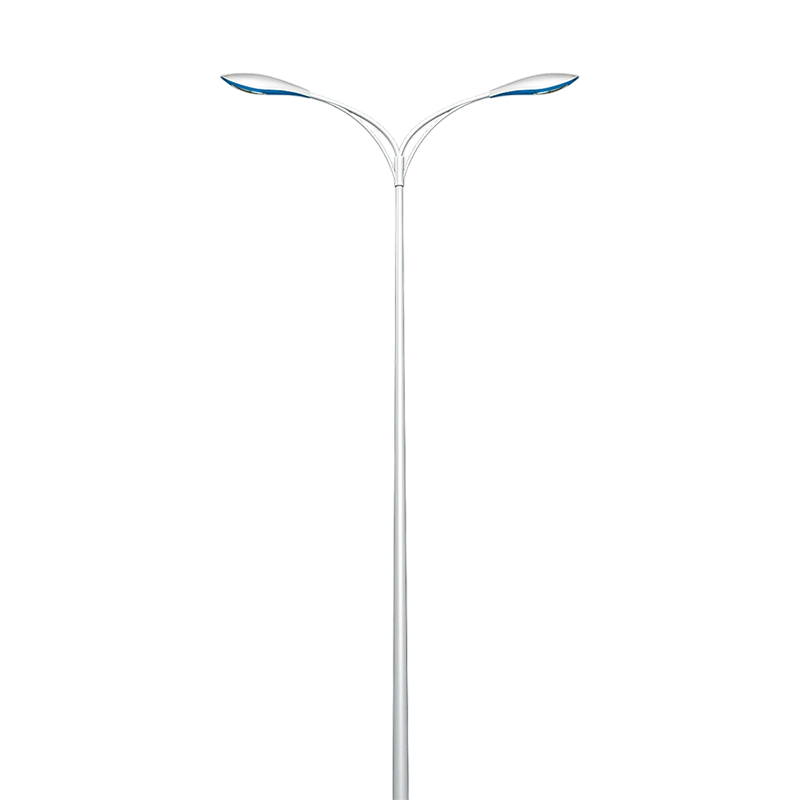
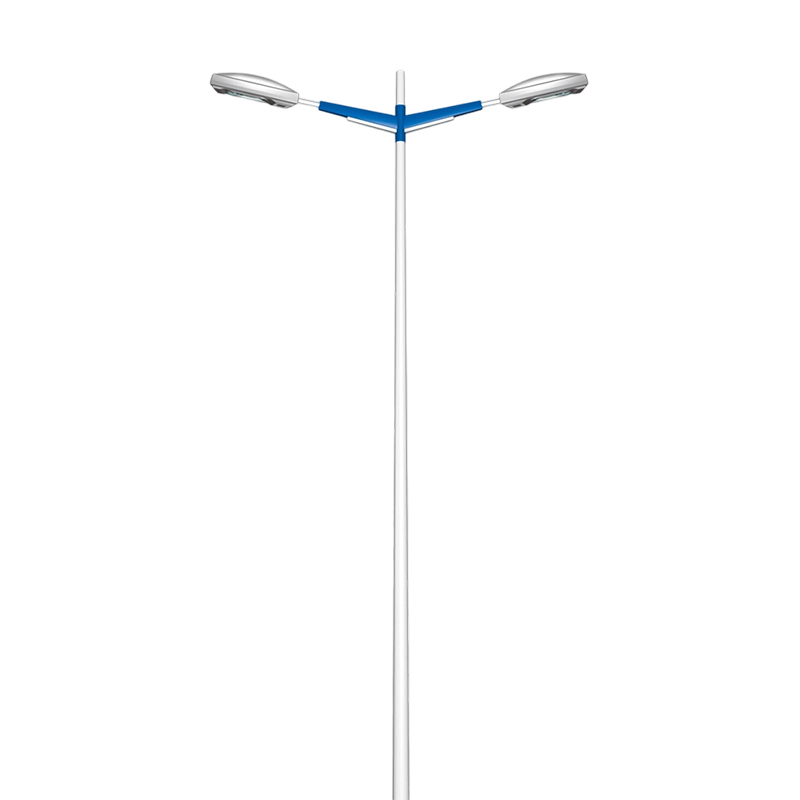
High-mast lighting — pole-mounted luminaire arrays positioned at heights typically ranging from twenty to forty-five meters — serves a category of infrastructure where lighting failure is not merely inconvenient but operationally catastrophic. An international airport with darkened taxiways cannot conduct safe aircraft operations. A major container port without adequate apron illumination halts cargo handling that may represent hundreds of millions of dollars in daily throughput. A national football stadium hosting a televised event cannot substitute temporary lighting when its permanent system fails during broadcast hours.
The consequence of this operational criticality is that high-mast lighting for transport hubs and large venues has historically been specified with reliability as the overriding priority, frequently at the expense of energy efficiency. Legacy high-pressure sodium and metal halide systems were chosen because their technology was proven, their failure modes were understood, and their replacement parts were universally available. The energy cost of running them — substantial, by any measure — was treated as a fixed operational expense rather than an optimization target.
This calculus has changed fundamentally. The combination of carbon-neutral operational targets that have become binding commitments for major airports, ports, and sports venues under national and international sustainability frameworks, with electricity prices that have increased sharply across most markets, has transformed energy efficiency from a secondary consideration to a primary specification driver. High-corrosion-resistant LED high-mast lighting is the technology that allows these facilities to meet their sustainability commitments without compromising the reliability standards their operations demand.
Why Corrosion Resistance Is the Critical Specification Parameter
The performance gap between standard LED luminaires and high-corrosion-resistant LED high-mast systems is not visible in a showroom comparison or a laboratory photometric test. It emerges over years of deployment in the specific environmental conditions that transport hubs and large sports venues impose on their lighting infrastructure — conditions that are, in many cases, among the most demanding that any outdoor electrical equipment can face.
Coastal airports, port facilities, and waterfront stadium complexes expose lighting equipment to continuous salt-laden air that penetrates every unsealed housing component and initiates electrochemical corrosion processes on metallic surfaces, circuit boards, connector contacts, and structural components simultaneously. Industrial transport hubs — freight terminals, rail yards, heavy logistics facilities — add chemical vapors, diesel exhaust particulates, and industrial cleaning agent residues to the corrosive load. High-altitude mountain venues and polar climate installations impose freeze-thaw cycling and ultraviolet radiation levels that degrade polymer seals and housing materials at rates that render standard outdoor luminaire ratings inadequate within their first service years.
Coastal transport facilities subject luminaires to continuous sodium chloride aerosol deposition that attacks aluminum housings, steel fasteners, circuit board traces, and LED driver components through galvanic and chemical corrosion mechanisms that compound with time and thermal cycling.
Fuel depots, cargo handling areas, and industrial logistics zones generate sulfur dioxide, nitrogen oxides, hydrocarbon vapors, and alkaline cleaning agent mists that attack polymer seals, degrade silicone gaskets, and penetrate housing joints rated only for water ingress protection.
High-mast luminaires experience daily thermal excursions of forty to sixty degrees Celsius between solar-heated daytime and cold night operation, creating differential expansion stresses on housing seams, lens materials, and wire penetrations that progressively compromise ingress protection over repeated cycles.
Unprotected polymer components at high-mast elevation receive unattenuated ultraviolet exposure that cracks polycarbonate lenses, degrades EPDM gasket materials, embrittles cable jackets, and fades protective coatings on aluminum housings within three to five years of initial exposure.
Luminaires mounted at twenty to forty-five meter heights experience wind-induced vibration loads that fatigue solder joints on LED arrays, loosen electrical connections, and progressively open housing seams that were adequately sealed at installation but fail under cumulative mechanical stress.
Bird habitation, insect ingress through inadequately sealed housings, and algae or moss growth on luminaire surfaces in humid climates create thermal insulation on heat dissipation surfaces, block ventilation pathways, and introduce moisture-retaining organic deposits that accelerate corrosion at contact points.
The response to these conditions in high-specification LED high-mast luminaire engineering is comprehensive and multi-layered. It begins with material selection and extends through manufacturing process, coating systems, sealing architecture, and driver electronics protection to create a system whose corrosion resistance is not merely a surface property but a structural characteristic of every component and assembly joint.
Engineering Corrosion Resistance: Materials, Coatings, and Sealing Systems
Housing Material Selection and Surface Treatment
The primary housing of a high-corrosion-resistant LED high-mast luminaire is typically manufactured from marine-grade aluminum alloy — most commonly ADC12 die-cast or 6061-T6 extrusion — selected for its inherent aluminum oxide passive layer that provides baseline corrosion resistance before any surface treatment is applied. This passive layer is then enhanced through a multi-step surface treatment process that begins with chemical conversion coating for improved adhesion and corrosion resistance, followed by powder coating with a minimum film thickness of sixty to eighty microns in formulations tested to exceed three thousand hours of salt spray exposure without blistering, cracking, or adhesion failure.
For the most demanding marine and industrial atmospheres, premium high-mast luminaire specifications add a second protective layer through anodizing prior to powder coating — a process that converts the outer aluminum surface to aluminum oxide at depths of fifteen to twenty-five microns, creating a substrate so chemically stable that the subsequent powder coat requires only substrate adhesion rather than performing barrier corrosion protection independently. The combined system achieves ASTM B117 salt spray test ratings exceeding five thousand hours — a performance level that extends service life in the most aggressive coastal environments by a factor of two to three compared with standard outdoor-rated luminaire construction.
Sealing Architecture and Ingress Protection
The ingress protection rating of an LED luminaire, expressed in the IP code framework, specifies the degree of protection against solid particle penetration and water ingress that the enclosure provides under standardized test conditions. For high-mast lighting in challenging environments, the minimum acceptable specification is IP65 — complete dust exclusion and protection against water jets from any direction. High-corrosion-resistant specifications for transport hub and venue applications typically demand IP66 or IP67 ratings, with premium coastal and industrial installations specifying IP69K — the highest water ingress protection rating in the standard, covering protection against high-pressure, high-temperature water jets that simulate the pressure washing used to clean heavily fouled luminaire housings at port facilities.
Achieving and maintaining these ratings over the luminaire's service life requires sealing systems that resist the thermal cycling, UV exposure, and mechanical vibration described above. Leading manufacturers specify silicone gaskets with proven UV resistance and compression set performance at temperature extremes, stainless steel fasteners with anti-galling compound to prevent corrosion seizure that would make maintenance disassembly impossible, and lens-to-housing joints designed with labyrinthine geometry that prevents capillary water ingress even when primary gasket compression is reduced by thermal relaxation.
LED High-Mast Performance Specifications — Corrosion-Resistant Grade
Driver Electronics and Surge Protection
The LED driver — the electronic power conversion and control unit that regulates current to the LED array — represents the most failure-prone component in an LED luminaire under corrosive operating conditions. Driver electronics are vulnerable to the same chemical environments that attack the housing, with the additional complexity that voltage transients, power surges from nearby lightning strikes, and electrical noise from industrial equipment create electromagnetic stress that compounds the chemical degradation of driver components.
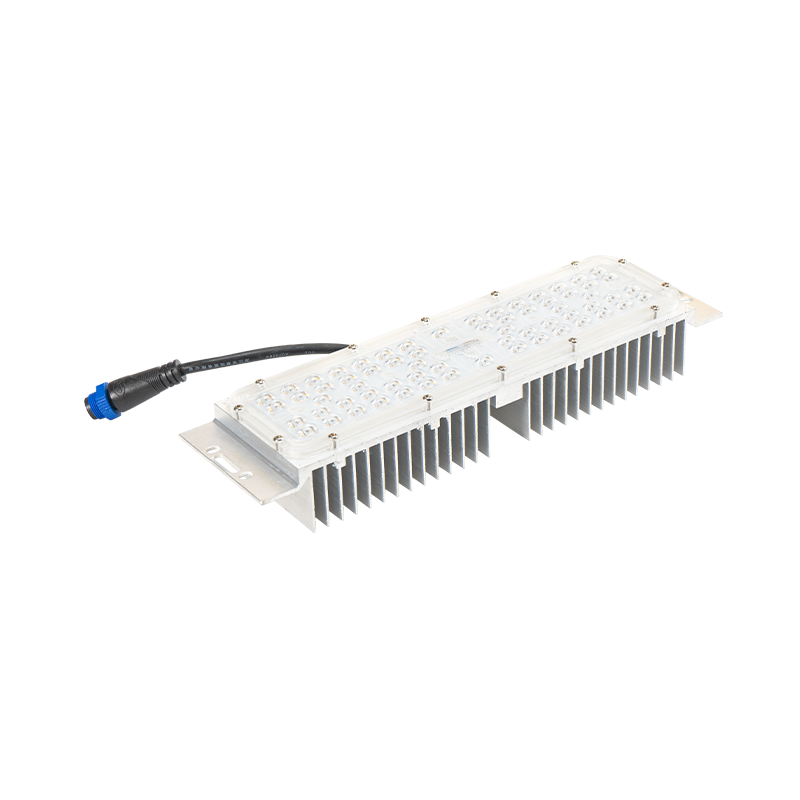
High-specification LED high-mast drivers for transport hub and venue applications are specified with surge protection devices capable of absorbing ten kilojoule or greater energy transients, conformal coating on all circuit board surfaces to prevent moisture and contaminant ingress to solder joints and component leads, and operating temperature ratings validated to the full ambient range the installation will experience — a specification that eliminates the majority of driver failures that occur when standard-rated units operate beyond their thermal design envelope during summer peak conditions at exposed high-mast heights.
Energy Efficiency: The Green Infrastructure Dividend
The energy efficiency advantage of LED high-mast lighting over the legacy high-pressure sodium and metal halide systems it replaces is not marginal. It is transformational. A typical high-pressure sodium high-mast system operating at four hundred watts per luminaire — a common specification for transport hub apron and roadway lighting — produces approximately forty-five thousand lumens of light output, of which a significant portion is emitted in non-visible infrared and in directions that require optical redirection to reach the target illumination area. The effective luminous flux reaching the target plane, accounting for optical losses in reflector systems, may represent seventy to seventy-five percent of the lamp output.
A current-generation corrosion-resistant LED high-mast luminaire of equivalent photometric output operates at one hundred to one hundred and thirty watts, representing a direct energy consumption reduction of sixty-seven to seventy-five percent for identical illumination performance. The precision optical distribution of LED luminaires — achievable through injection-molded secondary optics that place light precisely within the target area boundaries — further improves site-level energy efficiency by reducing the spillage illumination that requires either waste acceptance or additional system oversizing to compensate.
When we completed the LED high-mast retrofit across our three primary cargo aprons, the monthly electricity consumption for apron lighting dropped by seventy-two percent. The payback calculation we had used for project approval assumed sixty percent. The additional saving came from dimming during low-traffic night periods that our previous system could not support. Director of Infrastructure, Major Asian Container Port
Dimming, Controls, and Demand-Responsive Operation
The dimmability of LED high-mast systems unlocks an additional layer of energy saving that is structurally unavailable to legacy discharge lamp systems. High-pressure sodium and metal halide lamps cannot be dimmed below fifty to sixty percent of rated output without compromising lamp life and stability. LED systems can be dimmed to ten percent of rated output and returned to full output within seconds, enabling control strategies that precisely match illumination levels to real-time operational demand rather than providing constant maximum illumination regardless of activity level.
In transport hub applications, this capability enables lighting management systems that link luminaire output to traffic sensor data — reducing motorway interchange illumination during low-traffic periods between midnight and five in the morning, increasing output automatically when detection systems identify vehicle density returning to daytime levels, and providing full illumination in zones of active cargo handling or aircraft movement while maintaining reduced output in unoccupied areas of large aprons. Facilities implementing these demand-responsive strategies report additional energy savings of twenty to thirty-five percent beyond the baseline LED efficiency gain, bringing total energy reduction compared with legacy systems to eighty to eighty-five percent in optimally managed installations.
Transport Hub Applications: Airports, Ports, and Road Infrastructure
Taxiway edge lighting, apron floodlighting, cargo terminal illumination, and perimeter security lighting at major airports represent one of the highest-value LED high-mast retrofit opportunities globally. The combination of continuous twenty-four-hour operation, high installed system power, and aviation authority illumination uniformity requirements makes both the energy saving potential and the specification demands on corrosion-resistant LED systems particularly acute.
Port facilities combine the most demanding corrosion environment — continuous marine atmosphere salt loading combined with industrial chemical exposure from cargo handling operations — with illumination requirements driven by crane operating safety and container stack identification demands. LED high-mast systems at ports must maintain photometric performance and ingress protection through salt spray cycles that test the limits of standard corrosion protection specifications.
Major highway infrastructure represents the largest installed base of high-mast lighting globally and the greatest aggregate energy saving opportunity for LED conversion programs. Tunnel portal lighting, interchange apron illumination, and elevated junction lighting all require luminaires capable of operating in vehicle exhaust and road chemical environments across the full ambient temperature range of their geographic locations.
Rail marshalling yards and intermodal freight terminals combine the operational demands of twenty-four-hour heavy equipment operation — requiring consistent high-illumination-level operation — with the corrosive environments generated by diesel locomotive emissions, cargo chemical spillage, and industrial cleaning regimes. LED high-mast systems for rail applications must demonstrate vibration resistance to the ground-borne vibration transmitted through infrastructure mounted in proximity to heavy rail operations.
Large Sports Venues: Broadcast Standards and Spectator Experience
The lighting requirements of large sports venues occupy a distinct technical category from transport hub illumination, defined not primarily by safety thresholds but by the demanding photometric specifications of high-definition broadcast television. Modern HD and 4K broadcast production requires horizontal illuminance levels at playing surface height of one thousand five hundred to two thousand lux for national broadcast events, with vertical illuminance specifications that ensure athletes and the ball are fully rendered regardless of camera position around the perimeter and at elevated broadcast positions. Uniformity ratios — the relationship between minimum and average illuminance across the playing surface — must meet FIFA, UEFA, World Athletics, or equivalent governing body standards that allow no dark zones or bright spots detectable by broadcast cameras.
Meeting these specifications with LED high-mast systems requires luminaires with color rendering index values of Ra 80 or above — a specification that ensures the color accuracy of team uniforms, playing surface markings, and athlete skin tones is faithfully reproduced in both broadcast and spectator perception — and color temperature uniformity across all luminaires of the installation that prevents the greenish or warm patches visible in installations where luminaires of differing color temperatures are mixed. Premium broadcast-grade LED high-mast systems for major venues specify color temperature tolerance of plus or minus one hundred and fifty Kelvin across all luminaires in the installation, a consistency that requires factory binning and matching of LED arrays before assembly.
Corrosion Resistance in Open-Air Stadium Environments
Large outdoor sports venues present corrosion challenges that differ from transport hubs in their intermittency but not in their severity. Coastal stadium sites experience the same marine atmosphere loading as port facilities. Venues in tropical climates combine high humidity, frequent rain events, and biological growth conditions that challenge luminaire sealing systems. The elevated positions of stadium high-mast systems expose them to wind loads and UV radiation levels that require the full corrosion-resistant specification grade to achieve the twenty-year service life that major venue infrastructure investment requires.
The additional complexity in stadium applications is the interaction between the high-power LED arrays required for broadcast-grade illumination and the thermal management demands of continuous full-output operation during evening events. LED junction temperature must be maintained within the manufacturer's rated operating range throughout events — potentially four to five hours of full-output operation — to prevent lumen depreciation, color shift, and premature aging of LED arrays. The thermal management systems of corrosion-resistant LED high-mast luminaires for sports venues must therefore balance the competing requirements of heat dissipation and housing sealing — requirements that are in fundamental engineering tension and that are resolved differently at different price and performance points in the product market.
Lifecycle Cost Analysis and the Green Investment Case
| Parameter | LED High-Mast (Corrosion-Resistant) | High-Pressure Sodium | Metal Halide |
|---|---|---|---|
| Typical wattage (equivalent output) | 100-150W | 400W | 350W |
| Luminous efficacy | 160-180 lm/W | 100-130 lm/W | 75-100 lm/W |
| Rated service life | 80,000-100,000 hr | 24,000-32,000 hr | 10,000-20,000 hr |
| Lamp/source replacement interval | None (integrated LED) | Every 3-4 years | Every 1-2 years |
| Dimming capability | 10-100%, instant response | Not practical | Limited, slow response |
| Warm-up to full output | Instant | 3-5 minutes | 5-15 minutes |
| Corrosive environment service life | 20-25 years with CR grade | 10-15 years | 8-12 years |
| 20-year energy cost (per luminaire) | Lowest | Highest | Moderate |
Lifecycle Cost and Carbon Reduction Calculation Framework
- Baseline energy cost assessment: Calculate current annual electricity consumption across the installed high-mast luminaire population using metered consumption data or installed wattage multiplied by operational hours. Apply current and projected electricity tariff rates to establish the energy cost baseline over the investment horizon.
- LED energy saving quantification: Apply the measured or manufacturer-certified wattage reduction per luminaire, adjusted for actual operational hours including dimmed periods, to calculate annual energy saving in kilowatt-hours. Convert to carbon dioxide equivalent using the applicable grid emission factor for the facility's electricity supply region.
- Maintenance cost reduction: Quantify the avoided cost of lamp replacement labor and materials for legacy systems over the investment horizon, including the access equipment hire and traffic management costs associated with high-mast lamp changing operations. In many transport hub environments, these avoided costs represent twenty to thirty percent of total lifecycle saving.
- Carbon credit and regulatory compliance value: Where the facility operates under a carbon trading scheme or voluntary carbon reduction commitment, calculate the compliance value of verified emission reductions attributable to the LED conversion, including any applicable green infrastructure incentive payments from utility or government programs.
- Reduced failure risk premium: Assign a financial value to the reduced operational disruption risk from LED reliability versus legacy system failure rates, expressed as avoided incident cost weighted by failure probability and operational consequence severity. For airport and port facilities, this avoided cost component can be substantial.
Specification and Procurement Considerations for Infrastructure Operators
The procurement of LED high-mast lighting for major transport and venue infrastructure differs from standard luminaire procurement in its emphasis on verified long-term performance rather than initial photometric specification. A luminaire that meets its photometric specification at commissioning but degrades to sixty percent of initial output within five years due to inadequate corrosion protection fails the investment case regardless of its initial performance credentials. The specification and verification framework must therefore address performance maintenance over the full design service life as rigorously as it addresses initial performance.
Essential Specification Requirements for Corrosion-Resistant High-Mast LED Procurement
- Third-party corrosion test certification: Require independently witnessed ASTM B117 salt spray test results to a minimum of three thousand hours for standard installations and five thousand hours for coastal and industrial marine environments, not manufacturer self-certification.
- LM-80 LED lumen maintenance data: Require Illuminating Engineering Society LM-80 test data for the specific LED array used in the luminaire, with TM-21 projected L70 service life calculation that conservatively extrapolates measured depreciation data to the rated service life claim.
- IP rating independent verification: Require ingress protection ratings verified by accredited third-party test laboratories under IEC 60529, with test documentation specifying the exact luminaire configuration tested including all cable entry points and mounting interface components.
- Surge protection rating documentation: Specify minimum ten kilojoule surge protection capacity for locations exposed to lightning risk, with IEC 61643 compliance documentation for the specific surge protection devices installed in the driver assembly.
- Photometric data in IES format: Require photometric test data in Illuminating Engineering Society standard IES file format conducted by accredited independent laboratories, enabling verification through standard lighting design software of the illuminance distribution claims used in system design.
- Warranty terms covering corrosion failure modes: Review warranty documentation to confirm that corrosion-related failures within the warranty period are explicitly covered, as standard luminaire warranties frequently exclude environmental damage from warranty scope through broad exclusion clauses.
- Demonstrated project references in comparable environments: Require verifiable project references in installations with similar corrosive environment exposure, with contact information for facility maintenance engineers who can provide direct performance assessment data from operational systems.
The Green Infrastructure Imperative: Policy, Investment, and the Lighting Transition
The policy environment supporting LED high-mast lighting upgrades at transport hubs and large venues has strengthened substantially since the early adoption phase of a decade ago. Carbon-neutral airport commitments under the Airport Carbon Accreditation program, port sustainability frameworks developed through the World Ports Sustainability Program, and venue sustainability certification schemes linked to major sporting event hosting rights have created institutional pressures that treat lighting energy reduction not as a voluntary efficiency initiative but as a compliance requirement with material consequences for facility certification and event hosting eligibility.
Green bond financing for LED infrastructure upgrades has emerged as a significant capital mobilization mechanism, allowing transport authorities and venue operators to fund conversion programs at scale using debt instruments whose use-of-proceeds requirements are satisfied by the verified carbon reduction outcome of the LED upgrade. The structured reporting of energy savings and carbon reduction that LED high-mast systems enable through integrated monitoring systems provides the verification data that green bond frameworks require, creating a financing mechanism that is self-legitimating through the measurable environmental outcomes it funds.
National infrastructure investment programs in major economies have specifically identified transport hub lighting upgrades as eligible for green infrastructure stimulus funding, recognizing the combination of verified carbon reduction, long-term employment in installation and manufacturing, and improved facility safety that LED high-mast programs deliver. This policy support has reduced the effective capital cost of conversion programs for public transport facilities and opened pathways for facilities that could not have justified the investment on energy saving economics alone to participate in the transition.
The result of these converging forces is a global LED high-mast lighting transition that is now well past its early-adopter phase and moving into the mainstream infrastructure renewal cycle. The technology is proven, the economics are clear, the financing mechanisms exist, and the regulatory environment increasingly demands action. For the airports, ports, highway authorities, and sports venue operators who have not yet committed to the conversion, the question is no longer whether to make this investment. It is how quickly they can execute a program whose environmental and financial returns compound from the day the first legacy luminaire is replaced with a corrosion-resistant LED system designed to serve, reliably and efficiently, for the next quarter century.