


JINYUAN
JINYUAN
JINYUAN
JINYUAN
JINYUAN
JINYUAN
JINYUAN
JINYUAN
JINYUAN
JINYUAN
JINYUAN
JINYUAN
JINYUAN
JINYUAN
JINYUAN
JINYUAN
Content
- 1 1. Understanding Narrow Beam Lighting Fundamentals
- 2 2. What Makes a Narrow Beam Lighting System High Efficiency
- 3 3. Core Components of a Precision Narrow Beam System
- 4 4. Key Advantages of High-Efficiency Precise Narrow Beam Lighting
- 5 5. Typical Application Scenarios
- 6 6. Design Considerations for Implementation
- 7 7. Comparison with Conventional Wide Beam Lighting
- 8 8. Integration with Smart Control Systems
- 9 9. Maintenance and Longevity Factors
- 10 10. Future Development Directions
- 11 11. Conclusion
In modern industrial and technical environments, lighting is no longer simply about illumination. It has become a precision tool that directly affects measurement accuracy, energy consumption, and overall system performance. Among the various lighting technologies developed in recent years, high-efficiency precise narrow beam lighting has emerged as a critical solution for applications that demand concentrated illumination, minimal light scatter, and exceptional energy performance. From machine vision systems to specialized industrial processes, this lighting approach is reshaping how engineers think about light delivery and control.
1. Understanding Narrow Beam Lighting Fundamentals
Narrow beam lighting refers to illumination systems engineered to concentrate light output within a tightly controlled angular range, rather than dispersing it broadly across a wide area. Unlike conventional flood lighting, which spreads light over large surfaces with reduced intensity, narrow beam systems direct nearly all available luminous energy toward a specific target zone.
This concentration of light brings two major advantages. First, it dramatically increases the effective intensity at the target point without requiring additional power input. Second, it minimizes light loss to surrounding areas, reducing wasted energy and unwanted glare or reflection that could interfere with sensitive equipment or measurement processes.
2. What Makes a Narrow Beam Lighting System High Efficiency
The term high efficiency in the context of narrow beam lighting refers to the ratio between input electrical energy and usable light output delivered precisely to the intended target. Several engineering factors contribute to achieving this level of performance.
2.1 Optical Design and Collimation
Precision optics, including specialized lenses, reflectors, and collimating elements, play a central role in shaping the light path. Well-engineered optical assemblies reduce stray light and ensure that the majority of emitted photons travel within the desired narrow angle, rather than being lost as scattered or unfocused light.
2.2 Light Source Selection
The choice of light source significantly impacts overall efficiency. Solid-state sources such as high-output LEDs are commonly used due to their favorable balance of brightness, longevity, and controllable spectral characteristics, allowing narrow beam systems to maintain consistent performance over extended operational periods.
2.3 Thermal Management
High-intensity narrow beam systems generate concentrated heat at the source. Efficient thermal management, through heat sinks, conductive materials, or active cooling, helps maintain stable output and extends the operational lifespan of the lighting components.
High-efficiency precise narrow beam lighting is not defined by raw brightness alone, but by how effectively that brightness is delivered to exactly where it is needed, with minimal energy waste and maximum control over the resulting light pattern.
3. Core Components of a Precision Narrow Beam System
A complete narrow beam lighting solution typically integrates several functional components, each contributing to the overall precision and performance of the system.
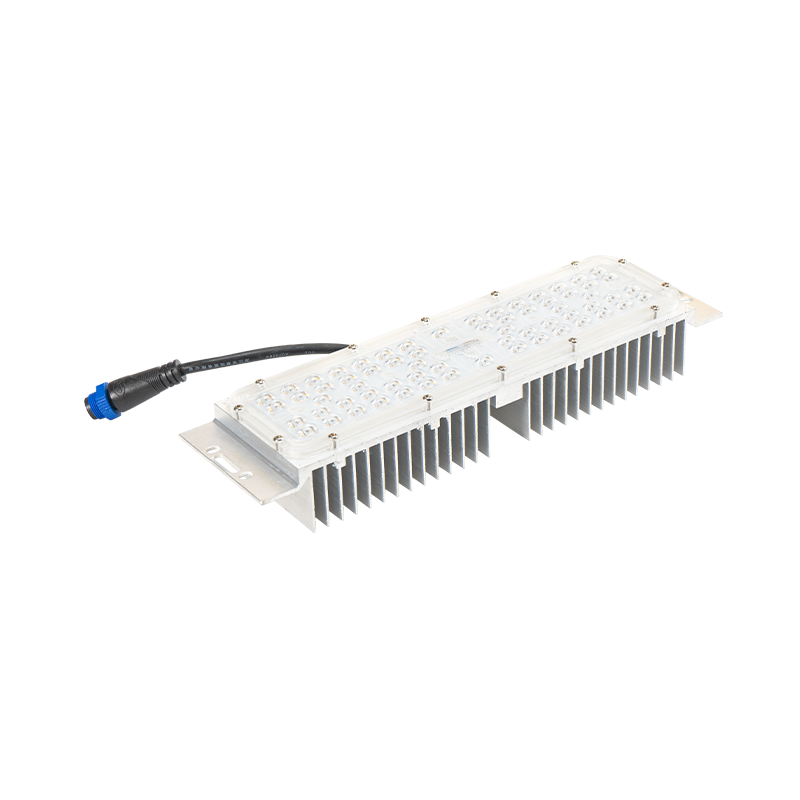
| Component | Function | Impact on Performance |
|---|---|---|
| Light Source Module | Generates the base illumination | Determines brightness, color consistency, and lifespan |
| Collimating Optics | Shapes and focuses light into a narrow path | Controls beam angle and reduces light scatter |
| Driver Circuitry | Regulates power delivery to the light source | Ensures stable output and energy efficiency |
| Thermal Management System | Dissipates heat generated during operation | Maintains long-term performance stability |
| Housing and Mounting Structure | Protects internal components and enables positioning | Supports durability and accurate beam alignment |
4. Key Advantages of High-Efficiency Precise Narrow Beam Lighting
Compared to traditional broad-angle lighting solutions, high-efficiency precise narrow beam systems offer several distinct advantages that make them particularly valuable in technical and industrial settings.
4.1 Superior Light Concentration
By focusing nearly all output within a narrow angular range, these systems achieve much higher intensity at the target point compared to flood lighting of similar power consumption.
4.2 Reduced Energy Consumption
Because less light energy is wasted on unintended areas, narrow beam systems can achieve the same effective brightness at the target using significantly less input power.
4.3 Improved Measurement and Detection Accuracy
In applications involving sensors, cameras, or inspection equipment, consistent and concentrated illumination reduces shadow artifacts and improves the reliability of captured data.
4.4 Minimized Glare and Light Pollution
Tightly controlled beam angles prevent excess light from spilling into surrounding areas, reducing glare for nearby personnel and minimizing interference with adjacent equipment.
5. Typical Application Scenarios
High-efficiency precise narrow beam lighting has found practical use across a wide range of industries, each leveraging its unique advantages for specific operational needs.
5.1 Machine Vision and Industrial Inspection
Narrow beam lighting is frequently used to highlight specific surface features, edges, or defects during automated inspection processes, improving the accuracy of image-based quality control systems.
5.2 Precision Manufacturing and Assembly
During delicate assembly operations, focused lighting helps operators or automated systems clearly distinguish small components, alignment marks, or critical reference points.
5.3 Architectural and Display Lighting
Narrow beam fixtures are commonly used to highlight specific objects, signage, or architectural features, drawing attention to a defined area while keeping surrounding regions dim.
5.4 Security and Surveillance Systems
Concentrated lighting improves the performance of surveillance cameras by ensuring sufficient illumination on monitored zones without excessive light spillover that could create unwanted shadows or glare for sensors.
5.5 Outdoor and Long-Distance Illumination
In scenarios requiring illumination of distant targets, such as perimeter lighting or signal projection, narrow beam designs maintain usable brightness levels over greater distances compared to wide-angle alternatives.
6. Design Considerations for Implementation
Successfully deploying a high-efficiency precise narrow beam lighting solution requires careful attention to several design factors that influence both performance and reliability.
- Target distance and required beam angle must be calculated to ensure consistent intensity at the intended working distance
- Ambient lighting conditions should be assessed to determine the necessary brightness contrast for effective illumination
- Thermal performance under continuous operation must be evaluated to prevent output degradation over time
- Mounting stability and alignment precision are critical for maintaining consistent beam targeting
- Compatibility with existing control systems should be verified for applications requiring dimming or synchronized operation
7. Comparison with Conventional Wide Beam Lighting
| Comparison Aspect | Conventional Wide Beam Lighting | High-Efficiency Precise Narrow Beam Lighting |
|---|---|---|
| Light Distribution | Spread across a broad area | Concentrated within a controlled angle |
| Energy Efficiency | Lower effective intensity per watt | Higher effective intensity per watt |
| Target Precision | Limited control over specific zones | High precision targeting of defined areas |
| Glare and Spillover | Higher risk of unwanted glare | Minimized glare due to controlled beam angle |
| Suitability for Sensing Applications | Less consistent for precision detection | Well suited for vision and sensor-based systems |
8. Integration with Smart Control Systems
Modern narrow beam lighting solutions are increasingly designed to integrate with intelligent control platforms, enabling dynamic adjustment of brightness, beam direction, and operational timing. This integration allows lighting systems to respond automatically to changing environmental conditions or process requirements, further enhancing overall energy efficiency.
In industrial automation environments, narrow beam lighting can be synchronized with sensor triggers or production line cycles, ensuring illumination is active only when needed. This not only reduces unnecessary energy consumption but also extends the operational lifespan of the lighting components by limiting continuous use.
9. Maintenance and Longevity Factors
To preserve the performance benefits of high-efficiency precise narrow beam lighting over time, several maintenance considerations should be observed.
- Regular inspection of optical components to ensure lenses and reflectors remain free of dust or debris that could scatter light
- Periodic verification of beam alignment to confirm the lighting continues to target the intended area accurately
- Monitoring of thermal performance to detect early signs of component degradation
- Scheduled assessment of driver circuitry to ensure consistent power delivery and prevent output fluctuations
10. Future Development Directions
As demand for precision lighting continues to grow across automation, manufacturing, and sensing industries, several trends are shaping the future of high-efficiency precise narrow beam lighting technology.
10.1 Adaptive Beam Shaping
Emerging optical technologies are enabling dynamic adjustment of beam angle and focus in real time, allowing a single lighting unit to adapt to varying application requirements without physical reconfiguration.
10.2 Enhanced Spectral Control
Future systems are expected to offer greater control over the spectral composition of emitted light, allowing customization for specific sensing or visual contrast requirements.
10.3 Deeper Integration with Automation Networks
Narrow beam lighting systems are increasingly being designed as connected components within broader automation ecosystems, enabling centralized monitoring and coordinated operation across multiple lighting units.
10.4 Continued Efficiency Improvements
Ongoing advancements in light source technology and optical engineering continue to push efficiency levels higher, reducing energy consumption while maintaining or improving output precision.
11. Conclusion
High-efficiency precise narrow beam lighting represents a meaningful evolution in how illumination is engineered and applied across industrial, technical, and commercial settings. By concentrating light output with exceptional precision while minimizing energy waste, these systems address the growing demand for accuracy, reliability, and sustainability in modern lighting applications. As optical engineering and control technologies continue to advance, organizations that adopt and properly implement narrow beam lighting solutions stand to gain significant improvements in operational performance, energy efficiency, and overall system reliability.