


JINYUAN
JINYUAN
JINYUAN
JINYUAN
JINYUAN
JINYUAN
JINYUAN
JINYUAN
JINYUAN
JINYUAN
JINYUAN
JINYUAN
JINYUAN
JINYUAN
JINYUAN
JINYUAN
Content
- 1 What Is High Mast Lighting and How Does It Compare to Traditional Lighting?
- 2 High Mast Lighting vs Traditional Lighting: Key Differences in Design and Structure
- 3 Energy Efficiency: High Mast Lighting vs Traditional Lighting Systems
- 4 High Mast Lighting and LED Technology: A Game Changer for Large-Scale Illumination
- 5 References / Sources
What Is High Mast Lighting and How Does It Compare to Traditional Lighting?
What Is High Mast Lighting?
High Mast Lighting refers to an advanced outdoor illumination system designed specifically for large-scale environments where wide, uniform light distribution is required. Unlike conventional lighting systems that rely on multiple low-height poles, High Mast Lighting utilizes tall poles—typically ranging from 15 meters to 50 meters—equipped with multiple high-output luminaires mounted at the top. These systems are engineered to deliver high-intensity illumination over expansive areas such as stadiums, airports, highways, ports, industrial yards, and large parking facilities.
A standard High Mast Lighting system consists of three primary components: the mast structure, the luminaire assembly, and the lowering or raising mechanism. The mast is usually constructed from high-strength steel and designed to withstand extreme wind loads, corrosion, and environmental stress. The luminaire assembly often incorporates LED floodlights with precise optical lenses to ensure targeted light distribution. The lowering system, typically motorized or manual, allows the lighting ring to descend to ground level for maintenance, eliminating the need for cranes or aerial lifts.
From a photometric perspective, High Mast Lighting is optimized to achieve high lux levels with minimal glare and excellent uniformity ratios. The elevated mounting height allows light to spread more evenly across large surfaces, reducing the number of poles required and minimizing shadow zones. This makes it particularly suitable for applications where visibility and safety are critical, such as airport aprons and sports arenas.
Another defining characteristic of High Mast Lighting is its integration with LED technology. Modern systems utilize high-lumen LED fixtures that offer superior efficacy (measured in lumens per watt), longer lifespan (often exceeding 50,000 hours), and reduced maintenance cycles compared to traditional light sources like metal halide or high-pressure sodium lamps. Additionally, LED-based High Mast Lighting supports advanced control systems, including dimming, motion sensing, and remote monitoring via IoT platforms.
Below is a parameter comparison table illustrating typical specifications of High Mast Lighting systems:
| Parameter | High Mast Lighting (LED) |
| Mounting Height | 15m – 50m |
| Luminous Efficacy | 120 – 180 lm/W |
| Lifespan | 50,000 – 100,000 hours |
| Beam Angle Options | 10° – 120° |
| Color Temperature | 3000K – 6500K |
| IP Rating | IP65 – IP67 |
| CRI (Color Rendering Index) | ≥70 / ≥80 |
| Maintenance Method | Lowering system |
The engineering design of High Mast Lighting also incorporates wind resistance calculations, typically conforming to international standards such as EN 40 or ANSI/TIA-222. The structural integrity of the mast is critical, especially in coastal or high-wind regions where dynamic loads can significantly impact performance.
In terms of application-specific customization, High Mast Lighting systems can be tailored with different lumen packages, beam distributions, and control interfaces. For example, in stadium environments, lighting must meet broadcasting standards, requiring flicker-free operation and high CRI values. In airport settings, the emphasis shifts toward glare control and consistent illumination for ground operations.
How Does High Mast Lighting Compare to Traditional Lighting?
When comparing High Mast Lighting to traditional lighting systems, the differences become evident across multiple dimensions, including design philosophy, performance metrics, operational efficiency, and lifecycle cost.
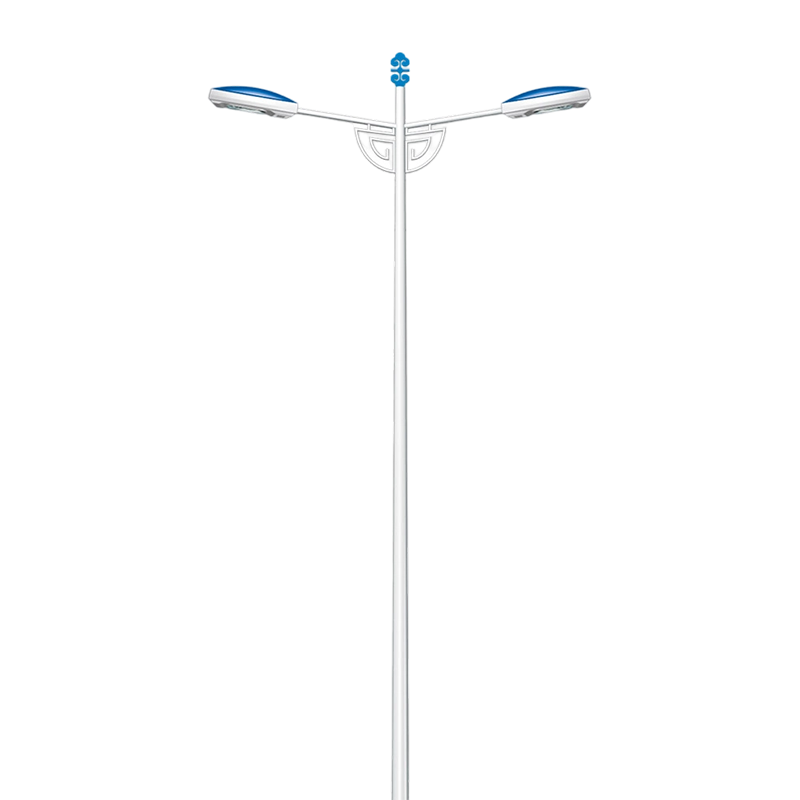
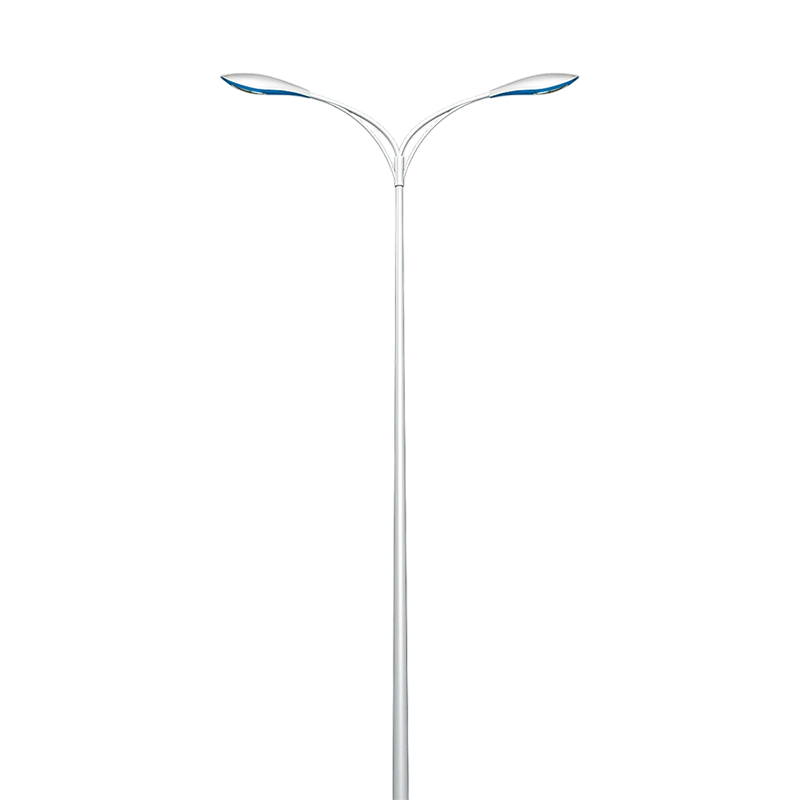
Traditional lighting systems typically consist of shorter poles (6m to 12m) equipped with single or dual luminaires. These systems are widely used in street lighting, small parking lots, and residential areas. However, when applied to large areas, traditional lighting requires a dense network of poles to achieve adequate illumination, which can lead to increased installation complexity, higher energy consumption, and inconsistent lighting quality.
One of the most significant differences lies in illumination coverage. High Mast Lighting, due to its elevated height and multi-luminaire configuration, can cover a much larger area with fewer poles. This not only reduces infrastructure costs but also enhances aesthetic appeal by minimizing visual clutter. In contrast, traditional lighting systems often produce overlapping light patterns that can result in uneven brightness and shadowing.
Energy efficiency is another critical factor. High Mast Lighting systems equipped with LED technology offer significantly higher luminous efficacy compared to traditional systems that rely on older technologies such as metal halide or high-pressure sodium lamps. This translates into lower energy consumption for the same or higher light output.
The following table provides a comparative overview:
| Parameter | High Mast Lighting | Traditional Lighting |
| Pole Height | 15m – 50m | 6m – 12m |
| Coverage Area per Pole | Very Large | Limited |
| Number of Poles Required | Low | High |
| Light Uniformity | High | Moderate |
| Energy Efficiency | High (LED-based) | Lower |
| Maintenance Frequency | Low | High |
| Installation Complexity | Moderate | High (due to quantity) |
| Glare Control | Advanced optics | Limited |
Maintenance practices also differ substantially. High Mast Lighting systems are designed with integrated lowering mechanisms, allowing technicians to safely perform maintenance at ground level. Traditional lighting, on the other hand, often requires lift equipment or scaffolding, increasing labor costs and downtime.
From a cost perspective, High Mast Lighting may involve higher initial investment due to the complexity of the mast structure and advanced lighting components. However, the total cost of ownership (TCO) tends to be lower over time because of reduced energy consumption, fewer fixtures, and minimized maintenance requirements. Traditional lighting systems may appear more economical upfront but can incur higher operational expenses in the long run.
Environmental impact is another area where High Mast Lighting demonstrates advantages. LED-based systems reduce carbon emissions through lower energy usage and longer replacement cycles. Advanced optical designs help minimize light pollution by directing light precisely where it is needed, reducing upward light spill.
Control and automation capabilities further differentiate the two systems. High Mast Lighting can be integrated with smart lighting controls, enabling features such as adaptive lighting, remote diagnostics, and scheduling. Traditional systems are often limited to basic on/off functionality, lacking the flexibility required for modern infrastructure projects.
In high-demand environments such as airports and stadiums, the limitations of traditional lighting become more pronounced. These settings require consistent, high-quality illumination with strict compliance to international standards. High Mast Lighting systems are specifically engineered to meet these requirements, offering superior performance in terms of brightness, uniformity, and reliability.
The structural and electrical design considerations also vary. High Mast Lighting requires careful planning of foundation design, wind load calculations, and electrical distribution due to the height and load concentration. Traditional lighting systems, while simpler in structure, demand more extensive wiring networks and distribution points due to the higher number of poles.
High Mast Lighting vs Traditional Lighting: Key Differences in Design and Structure
Structural Design of High Mast Lighting Systems
High Mast Lighting systems are engineered as integrated vertical structures designed to support multiple high-power luminaires at significant heights, typically ranging from 15 meters to 50 meters. The structural design begins with the foundation, which must accommodate substantial axial loads, bending moments, and dynamic wind forces. Foundations are usually reinforced concrete blocks calculated based on soil bearing capacity, mast height, and regional wind speed standards such as EN 40 or ANSI/TIA-222.
The mast itself is commonly fabricated from high-tensile steel, often in polygonal or circular tapered sections. These sections are joined through slip-fit connections or flange-mounted joints depending on the height and transportation constraints. The tapering geometry is critical in optimizing weight distribution while maintaining structural integrity against lateral forces. Hot-dip galvanization is applied to protect against corrosion, especially in coastal, airport, and industrial environments where exposure to moisture, salt, and chemicals is significant.
At the top of the mast, a headframe or crown assembly supports a circular or polygonal luminaire ring. This ring can hold anywhere from 4 to 30 LED floodlights, depending on the application requirements such as stadium lighting, airport apron lighting, or port high mast illumination. The ring is designed with precise load balancing to ensure even weight distribution and prevent mechanical stress concentrations during operation and maintenance.
One of the defining structural features of High Mast Lighting is the integrated lowering system. This system typically consists of a motorized winch, stainless steel wire ropes, pulleys, and a braking mechanism. The design allows the luminaire ring to be safely lowered to ground level for maintenance, eliminating the need for aerial lift equipment. The wire ropes are engineered with high safety factors, often exceeding 5:1, and are resistant to fatigue, corrosion, and tensile stress.
The internal routing of electrical cables within the mast is another critical design aspect. Cables are guided through cable trays or conduits to prevent abrasion during raising and lowering operations. Junction boxes, power connectors, and surge protection devices are integrated into the system to ensure electrical safety and reliability under high-load conditions.
The following table outlines key structural parameters of High Mast Lighting systems:
| Structural Component | Specification Range |
| Mast Height | 15m – 50m |
| Material | Q345 / Q460 Steel |
| Surface Treatment | Hot-dip Galvanized (≥85μm coating) |
| Wind Resistance | Up to 160 km/h |
| Foundation Type | Reinforced Concrete |
| Luminaire Capacity | 4 – 30 Fixtures |
| Lowering System Type | Manual / Motorized |
| Safety Factor (Wire Rope) | ≥5 |
The aerodynamic behavior of the mast is also considered during design. Wind tunnel simulations or computational fluid dynamics (CFD) analysis may be used to evaluate vortex shedding and oscillation risks. Dampers or stiffeners can be incorporated to mitigate resonance effects, particularly in taller installations.
Structural Design of Traditional Lighting Systems
Traditional lighting systems are characterized by shorter pole heights, typically between 6 meters and 12 meters, and simpler structural configurations. These systems are widely used in urban streets, residential areas, and small parking facilities where localized illumination is sufficient.
The poles used in traditional lighting are often made from steel, aluminum, or sometimes fiberglass. Unlike High Mast Lighting, these poles are usually single-piece structures without tapering complexity. The base is either directly embedded into the ground or mounted on a small concrete foundation using anchor bolts. The structural load considerations are relatively minimal compared to high mast systems, as the height and weight of luminaires are significantly lower.
Each pole generally supports one or two luminaires, mounted using horizontal arms or brackets. The mechanical design focuses on ease of installation and cost-effectiveness rather than large-scale load distribution. As a result, traditional lighting systems do not require complex headframes or luminaire rings.
Electrical wiring in traditional systems is typically external or semi-internal, with cables running through the pole and connecting to underground distribution networks. Maintenance access is achieved using ladders, bucket trucks, or scaffolding, as there is no integrated lowering mechanism.
The structural simplicity of traditional lighting makes it easier to manufacture and install, but it also introduces limitations in terms of scalability and durability under extreme conditions. For example, in high-wind areas, shorter poles may still experience bending or fatigue if not properly designed, but they lack the advanced engineering considerations found in High Mast Lighting systems.
A comparison of structural parameters is shown below:
| Structural Component | Traditional Lighting Specification |
| Pole Height | 6m – 12m |
| Material | Steel / Aluminum |
| Surface Treatment | Powder Coating / Galvanized |
| Wind Resistance | Moderate |
| Foundation Type | Small Concrete Base / Direct Burial |
| Luminaire Capacity | 1 – 2 Fixtures |
| Maintenance Method | Aerial Lift / Manual Access |
The absence of a centralized structural system means that traditional lighting relies on multiple distributed poles to achieve coverage. This increases the total number of structural elements required, leading to more connection points, higher cumulative material usage, and greater installation complexity over large areas.
Design Philosophy Differences Between High Mast Lighting and Traditional Lighting
The design philosophy behind High Mast Lighting and traditional lighting systems reflects fundamentally different approaches to large-area illumination. High Mast Lighting is based on centralized, high-elevation illumination, while traditional lighting follows a decentralized, low-height distribution model.
In High Mast Lighting design, the primary objective is to maximize coverage and uniformity using a minimal number of structures. This requires advanced photometric planning, including the use of lighting simulation software such as Dialux or Relux. Engineers analyze parameters such as lux levels, uniformity ratios, glare indices, and beam angles to determine the optimal arrangement of luminaires on the mast.
The structural design is closely integrated with the optical design. The height of the mast directly influences the beam spread and light distribution pattern. Higher mounting heights allow for wider coverage but require more precise optical control to minimize light spill and glare. This leads to the use of specialized LED optics, including asymmetric and narrow-beam lenses.
Traditional lighting design, on the other hand, prioritizes localized illumination. Each pole is designed to light a specific area, resulting in overlapping light zones. While this approach is simpler, it often leads to inefficiencies such as over-lighting in some areas and under-lighting in others. The design process is less dependent on advanced simulation and more focused on standard spacing guidelines.
Another key philosophical difference lies in maintenance strategy. High Mast Lighting incorporates maintainability into the core design through lowering systems and centralized access. Traditional lighting treats maintenance as an external operation, requiring additional equipment and labor.
Scalability is also a major consideration. High Mast Lighting systems are inherently scalable for large projects such as airports, seaports, and stadiums. The structural design allows for the addition or adjustment of luminaires without significant modification to the mast. Traditional lighting systems require proportional increases in the number of poles to expand coverage, which can quickly become inefficient.
From an engineering perspective, High Mast Lighting demands a multidisciplinary approach involving structural engineering, electrical engineering, and lighting design. Traditional lighting systems are generally less complex and can be designed with standard engineering practices.
The integration of smart technologies further differentiates the two design philosophies. High Mast Lighting systems are often equipped with centralized control systems, enabling real-time monitoring, adaptive lighting, and energy management. This requires additional structural considerations for mounting sensors, communication devices, and control units. Traditional lighting systems are typically limited in this regard, with minimal integration of smart features.
Material optimization is another area where design philosophies diverge. High Mast Lighting uses high-strength materials and advanced fabrication techniques to achieve durability and performance at scale. Traditional lighting systems prioritize cost reduction and ease of production, often resulting in lower material performance standards.
The spatial impact of each system also differs significantly. High Mast Lighting reduces ground-level obstructions by minimizing the number of poles, which is particularly advantageous in areas with heavy traffic or operational constraints. Traditional lighting increases ground-level clutter, which can interfere with vehicle movement, pedestrian pathways, and equipment operations.
In terms of lifecycle design, High Mast Lighting systems are planned with long-term performance in mind, including considerations for corrosion resistance, fatigue life, and component replacement cycles. Traditional lighting systems may require more frequent replacement and upgrades due to shorter lifespans and less robust construction.
The differences in design and structure between High Mast Lighting and traditional lighting systems reflect their intended applications and performance requirements. High Mast Lighting represents a highly engineered solution for large-scale illumination, while traditional lighting remains suitable for smaller, less demanding environments.
References / Sources
-
IES (Illuminating Engineering Society). The Lighting Handbook: Reference & Application, 10th Edition. IESNA, 2011.
-
CIE (International Commission on Illumination). CIE 115:2010 – Lighting of Roads for Motor and Pedestrian Traffic. Vienna: CIE, 2010.
-
Boyce, P. R. Human Factors in Lighting, 3rd Edition. CRC Press, 2014.
-
Schubert, E. F. Light-Emitting Diodes, 2nd Edition. Cambridge University Press, 2006.
-
U.S. Department of Energy. Solid-State Lighting Technology Fact Sheet. DOE, 2020.