


JINYUAN
JINYUAN
JINYUAN
JINYUAN
JINYUAN
JINYUAN
JINYUAN
JINYUAN
JINYUAN
JINYUAN
JINYUAN
JINYUAN
JINYUAN
JINYUAN
JINYUAN
JINYUAN
Content
- 1 Why Traditional Street Lighting Is No Longer Enough
- 2 The Architecture of Smart Street Lighting
- 3 Core Capabilities That Define the Technology
- 4 Sustainability at the Core: Environmental Impact
- 5 Smart vs. Conventional: A Direct Comparison
- 6 Implementation: From Pilot to City-Wide Deployment
- 7 Challenges and Considerations
- 8 The Road Ahead: Smart Lighting as Urban Platform
Urban infrastructure is undergoing a quiet transformation. Across thousands of cities, conventional street lamps are being replaced by sustainable IoT smart street lighting systems — fixtures that sense, communicate, adapt, and conserve. What was once a passive utility is now an active node in a data-driven urban network.
Why Traditional Street Lighting Is No Longer Enough
Conventional street lighting systems were designed for a single purpose: illuminate roads at night. They operate on fixed schedules, burn at full power regardless of conditions, and offer no feedback about their own performance or failures. In aggregate, street lighting accounts for roughly 40% of a municipality's total electricity consumption — a figure that carries enormous environmental and financial weight.
As cities grow and sustainability targets become legally binding, the static lamp post has become a liability. It wastes energy during low-traffic hours, requires costly manual maintenance, and generates unnecessary carbon emissions. The emergence of IoT-enabled smart street lighting addresses all three problems simultaneously, making it one of the most compelling investments in modern urban infrastructure.
50–80% Energy reduction achieved through adaptive LED + IoT dimming controls
$6B+ Global smart street lighting market value projected by 2028
304M Conventional street light units estimated worldwide, majority upgrade-eligible
30% Reduction in maintenance costs from predictive fault detection via IoT sensors
The Architecture of Smart Street Lighting
A sustainable IoT smart street lighting system is not simply an LED bulb with a timer. It is a layered architecture of hardware, connectivity, and data intelligence working in concert.
Edge Hardware: The Intelligent Fixture
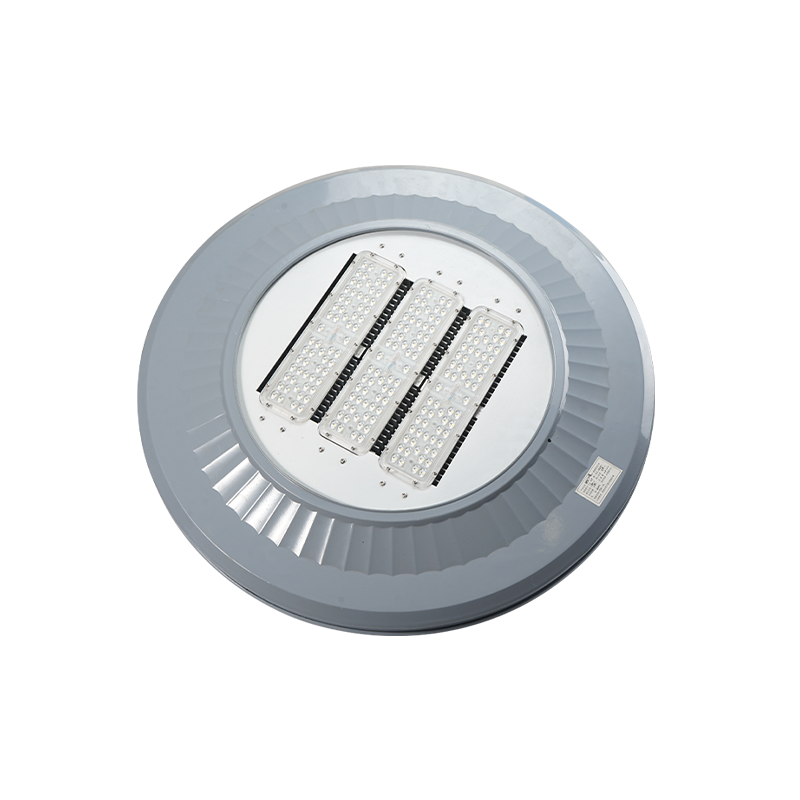
At the physical layer, smart luminaires incorporate LED light sources paired with embedded microcontrollers. Each fixture houses an array of sensors — passive infrared (PIR) detectors for pedestrian and vehicle presence, ambient light sensors (photoresistors or photodiodes) to read natural illumination, and in some deployments, environmental sensors measuring temperature, humidity, or air quality. This local intelligence allows each lamp to respond to its immediate environment without relying on a central command for every decision.
Connectivity Layer: From Node to Network
Communication protocols bridge the fixture to the broader urban network. Common choices include LoRaWAN for long-range, low-power mesh networks; NB-IoT and LTE-M for cellular-based deployments; and Zigbee or Z-Wave for dense mesh topologies in city centres. The choice of protocol depends on the deployment scale, existing infrastructure, and the required data throughput — sensor telemetry demands far less bandwidth than video, but latency and reliability requirements vary by use case.
Control and Management Platform
A centralised management system (CMS) — typically a cloud or on-premise software platform — aggregates data from every node. Operators can monitor energy consumption per fixture, receive automated fault alerts, schedule dimming profiles, and generate compliance reports, all from a single dashboard. Modern platforms expose APIs that allow integration with broader smart city systems: traffic management, emergency services, weather feeds, and carbon accounting software.
Core Capabilities That Define the Technology
Smart street lighting systems deliver value through several interlocking capabilities, each contributing to energy efficiency, safety, or operational excellence.
Adaptive Dimming
Luminaires automatically modulate output between 20% and 100% based on detected activity, time-of-night schedules, and ambient conditions. Unoccupied areas dim immediately; active zones brighten on demand.
Real-Time Telemetry
Continuous reporting of energy draw, operating hours, lamp temperature, and driver health enables predictive maintenance — replacing components before failure, not after.
Renewable Integration
Off-grid and hybrid fixtures combine solar photovoltaic panels with lithium battery storage, enabling deployment in locations without grid access and reducing dependency on centralised energy supply.
Environmental Sensing
Beyond lighting, the same network can carry air quality, noise, and weather data — turning every lamp post into a distributed environmental monitoring station.
Cybersecurity by Design
Modern deployments implement end-to-end encryption, secure OTA firmware updates, and network segmentation to protect both the lighting infrastructure and the sensitive data it collects.
Data-Driven Reporting
Automated carbon and energy reports support ESG compliance, sustainability certifications, and grant applications — translating raw sensor data into decision-ready intelligence.
"The street lamp post of the 21st century is no longer a light source. It is infrastructure for the city's nervous system — sensing, communicating, and acting in ways that were impossible a decade ago."
// URBAN TECHNOLOGY REVIEW, 2024Sustainability at the Core: Environmental Impact
The environmental case for sustainable IoT smart street lighting is compelling at every level of analysis. LED technology alone reduces energy consumption compared to legacy high-pressure sodium (HPS) lamps; when combined with IoT-managed adaptive dimming, total wattage consumed over a night cycle can fall by up to 80%. Multiplied across tens of thousands of fixtures in a medium-sized city, this represents measurable reductions in grid load and carbon emissions.
Light pollution — a less-discussed but significant environmental issue — is also addressed. Precision optics in modern LED fixtures direct light downward with high efficiency, reducing sky glow and its impacts on nocturnal ecosystems and human circadian health. Adaptive control means lights are bright only when and where they are needed, rather than flooding empty roads with maximum output throughout the night.
Solar-powered off-grid variants extend the sustainability argument further. In regions with strong solar irradiance — coastal areas, equatorial cities, or remote communities — a self-sufficient smart lighting node emits zero operational carbon after manufacture, operates independently of grid instability, and contributes to rural electrification goals.
Smart vs. Conventional: A Direct Comparison
The performance gap between traditional and IoT-enabled street lighting spans energy, operations, and sustainability outcomes.
| Attribute | Conventional (HPS/MH) | IoT Smart LED System |
|---|---|---|
| Energy Efficiency | Fixed output, no dimming | Adaptive, up to 80% savings |
| Fault Detection | Manual inspection only | Automated real-time alerts |
| Remote Control | Not available | Full per-fixture remote management |
| Carbon Reporting | Estimated / manual | Automated, per-fixture data |
| Lifespan | ~8,000–15,000 hours | 50,000–100,000 hours (LED) |
| Renewable Integration | Not compatible | Solar + storage hybrid options |
| Data Collection | None | Environmental, traffic, energy telemetry |
Implementation: From Pilot to City-Wide Deployment
Transitioning a city's street lighting network to a sustainable IoT platform is a multi-stage undertaking. The most successful deployments follow a deliberate progression from assessment through to scaled operation.
- STEP 01 Infrastructure Audit: A full inventory of existing lamp posts, fixtures, power supply routes, and maintenance records establishes the baseline. This data determines upgrade priority zones and informs the technology specification.
- STEP 02 Technology Selection: Procurement teams evaluate luminaire manufacturers, connectivity protocols, and CMS platforms against criteria including interoperability standards (TALQ, DALI-2), cybersecurity certifications, and long-term vendor support commitments.
- STEP 03 Pilot Deployment: A defined district or corridor — typically 50 to 500 fixtures — is upgraded first. This phase validates energy savings projections, tests connectivity reliability, and surfaces integration challenges before scaling.
- STEP 04 Network Rollout: Phased expansion follows pilot validation, prioritising high-traffic corridors, public safety zones, and areas with the highest energy waste. Logistical planning coordinates civil works, electrical contracting, and network configuration in parallel.
- STEP 05 Optimisation and Integration: Once live, the system's CMS is tuned through seasonal dimming profiles, demand-response configurations, and integration with adjacent smart city platforms. Ongoing monitoring closes the feedback loop between data and decision.
Challenges and Considerations
No technology transition is without friction. Sustainable IoT smart street lighting deployments encounter several recurring challenges that planners must address proactively.
Interoperability and Vendor Lock-In
The market is fragmented across competing proprietary platforms. Cities that deploy a single vendor's end-to-end stack can find themselves locked into that vendor's pricing and roadmap. Procuring to open standards — particularly TALQ for CMS integration and DALI-2 for fixture control — preserves flexibility and competitive leverage over the asset's lifetime.
Data Governance and Privacy
When lamp posts carry cameras, microphones, or footfall counters, they become civil infrastructure with significant surveillance implications. Clear data governance policies — defining what is collected, retained, shared, and for how long — are a prerequisite for public trust and regulatory compliance in many jurisdictions.
Capital Expenditure and Financing
Upfront hardware and installation costs can be substantial, even as operational savings are well-documented. Energy-as-a-service (EaaS) and public-private partnership (PPP) models have emerged as viable financing mechanisms, allowing municipalities to upgrade infrastructure using future energy savings as the repayment mechanism, reducing initial capital outlay.
Cybersecurity Risk Surface
A networked lamp post is an endpoint on a public network. Without rigorous security design — encrypted communications, authenticated firmware updates, network isolation — a city's lighting infrastructure can become a vector for broader cyber-attacks. Security-by-design, not security-as-an-afterthought, is non-negotiable at scale.
The Road Ahead: Smart Lighting as Urban Platform
The most forward-looking deployments recognise that street lighting infrastructure represents an unparalleled platform for broader smart city services. The lamp post's ubiquity — present on virtually every street, powered, networked, and elevated — makes it a natural host for capabilities that extend well beyond illumination.
EV charging points integrated into smart lamp posts are already commercially available, turning existing infrastructure into a distributed charging network. 5G small cell antennas co-located on lamp posts accelerate urban connectivity rollout by leveraging existing civil infrastructure. Environmental monitoring nodes provide the hyper-local air quality data that city health authorities and climate adaptation planners require but rarely have at sufficient resolution.
As artificial intelligence matures, the data streams generated by smart lighting networks will feed increasingly sophisticated urban models — predicting where road maintenance is needed, optimising emergency response routing, or dynamically adjusting lighting to support large-scale public events. Sustainable IoT smart street lighting is not an end state; it is the foundation layer of the intelligent city.