


JINYUAN
JINYUAN
JINYUAN
JINYUAN
JINYUAN
JINYUAN
JINYUAN
JINYUAN
JINYUAN
JINYUAN
JINYUAN
JINYUAN
JINYUAN
JINYUAN
JINYUAN
JINYUAN
Content
- 1 What Is High Mast Lighting?
- 2 Key Components of a High Mast Lighting System
- 3 The LED Advantage in High Mast Lighting
- 4 Typical Applications and Where They Matter
- 5 High Mast Lighting vs Traditional Lighting
- 6 Stadium Lighting: A Specialized High Mast Application
- 7 Maintenance, Safety, and Service Life
- 8 Planning Your High Mast Project
- 9 Conclusion
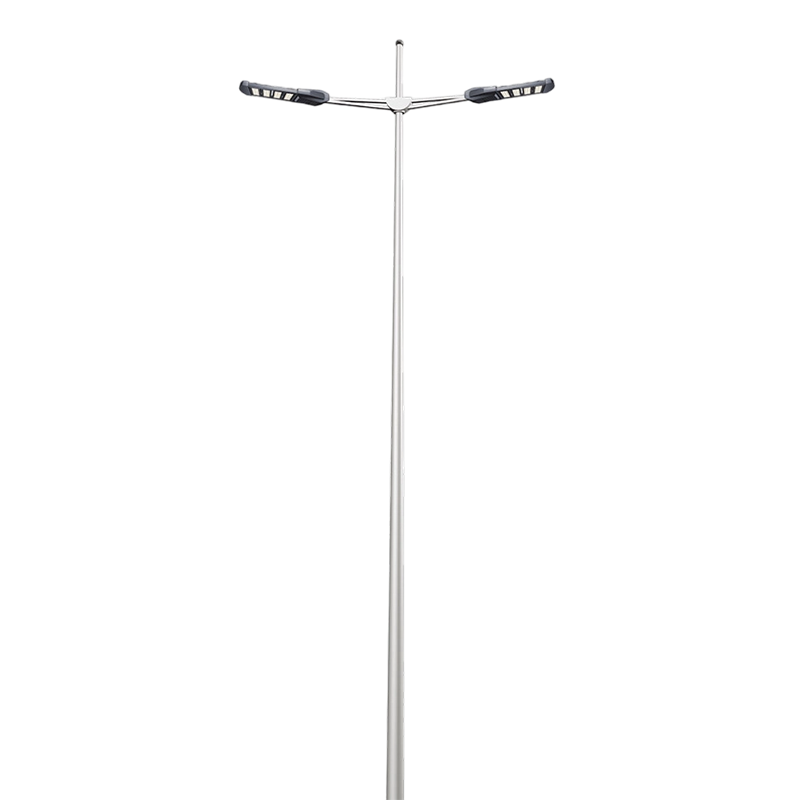
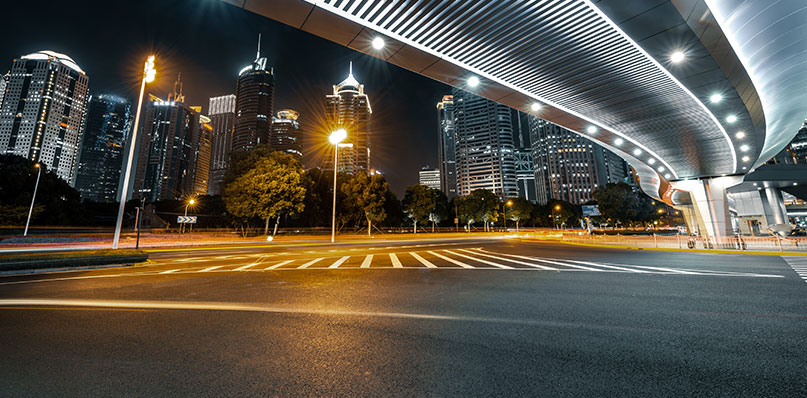
When you need to illuminate a vast outdoor area, such as a shipping terminal, an airport apron, a sports stadium, or a busy highway interchange, conventional street lighting quickly reaches its practical limits. High mast lighting offers a different approach. Instead of lining a site with poles every 30 to 40 meters, it lifts a compact ring of high-power luminaires to the top of a tall pole, typically 20 to 50 meters above the ground. From that height, every fixture can project light across a very large horizontal area, and a single mast often replaces five or more conventional poles. For project managers, engineers, and municipal buyers, understanding how these systems work and where they deliver the best return is essential to making confident decisions.
What Is High Mast Lighting?
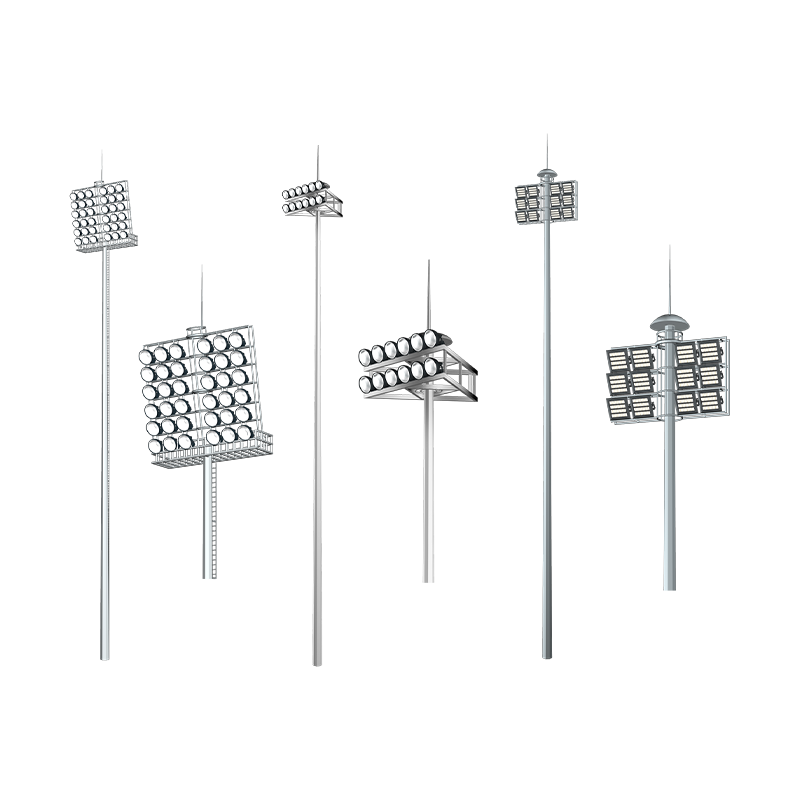
High mast lighting is a lighting system in which a group of luminaires is mounted in a fixed orientation at the top of a high mast, generally 20 meters or more in height. Some specifications describe it as a form of floodlighting because each luminaire is aimed and focused to produce a specific beam pattern rather than a simple symmetric pool of light. The concept itself is not new. Early versions appeared at ports, railyards, and military airfields during the mid-twentieth century, when engineers discovered that one tall pole could cover an area that would otherwise require dozens of smaller poles. Today, the technology has evolved into a mature engineering discipline with clear standards for photometric performance, structural design, electrical safety, and maintenance access.
Key Components of a High Mast Lighting System
Every high mast installation combines several engineered subsystems that must work together for the life of the project. The main components are:
- Mast pole: A steel or aluminum structure, usually circular or octagonal in cross-section, engineered to withstand wind loads, vibration, and the weight of the luminaire ring.
- Luminaire ring: A circular or linear frame at the top of the pole that holds the individual LED luminaires and allows them to be aimed precisely.
- LED luminaires: High-output fixtures with purpose-built optics that produce controlled distributions such as Type II, III, IV, or V patterns depending on the application.
- Lifting system: A manual or motorized winch mechanism that lowers the luminaire ring to ground level for cleaning, relamping, or repair.
- Electrical cabinet and controls: A weatherproof enclosure at the base of the pole that houses protection devices, contactors, photocells, and smart lighting controllers.
- Foundation: A reinforced concrete base designed to resist overturning moments from wind and to guarantee the stability of the pole for its entire service life.
Each component must be matched to site conditions such as wind zone, coastal corrosion, soil type, and required lighting levels. A well-specified system will remain safe and efficient for decades.
The LED Advantage in High Mast Lighting
Modern high mast lighting has moved almost completely to LED technology, and the reasons go far beyond utility bills.
- Energy efficiency: LED luminaires convert a far higher share of electricity into useful light. Retrofitting a legacy high mast installation typically cuts energy consumption by 40 to 60 percent.
- Precision optics: Beam patterns are controlled cone by cone, keeping light on the target area and limiting spill, sky glow, and glare for nearby drivers and residents.
- Long service life: With rated lifetimes of 50,000 to 100,000 hours, LED fixtures need replacement far less often than traditional lamps, reducing labor and material costs.
- Instant control: LEDs reach full brightness instantly and work naturally with photocells, motion sensors, dimming schedules, and central management systems.
- Better visibility: A high color rendering index and neutral white color make it easier for workers, security cameras, and drivers to identify objects and movement.
Together, these advantages make LED high mast lighting the clear choice for both greenfield projects and the replacement of aging metal-halide or high-pressure sodium systems.
Typical Applications and Where They Matter
The most effective way to evaluate high mast lighting is to study the environments where it creates the strongest value. Each application places different demands on mounting height, photometrics, and control.
| Application | Typical Mounting Height | Key Requirement |
|---|---|---|
| Ports and harbors | 25–50 m | Uniform illumination across container stacks and crane lanes |
| Airports and heliports | 20–45 m | Glare control and strict photometric compliance |
| Sports stadiums | 25–50 m | High vertical illuminance for players and broadcast cameras |
| Highway interchanges | 18–40 m | Uniform lighting for merging traffic and tolling areas |
| Industrial storage yards | 20–35 m | Broad coverage with minimal interference to vehicle movement |
| Railway terminals | 20–40 m | Reliable operation and easy ground-level maintenance |
In a container port, for instance, stacked containers and moving cranes make it impossible to install poles in the middle of the working area. A high mast pole placed along the edge of the yard can light a wide bay without obstructing equipment. At airports, the same height advantage lights the apron while strict glare controls prevent distraction for pilots.
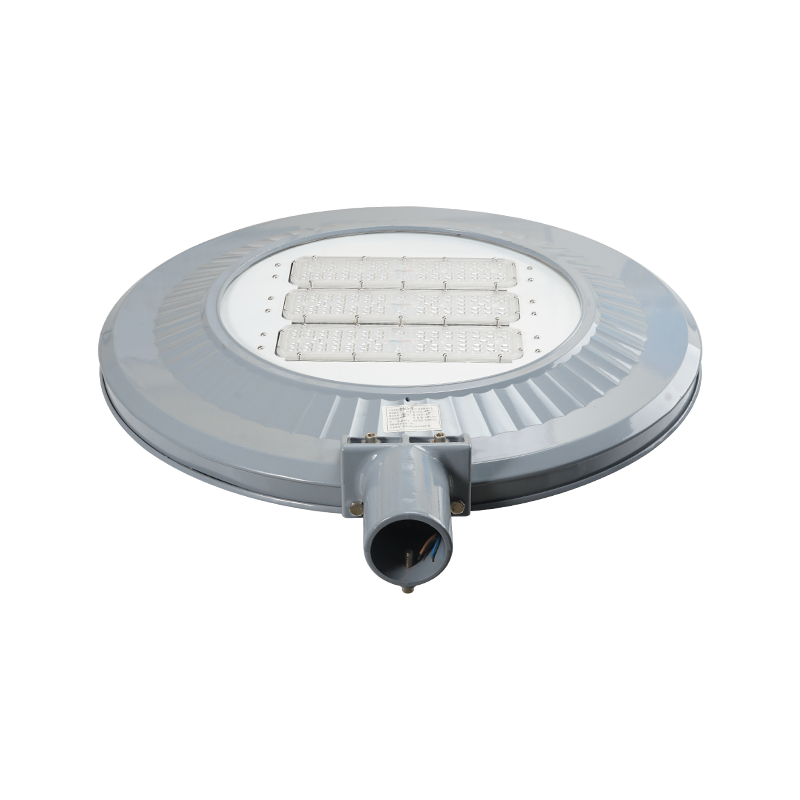
 High-Efficiency High Pole LED Port Lighting FixtureThis robust LED fixture is built for large port yards and coastal areas, combining corrosion-resistant aluminum housing with intelligent dimming to provide uniform illumination and dependable performance in demanding maritime environments.View Product →
For demanding port environments, the high-efficiency high pole port lighting product family combines structural robustness with precision optics to deliver the uniformity and reliability that terminal operators need.
High Mast Lighting vs Traditional Lighting
One of the most common questions in outdoor lighting design is whether to use high masts or a conventional layout of lower poles. The answer depends on the scale and shape of the area. Conventional poles are ideal for continuous streets and parking lots, where the area is long and narrow and low-level illumination is sufficient. They are simple to install, individually small, and easy to reach with standard maintenance equipment.
High mast systems, by contrast, win wherever a large and open space must be lit from a small number of points. Fewer foundations and cable runs reduce civil works, and because the luminaire ring can be lowered to the ground, maintenance never requires an aerial platform. We compared the two approaches in more detail in our dedicated article on high mast lighting versus traditional lighting. The short version is simple: choose high mast lighting when the site is large and open, and reserve conventional poles for corridors and edge lighting.
Stadium Lighting: A Specialized High Mast Application
Stadiums are where high mast lighting becomes most visible to the public. A modern sports venue positions several high masts around the bowl, each carrying a frame of floodlights aimed with great precision at the playing surface. The requirements here differ from a port or highway. Broadcast cameras need high vertical illumination and consistent color temperature. Players need a unified, glare-free field of light. Neighbors expect minimal spill beyond the stadium boundary.
High mast poles for stadiums are usually shorter than port masts but carry a larger frame and more luminaires. The design work concentrates on aiming angles and on selecting narrow, medium, or wide beam floodlights for different zones of the field.
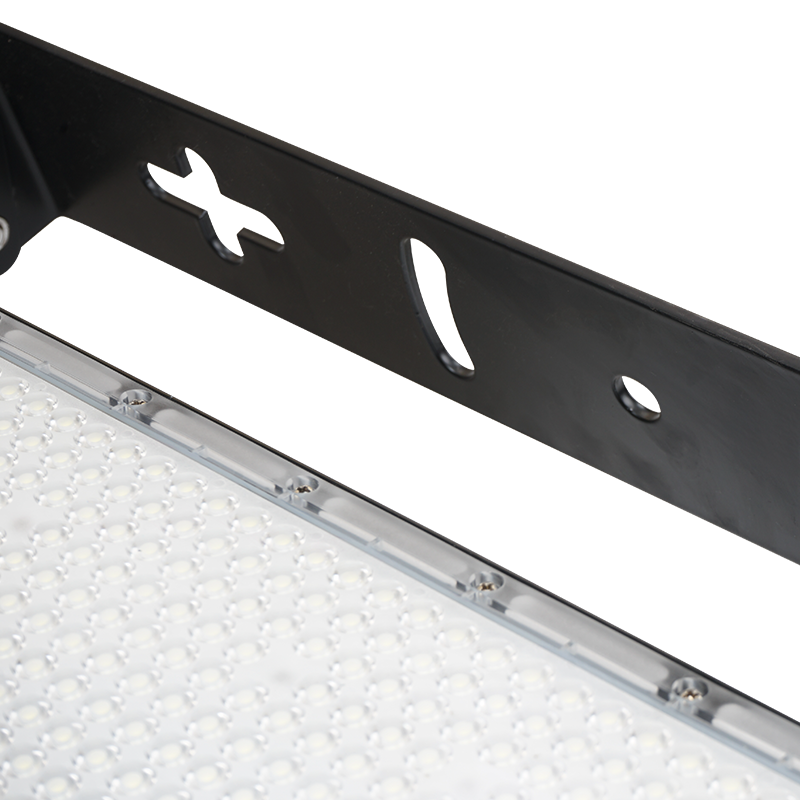
 High-Intensity LED Stadium Lighting for Sports FieldsEngineered for professional sports venues, this IP65-rated LED floodlight delivers bright, uniform coverage with adjustable angles and high wind resistance, making it a reliable choice for nighttime matches and broadcasts.View Product →
For sports facilities, the high-intensity stadium lighting fixtures are engineered to deliver the vertical illumination, uniformity, and color quality that players and broadcast teams depend on.
Maintenance, Safety, and Service Life
Maintenance access is the single most important operational consideration when selecting a high mast system. Two basic approaches are common. The first uses a permanently raised ring with a lowering device that brings each luminaire down on a cable for service. The second uses a ring that descends along guide rails all the way to ground level. Both methods allow technicians to work at grade with standard tools, eliminating the need for bucket trucks or cranes.
Safety depends equally on the electrical design. Proper grounding, surge protection, and residual current devices protect personnel and hardware. Regular inspections of the lifting cable, brake mechanisms, and pole anchor bolts keep the system dependable over its lifespan.
Retractable high mast lighting systems offer a particularly attractive answer to these concerns, because the entire lighting frame can be lowered for routine service in minutes.
Planning Your High Mast Project
A successful high mast project begins with professional lighting design. The starting point is a clear statement of the task: the total area to be illuminated, the required horizontal illuminance, the uniformity ratio, the glare limits, and the maintenance factor. From these values, an experienced manufacturer can calculate the number of masts, the optimum mounting height, and the beam pattern for every luminaire.
It is also worth looking forward. Many modern high mast systems include smart features such as scheduled dimming, adaptive lighting based on traffic presence, and remote monitoring of lamp status. These features cut energy costs and help operators identify problems before they become failures. Choosing a supplier that engineers the complete system, including pole, lifting gear, luminaires, and controls, simplifies procurement and avoids compatibility issues. You can view the full scope of our outdoor infrastructure products on our product overview page.
Conclusion
High mast lighting remains one of the most efficient answers to a fundamental challenge: lighting very large areas from as few physical supports as possible. LED technology has made the concept stronger than ever, delivering lower operating costs, better visual quality, and precise control of light where it is needed.
At Yangzhou Jinyuan Lamps Co., Ltd., we have designed and manufactured outdoor lighting systems since 2002, and our product range includes high masts, LED luminaires, lifting mechanisms, and related smart controls. Whether your project is a container terminal, an airport apron, a stadium, or a highway interchange, we can help you specify a high mast system that will perform reliably for decades. Contact us for lighting design assistance and a quotation.