


JINYUAN
JINYUAN
JINYUAN
JINYUAN
JINYUAN
JINYUAN
JINYUAN
JINYUAN
JINYUAN
JINYUAN
JINYUAN
JINYUAN
JINYUAN
JINYUAN
JINYUAN
JINYUAN
Content
- 1 How a Dusk to Dawn Sensor Reads the Sky
- 2 Why Flood Lights and Dusk to Dawn Control Work So Well Together
- 3 Specifications Worth Checking Before You Buy
- 4 Matching Beam Angle, Wattage and Sensor Position to the Site
- 5 Solar and Off-Grid Dusk to Dawn Solutions
- 6 Installation Details That Prevent Callbacks
- 7 Maintenance and Troubleshooting
- 8 Buying the Whole Assembly From One Place
There is one lighting problem that almost every facility manager runs into sooner or later: the yard, the loading apron, the parking row, or the perimeter that has to be lit from dusk to dawn, every single night, without anyone remembering to switch it on. Timers help until the seasons shift and the on-time drifts an hour late. Manual switching works until the person holding the key changes shift.
A flood light with a dusk to dawn sensor solves that problem inside the fixture itself. The light watches the sky, decides when the working day of the sun is over, and turns on. When morning light crosses the same threshold, it turns off again. No controller cabinet, no schedule to rewrite every winter, no argument about who forgot to flip the switch.
How a Dusk to Dawn Sensor Reads the Sky
The sensing element is small: a photoresistor or photodiode sitting behind a clear window on the housing or at the end of a short arm. Its electrical resistance or current output changes with ambient light, and a compact control circuit compares that reading against a set threshold. On most outdoor fixtures, the lamp is set to switch on somewhere between 10 and 20 lux and to switch off again at a noticeably higher level, often 30 to 50 lux.
That gap is deliberate, and it is the single most important detail in the whole assembly. If the turn-on and turn-off points were identical, the fixture would chase its own light at dawn: it would switch off, notice the dark, switch on, notice the light it just produced, switch off again, and repeat until something failed. The gap is called hysteresis, and a properly specified sensor carries enough of it to sit quietly through a dark storm cloud.
Two more pieces of housekeeping live in the same circuit. A time delay, usually 30 to 60 seconds, stops headlight beams, lightning flashes, and the shadow of a passing truck from triggering anything. And the sensor window is positioned so it never sees the fixture's own output. On a well-built flood light, the photocell faces away from the beam or sits in a shaded recess, which is a small manufacturing decision that determines whether the product is usable or infuriating.
Why Flood Lights and Dusk to Dawn Control Work So Well Together
Flood lights are designed to cover area rather than to decorate it. A single fixture on a pole or wall can hold a car park entrance, a service yard, a storage compound, or a section of perimeter fence in even light. That is exactly the kind of space where nobody is standing by a switch, and where lighting needs to be predictable rather than clever.
Because the fixture already runs on a stable LED driver, adding automatic switching costs almost nothing in efficiency. What it buys is consistency. The site is lit during the hours when it is both dark and in use, and dark during the hours when it is neither, which is a simple way to cut run time without cutting security. Photocell-controlled flood lights also tend to age gracefully: the sensor adjusts to shorter winter days on its own, and the maintenance team never has to touch a time clock again.
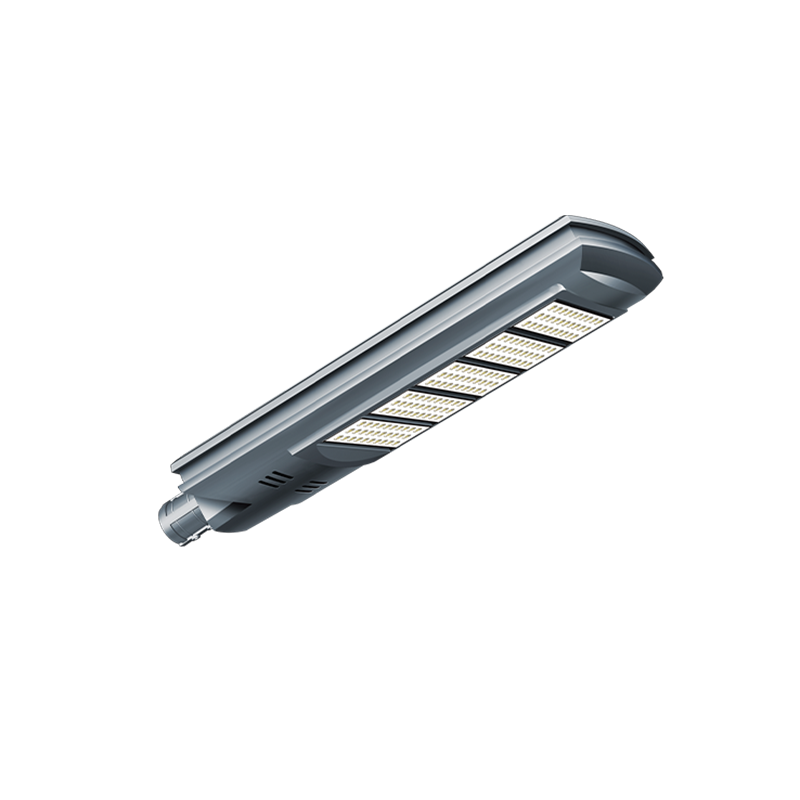
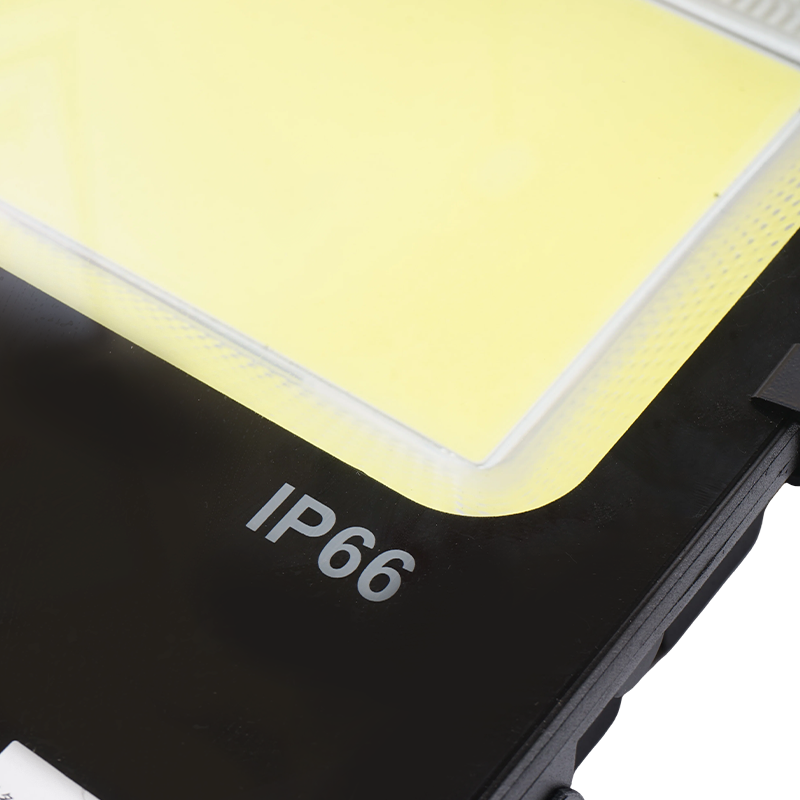 Wide-Angle Integrated LED Floodlight 200WThis 200W integrated LED floodlight suits broad outdoor area lighting with a 120° beam and high-efficiency COB source.View Product →
Specifications Worth Checking Before You Buy
The differences between a reliable dusk to dawn flood light and a disappointing one are rarely visible in a product photo. They live in a handful of numbers on the datasheet, and it pays to read them in the right order.
| Specification | What to look for | Why it matters |
|---|---|---|
| Sensor type | Photocell with defined hysteresis and delay | Prevents on and off cycling at dawn |
| Switching threshold | About 10 to 20 lux on, 30 to 50 lux off | Stable switching through cloudy days |
| Beam angle | Narrow around 15 to 30 degrees, wide 60 to 120 degrees | Matches coverage to pole height |
| Output | 30 to 300 W at roughly 120 to 150 lm/W | Sizing to the site instead of guessing |
| Ingress protection | IP65 minimum, IP66 in wet or coastal areas | Keeps the sensor window clear and dry |
| Operating temperature | Rated from -30 C to +50 C | Avoids sensor drift in heat or hard frost |
| Mounting | Bracket reach, tilt range, sensor orientation | Keeps the cell out of its own light |
| Controls | Manual override, optional dimming or timer | Service access and future upgrades |
Matching Beam Angle, Wattage and Sensor Position to the Site
Start with the geometry of the space rather than the wattage. A 6 metre pole over a wide parking apron wants a broad, even distribution, because a narrow beam at that height leaves pools of light and pockets of shade. A 12 metre pole aimed down a loading lane or across a facade wants a tighter beam, so the light travels where it is useful instead of spilling into neighbouring property.
The sensor has its own placement rules. It should face the open sky in roughly the same direction as the area being lit, and it must not sit in the shadow of its own bracket, a wall, a tree, or a sign. On tiltable or adjustable brackets, it is worth walking the site at dusk once before final tightening, because a sensor that faces a white wall will read reflected light and switch off early all year round.
 Custom Narrow Beam Floodlights for Precise Long-Distance IlluminationWhen lighting must be concentrated rather than spread, these custom narrow beam floodlights target distant facades, docks, or runways with reduced glare and waste.View Product →
Solar and Off-Grid Dusk to Dawn Solutions
Where trenching a power cable is impractical or simply too expensive, integrated solar lighting has become a practical answer. All-in-one solar units combine panel, battery, LED module and controller in a single housing, and the controller already includes the same dusk to dawn logic described above, plus motion sensing in many models. Split-type systems separate the panel from the lamp head, which suits sites with partial shading or where the panel needs a better tilt.
The trade-offs between the two approaches are worth understanding before you specify: a comparison of all-in-one and split-type solar street lighting covers the practical differences in installation, maintenance access and winter performance. Either way, the sensor does the daily work, and the battery does the nightly work.
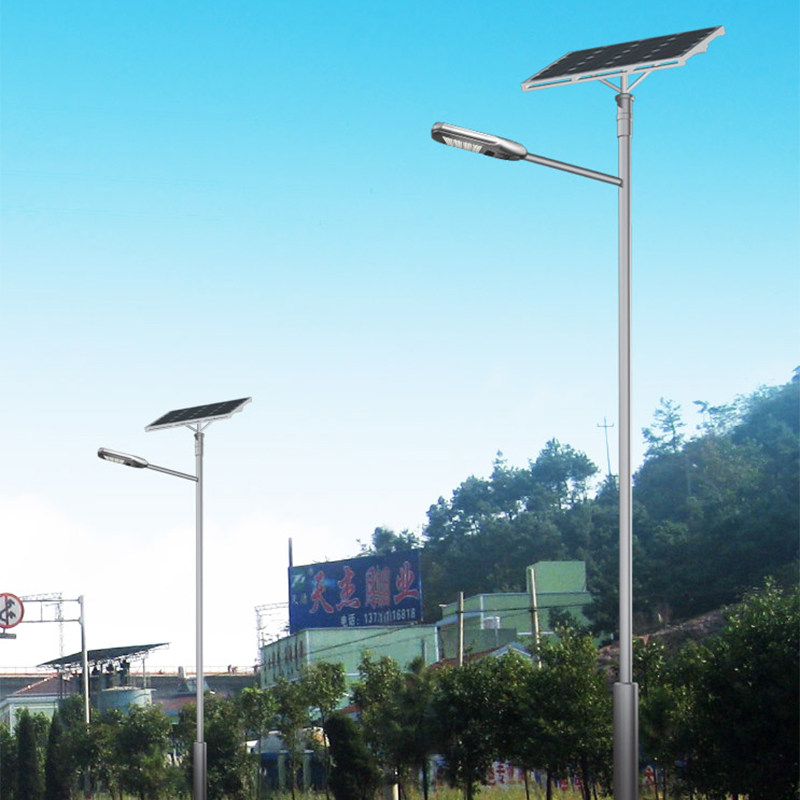 Integrated Solar Smart Streetlight with Light and Time ControlFor road lighting without trenching, this all-in-one solar streetlight combines panel, battery, and LED module with dusk-to-dawn light control.View Product →
Installation Details That Prevent Callbacks
- Position the sensor before you drill. Once the bracket is fixed, a photocell aimed at a reflective surface is a problem you will live with for years.
- Keep the sensor window clean during installation. Dust, hand grease and packaging film all read as darkness and will make the fixture switch on two hours early.
- Wire a manual override. A bypass switch or a control input lets maintenance staff work after dark without taping over the sensor.
- Respect the delay setting. If the site has traffic, leave the delay at 60 seconds rather than shortening it to react faster.
- Seal every gland and entry. Water reaching the control circuit is the most common cause of a sensor that fails within two seasons.
- Record the setting. Note the threshold and delay values used on each pole so future adjustments start from a known point.
Maintenance and Troubleshooting
Most dusk to dawn complaints turn out to be simple, and they follow a predictable pattern.
- Switches on and off repeatedly at dusk. The hysteresis setting is too tight, or the sensor is picking up its own light. Check orientation first, then the threshold.
- Stays on all day. The sensor window is covered, dirty, or painted over, or the photocell has failed. Clean it, then test the circuit.
- Comes on too late in the evening. Debris or shading is reducing the light reaching the cell, or the delay is longer than the site tolerates.
- Turns off in the middle of the night. Almost always a light source nearby, such as a neighbouring flood light or a vehicle headlight, hitting the sensor window.
- Drifting performance over the years. Photocells age. On fixtures more than eight to ten years old, replacing the sensor module is often cheaper than replacing the luminaire.
Buying the Whole Assembly From One Place
A dusk to dawn flood light is a small system: luminaire, driver, sensor, bracket, pole, and the wiring between them. When those parts come from different suppliers, sensor problems become nobody's problem. It is one reason we build the full assembly under one roof. Yangzhou Jinyuan Lamps has been manufacturing outdoor lighting since 2002, with a production base of more than 70,000 square metres, a technical team of over 300 people, and quality, environmental and occupational health management systems certified to ISO 9001, ISO 14001 and OHSAS 18001. Our fixtures and poles are shipped to customers in more than 200 countries.
If you are specifying lighting for a yard, a port apron, a car park or a rural road and want the sensor, the beam and the bracket designed to work together, take a look at our full range of outdoor lighting and tell us the site conditions. We will size the fixture to the space rather than to a catalogue page.