


JINYUAN
JINYUAN
JINYUAN
JINYUAN
JINYUAN
JINYUAN
JINYUAN
JINYUAN
JINYUAN
JINYUAN
JINYUAN
JINYUAN
JINYUAN
JINYUAN
JINYUAN
JINYUAN
Content
Municipal solar lighting decisions fail when they focus on the fixture first and the system second. A solar street light is an integrated package of photovoltaic panel, storage battery, controller, LED optical assembly, and mounting structure. The panel size, battery capacity, and control logic must be sized to the site’s sun exposure, night length, and desired light output. In practice, the highest-performing municipal projects treat solar lighting as a design exercise rather than a catalog purchase: they define the performance requirements first, then select an architecture that can deliver them reliably over a 10- to 20-year service life.
This guide is written for municipal engineers, public works directors, and project planners. It summarizes the architecture choices, site-specific design parameters, reliability concerns, lifecycle costs, and smart-control options that determine whether a solar lighting program will meet public safety expectations and financial targets. The short version: solar lighting can work well for streets, parks, and remote areas, but only when the system is correctly configured, installed, and maintained.
Choose the Right System Architecture Before Comparing Prices
The first decision is not the brand of the LED module; it is whether to use an all-in-one or split-type solar light. All-in-one units put the panel, battery, and optical assembly into a single compact fixture. They are easy to mount, require fewer cables, and often look cleaner on existing poles. Split-type systems separate the solar panel from the LED head, which allows installers to orient the panel optimally and to use larger batteries without overloading the pole top.
For roadways that are open to strong winds, such as coastal highways or elevated sections, split-type systems generally have a structural advantage because the panel is mounted on a separate bracket and the wind load is better distributed. For example, a wind-resistant and waterproof split-type solar street light can be specified when the project brief mentions high wind speeds, heavy rain, or the need for easy access to the battery compartment. The separation of components also makes it cheaper to replace a damaged battery without dismantling the entire luminaire.
 Wholesale Wind-Resistant And Waterproof Split-Type Solar Street Light Suppliers,Yangzhou Jinyuan Lamps Co.,Ltd. is China wholesale Wind-Resistant And Waterproof Split-Type Solar Street Light suppliers and Wind-Resista...View Product →
However, all-in-one systems have their place. They are quicker to install, less intrusive on heritage streets, and can be made in a sealed design that resists dust and water. The right choice depends on the pole location, shading, and maintenance workflow. If you are evaluating both layouts, our analysis of all-in-one versus split-type solar street lights explains the performance trade-offs in detail.
Match the Luminaire to the Site, Not Just the Wattage
Once the architecture is selected, the next step is matching the luminaire to the actual place it will serve. A collector road with 12-meter poles demands a different light distribution than a 4-meter pathway in a park. Municipal buyers should look at photometric files, measured in candela per lumen, to confirm that the fixture will produce the required uniformity and glare control at the planned mounting height.
| Application | Mounting Height | Key Design Priority | Common Solar Architecture |
|---|---|---|---|
| Major collector road | 10-12 m | Uniformity, maintenance access | Split-type with modular LED luminaire |
| Residential street | 6-8 m | Glare control, cost efficiency | All-in-one with standard photometric optics |
| Park or pedestrian path | 4-5 m | Warm light, aesthetics, low glare | Solar garden light with motion sensor |
| Remote rural road | 6-8 m | Autonomy, battery reliability | High-capacity all-in-one or split-type |
Park and pedestrian applications benefit from a lower color temperature and a compact form factor. A smart solar garden light is an effective fit for these spaces because it can provide comfortable illumination at pedestrian heights while allowing dimming schedules that reduce energy draw late at night. In public parks, the light should not feel like a highway fixture; it should be scaled to human movement, with enough uniformity for people to see clearly but not so much intensity that it creates harsh shadows.
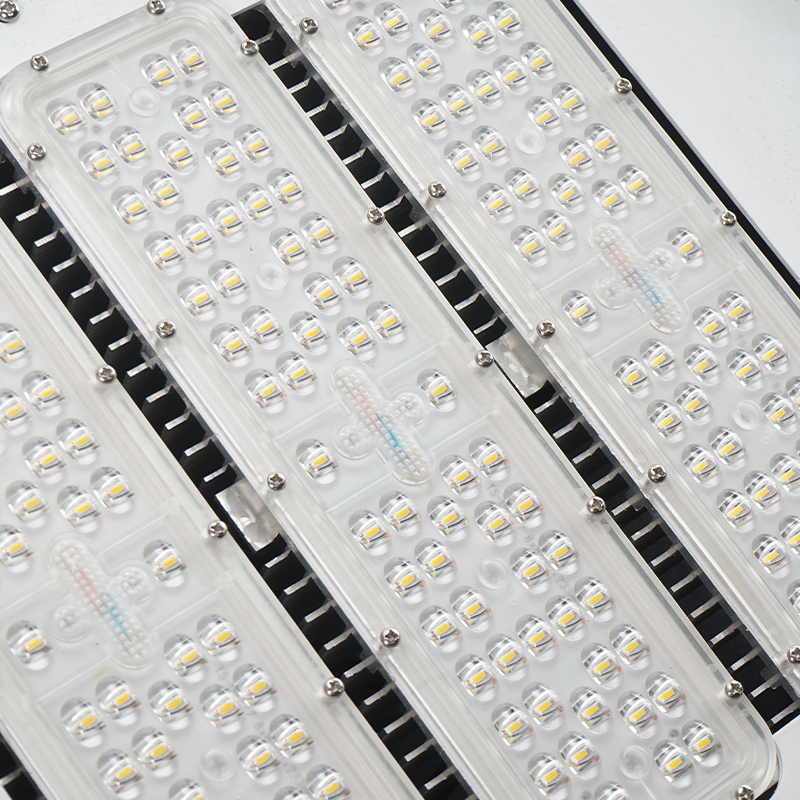 Wholesale Smart Garden Lighting Suppliers, Factory - Yangzhou Jinyuan Lamps Co.,Yangzhou Jinyuan Lamps Co.,Ltd. is China wholesale Smart Garden Lighting suppliers and Smart Garden Lighting factory,This product feature...View Product →
Plan for Real-World Reliability, Not Just Datasheet Values
Solar lighting components must survive decades outdoors. The failure points in municipal solar lights are usually not the LEDs but the battery, the controller, and the wiring connections. Water ingress, extreme temperature cycling, and shading are the three most common causes of premature failure. A specification should require high IP ratings, tested battery cycles, and a controller with low self-consumption.
Another reliability issue is the site itself. A solar panel that looks clean on paper can be shaded by a tree or a new building for half the day. Municipal planners should perform a simple shading analysis, ideally with a solar path calculator, before finalizing pole locations. In snow-prone regions, mounting the panel at a steeper tilt improves self-cleaning and reduces winter losses. In high-wind zones, the pole and foundation must match the wind load data from the local building code.
Maintenance planning also matters. Batteries eventually need replacement, and the cost of sending a bucket truck to a highway median is much higher than the battery itself. This is why modular battery enclosures, accessible controllers, and standardized LED modules are valuable. A tiltable maintenance pole can shorten service time, but even without that option, the system should be designed so that common replacements do not require welding or cutting.
Evaluate Lifecycle Cost, Procurement Requirements, and Grants
The upfront cost of solar street lighting is usually higher than a conventional LED retrofit. Over ten years, the comparison changes because solar systems eliminate electricity charges, reduce trenching and cabling costs, and can avoid peak-demand fees. But the operating budget will still include battery replacement and occasional cleaning. A full lifecycle cost model should include:
- Battery replacement every five to eight years, depending on chemistry and ambient temperature.
- Panel cleaning and vegetation management, particularly after storms.
- Spare parts inventory and the labor cost of accessing the fixture.
- Warranty terms and supplier response times, because a failed light on a crime-prone street has a social cost that is difficult to quantify.
For procurement, municipalities often need to specify solar lighting in a way that allows competitive bidding while holding performance standards. The tender should require photometric test reports, battery certification, and documented project references. If the city is applying for energy grants, the carbon-reduction calculations should be tied to the measured system performance rather than a generic per-fixture estimate.
Build Smart Controls Into the Initial Specification
Solar lighting is inherently suited to smart city applications because every unit contains its own power source and controller. Dimming profiles can be programmed to match traffic and pedestrian patterns. Motion sensors can raise light levels when someone approaches and dim them again when the area is empty. Remote monitoring can alert maintenance crews to a failing battery before the light goes out completely.
When specifying these features, look for compatibility with existing systems or a clear migration path. Some municipalities want a central management platform; others only need a simple timer. The controller should allow field adjustments with a mobile app or a portable programmer, because a city cannot afford to send an electrician up a pole simply to change a schedule.
A useful example of this approach is an integrated solar smart streetlight, which packs the panel, battery, controller, and telemetry into one housing. This type of system can be deployed quickly on existing poles and is often supplied with options for motion detection, dimming, and remote status reporting. In a mixed city district, this design makes it easier to scale up from a pilot project to a full network.
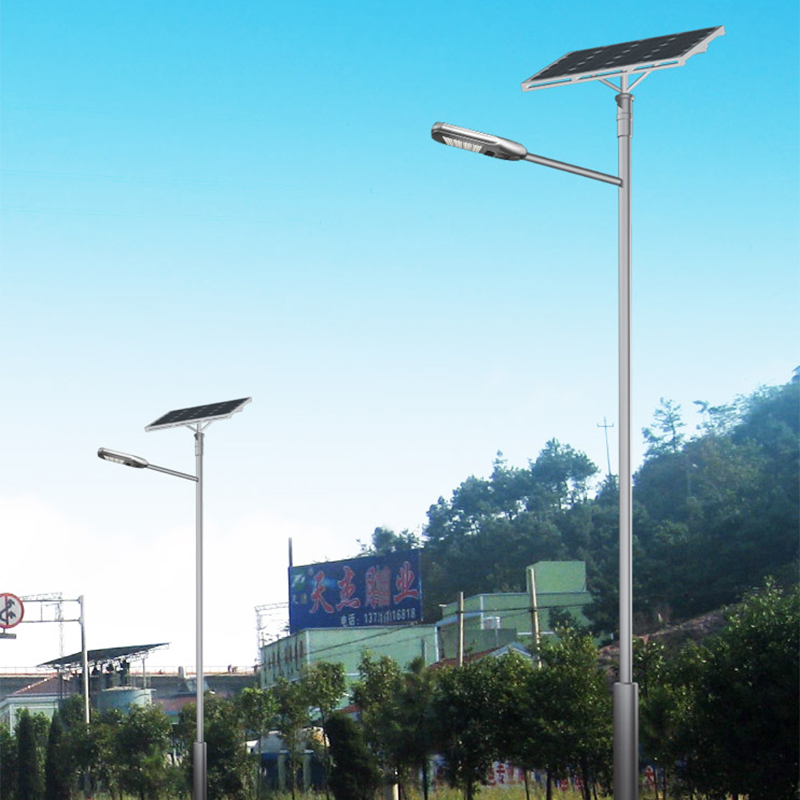 Wholesale Integrated Solar Smart Streetlight Suppliers, Factory - Yangzhou JinyuYangzhou Jinyuan Lamps Co.,Ltd. is China wholesale Integrated Solar Smart Streetlight suppliers and Integrated Solar Smart Streetlight fa...View Product →
The most reliable municipal solar lighting programs are built around a simple operating principle: define the performance need, verify the site conditions, and choose an architecture that can be maintained with local resources. Photographic aesthetics and first cost are secondary to battery life, optical quality, and supplier support. Municipalities that take this approach tend to avoid the common pitfalls of solar street lights and gain the lasting benefit of lower energy use, lower carbon emissions, and safer public spaces.
If your team is ready to compare system options, our solar lighting product range covers all-in-one, split-type, garden, and smart-connected configurations for municipal projects.