


JINYUAN
JINYUAN
JINYUAN
JINYUAN
JINYUAN
JINYUAN
JINYUAN
JINYUAN
JINYUAN
JINYUAN
JINYUAN
JINYUAN
JINYUAN
JINYUAN
JINYUAN
JINYUAN
Content
- 1 What Municipal Solar Street Lights Are and How They Work
- 2 Why Municipalities Are Choosing Solar Street Lights
- 3 Cost Comparison: Grid-Tied LED vs. Municipal Solar
- 4 Design and Specification Considerations for Municipal Tenders
- 5 Procurement: What to Verify Before You Specify
- 6 Conclusion: Solar Street Lights Are a Municipal Tool, Not a Trend
The tender package for a county road widening project arrived with one unavoidable question: grid-tied or solar street lighting? It is a question that now appears in municipal procurement documents on nearly every continent. Municipal solar street lights are fully self-contained systems, with a photovoltaic panel, LED luminaire, battery, and controller mounted on each pole and no underground cable connection. They reduce trenching work, cut long-term energy spending, and keep roads illuminated when the grid fails. The conclusion from real projects is equally clear: solar is the stronger choice when grid access is expensive, unreliable, or unavailable, provided the municipality specifies the right architecture, battery autonomy, and photometric performance.
What Municipal Solar Street Lights Are and How They Work
A municipal solar street light captures sunlight during the day and releases it as light at night. The photovoltaic panel charges a storage battery, and the battery drives an LED luminaire through a charge controller. Because every component sits on the pole, the project scope eliminates trenching, cabling, transformer connection, and meter installation. The controller is the technical heart of the system: it manages charging current, prevents over-discharge, and in modern designs applies a dimming schedule to stretch stored energy through the night.
Not all municipal solar lights are built the same way, which is why tenders should describe the system architecture as precisely as the light output.
All-in-one or split-type: which architecture fits the site?
All-in-one units integrate the panel, battery, and luminaire into a single fixture head. They install quickly, look clean on urban poles, and reduce the number of components that can work loose over time. A compact option in this category is the high-efficiency adaptive all-in-one solar street light, which suits residential streets, parks, and campus roads. Split-type systems mount the panel separately, often above the luminaire or on a bracket, with the battery housed lower on the pole. This layout allows larger battery capacity and better ventilation in hot climates. For exposed roadsides and coastal areas, a wind-resistant and waterproof split-type solar street light is frequently the safer specification. Municipalities that want to compare the two approaches before writing a tender can read an objective comparison of all-in-one and split-type solar street lights. The choice affects maintenance, wind load, and visual appearance, not just the price.
 Wholesale Wind-Resistant And Waterproof Split-Type Solar Street Light Suppliers,Yangzhou Jinyuan Lamps Co.,Ltd. is China wholesale Wind-Resistant And Waterproof Split-Type Solar Street Light suppliers and Wind-Resista...View Product →
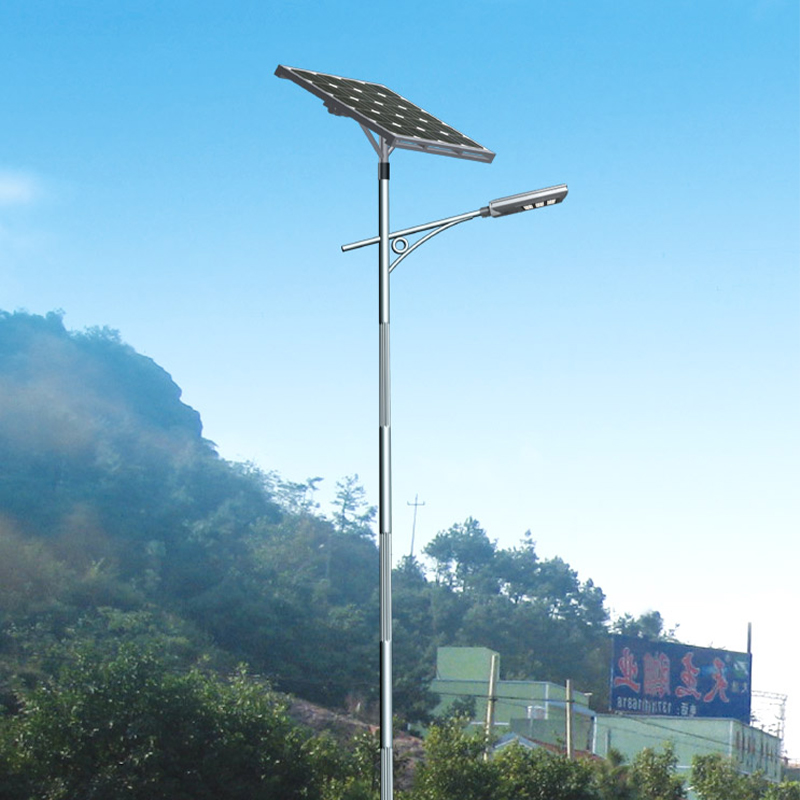 Wholesale High-Efficiency Adaptive All-in-One Solar Street Lights Suppliers, FacYangzhou Jinyuan Lamps Co.,Ltd. is China wholesale High-Efficiency Adaptive All-in-One Solar Street Lights suppliers and High-Efficiency ...View Product →
Battery, panel, and controller: components that decide longevity
Lithium iron phosphate batteries have become the default for municipal specifications because they tolerate deep discharge and cold temperatures better than lead-acid. A tender should state minimum autonomy in days, typically three to five for cloudy periods, and require cycle-life data at real operating temperatures. Panels should be sized from local insolation data, not from a generic brochure. A maximum power point tracking (MPPT) controller adds several percentage points of energy harvest compared with earlier designs, which matters when a rainy week follows a cloudy month.
Why Municipalities Are Choosing Solar Street Lights
The movement toward municipal solar street lights is driven by budget, resilience, and climate commitments. The practical reasons appear again and again in procurement evaluations:
- Lower installation cost: without trenching and cable runs, installation work shrinks dramatically, especially on remote roads and uneven terrain.
- Zero grid energy bills: sunlight replaces metered electricity, protecting the operating budget from tariff increases.
- Outage resilience: each pole operates independently, so a local grid failure does not plunge a road into darkness.
- Sustainability targets: solar lighting produces measurable carbon reductions and can help municipalities qualify for green infrastructure grants.
These advantages are strongest on new pole projects, in areas with abundant sunshine, and where grid connection costs are high. They are weakest in dense urban grids where street lighting infrastructure already exists. A municipality should evaluate both scenarios honestly rather than assuming solar is always greener or cheaper.
Cost Comparison: Grid-Tied LED vs. Municipal Solar
Comparing only equipment prices produces a misleading picture. A grid-tied LED luminaire costs less at the purchase order stage, but the full project scope includes trenching, cables, junction boxes, grid connection fees, and a permanent monthly energy bill. Solar equipment carries a higher initial price, yet installation remains a simple pole-and-foundation operation.
| Cost component | Grid-tied LED street light | Municipal solar street light |
|---|---|---|
| Fixture and pole cost | Lower | Higher |
| Trenching and cabling | Significant | Not required |
| Grid connection and metering | Required | Not required |
| Annual energy cost | Utility bill for every pole | None from the grid |
| Typical maintenance cycle | Lamp and driver replacement | Battery replacement every 5 to 10 years |
| Project timeline | Linked to utility coordination | Independent after site approval |
A practical rule of thumb from completed municipal projects: when the distance to the nearest grid connection exceeds the spacing between light poles, solar tends to win on total lifecycle cost. When existing grid infrastructure is already at the site, retrofitting grid-tied LED fixtures is often the economically rational decision. Suppliers should provide a per-pole cost model based on local insolation, pole spacing, and night-time hours rather than a flat quote per unit.
Design and Specification Considerations for Municipal Tenders
Solar lighting is still lighting. A responsible tender defines illuminance, uniformity, and glare with the same rigor used for grid-fed installations. The following details separate a project that performs from one that disappoints.
Photometric performance and light distribution
Luminaires must have photometric reports showing the distribution pattern at the proposed mounting height, pole spacing, and road geometry. A solar fixture is sized by energy budget first; if the fixture cannot produce the required lux with the available battery energy, the entire design fails. Requiring IES or EULUMDAT files and a lighting design calculation makes the comparison objective.
Autonomy, shading, and seasonal insolation
Panel orientation and latitude decide how much energy the system collects. Shading from trees, adjacent buildings, or signage can cut harvest by half. Municipalities in northern or monsoon climates should specify the number of autonomy days and verify the battery's rated capacity at the lowest expected temperature.
Wind load, corrosion, and structural safety
Solar poles carry more surface area than conventional luminaires, which increases wind load and foundation stress. In coastal regions, specify salt-spray corrosion protection and verify pole material certificates. A split-type arrangement, with the panel attached to a separate bracket, can simplify wind-load calculations and is often preferred for highway and bridge installations.
Smart control and remote monitoring
Modern municipal solar lights are no longer simple timers. Controllers support midnight dimming, motion-activated boost, and remote telemetry that reports battery state and lamp faults. Maintenance crews go to a pole only when it actually reports a problem. The integrated solar smart streetlight demonstrates how sensing and communication fit into a single fixture, and a broader discussion of upgrading municipal lighting to smart systems explains the infrastructure benefits. For cities planning IoT upgrades, solar light points can serve as distributed sensor nodes as well as light sources.
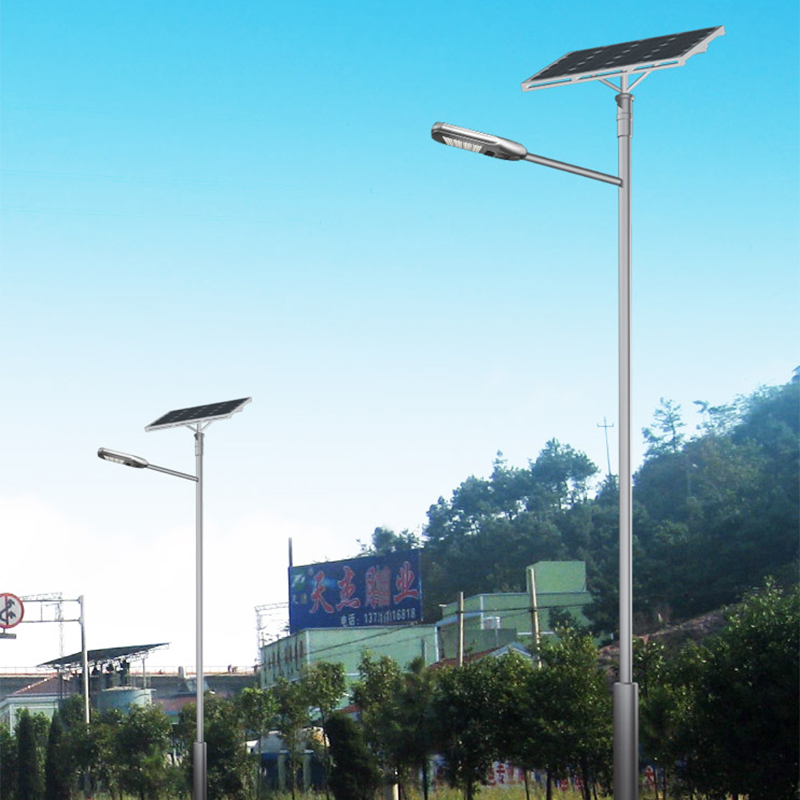 Wholesale Integrated Solar Smart Streetlight Suppliers, Factory - Yangzhou JinyuYangzhou Jinyuan Lamps Co.,Ltd. is China wholesale Integrated Solar Smart Streetlight suppliers and Integrated Solar Smart Streetlight fa...View Product →
Procurement: What to Verify Before You Specify
Procurement errors in solar lighting usually come from accepting marketing data as engineering evidence. A practical verification checklist protects the municipality and the taxpayer:
- Confirm the supplier holds ISO 9001 quality management, ISO 14001 environmental, and OHSAS 18001 occupational health and safety certifications.
- Request photometric reports and thermal test data for the exact luminaire model being tendered.
- Require battery cycle-life data, including rated capacity at the lowest project-site temperature.
- Verify wind-load calculations, pole material certificates, and foundation drawings.
- Check IP and salt-spray test results for the fixture, controller, and battery enclosure.
- Define warranty terms, spare-parts availability, and the supplier's after-sales response commitment.
Structural strength also matters. A supplier that engineers and manufactures its own poles, luminaires, and controllers, rather than assembling parts from several sources, tends to deliver more consistent quality and simpler spare-part management. For wide-area projects, the same supplier can also provide off-grid PV systems to power auxiliary equipment such as cameras or signage. Yangzhou Jinyuan Lamps, for example, combines a 70,000-square-meter production base, more than 300 technical staff, and product delivery to over 200 countries, which is the type of manufacturing depth an evaluation committee should look for.
Conclusion: Solar Street Lights Are a Municipal Tool, Not a Trend
Municipal solar street lights have moved from pilot programs into standard procurement categories because they solve real problems: expensive trenching, grid vulnerability, rising energy costs, and carbon reduction targets. They also demand more specification discipline than conventional fixtures. Battery autonomy, photometric performance, and wind load cannot be left to chance. Municipalities that invest in site analysis, verify supplier evidence, and write clear performance requirements will find solar street lighting a reliable, defensible investment for roads, parks, and public spaces. Start with the site's insolation and night-time requirements, then let the data decide.