


JINYUAN
JINYUAN
JINYUAN
JINYUAN
JINYUAN
JINYUAN
JINYUAN
JINYUAN
JINYUAN
JINYUAN
JINYUAN
JINYUAN
JINYUAN
JINYUAN
JINYUAN
JINYUAN
Content
- 1 What Manufacturing Lighting Usually Means in Practice
- 2 Start With the Work, Not the Wattage
- 3 Construction Details That Separate Good Lighting From Costly Lighting
- 4 Outdoor Manufacturing Sites Need a Different Lighting Plan
- 5 Solar and Off-Grid Lighting for Remote or Expanding Sites
- 6 Controls, Commissioning, and Maintenance
- 7 A Practical Specification Checklist
- 8 Working With a Lighting Manufacturer
Manufacturing lighting is rarely a single purchase. It is a set of decisions about how people see, move, work, and maintain equipment across a production site. The phrase covers two related conversations: the lighting used inside and around a manufacturing facility, and the way lighting products themselves are manufactured. Both matter. A well-made luminaire with poor glare control will still make a factory floor uncomfortable, while a clever layout built on weak housings soon becomes a maintenance burden. Our experience as a lighting manufacturer has taught us to start with the task, then choose construction and controls that support it year after year.
What Manufacturing Lighting Usually Means in Practice
On a manufacturing site, lighting is asked to do several jobs at once. It may need to reveal fine detail at a workbench, keep forklift routes clear, illuminate a loading yard, protect a perimeter, or simply help staff move safely between buildings. The right answer for a production hall is not automatically right for an outdoor storage area. The table below separates those needs before products are compared.
| Area | Main lighting goal | Specification focus |
|---|---|---|
| Production floor | Task visibility and glare control | Low-glare optics, uniform light, dust-rated housing |
| Loading bay or yard | Safe vehicle movement | High-mast or floodlighting, precise aiming, impact resistance |
| Perimeter and access roads | Security and wayfinding | Street luminaires, pole spacing, controls, solar where needed |
| Remote or temporary site | Resilience and quick deployment | All-in-one solar, battery autonomy, easy monitoring |
The most common mistake is to treat illuminance as the only metric. Two areas can have the same lux level and feel completely different if one has harsh glare and the other has soft, even light. For manufacturing lighting, uniformity, glare control, colour quality, and maintenance access are often as important as raw output.
Start With the Work, Not the Wattage
A lighting plan should begin with a walk-through, not a catalogue. Watch how people stand, where they look, what they carry, and how often surfaces are cleaned. High ceilings and reflective machinery can create glare that is invisible on a drawing; racking can block light and leave aisles uneven; vehicle headlights, wet ground, and seasonal foliage can change an outdoor layout.
We prefer to ask about tasks and shift patterns first. Does the work involve small components, colour matching, inspection, or fast-moving vehicles? Is the area cleaned with water jets or dry methods? Are there dust, vibration, or temperature extremes? These answers shape the housing, beam angle, mounting height, and control strategy.
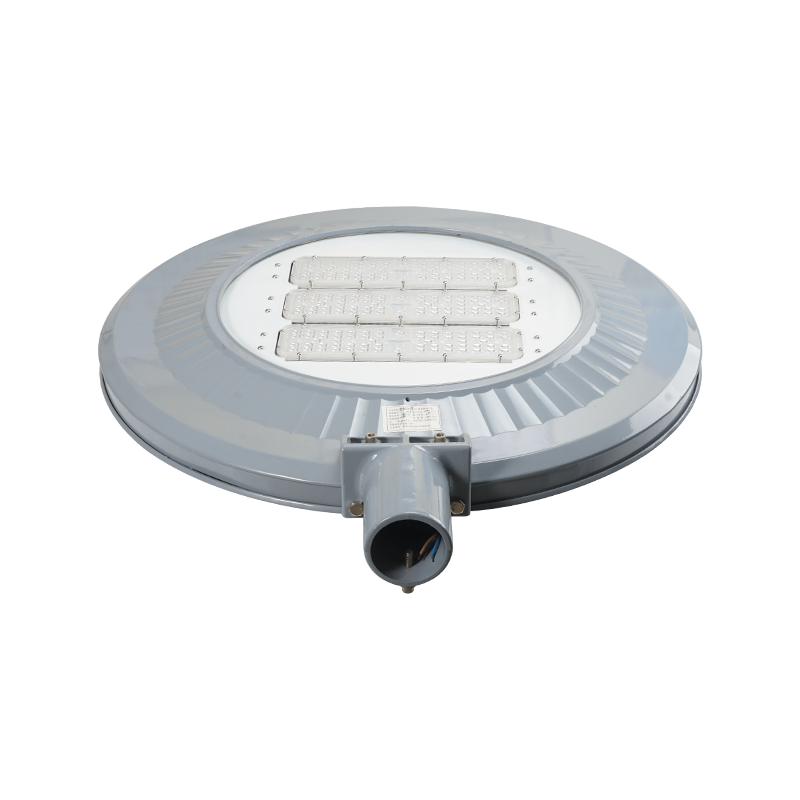
 Industrial Modular LED Luminaires with Precision OpticsAluminum modular luminaires with IP65 protection and precision optics suit covered production areas where beam shaping and glare control matter.View Product →
For covered production areas, modular LED luminaires with precision optics can be a practical starting point because they let the beam be shaped rather than simply spread. The aim is to put useful light where the work happens and keep glare away from eyes that are already busy.
Construction Details That Separate Good Lighting From Costly Lighting
In manufacturing lighting, the housing is part of the optical system and the maintenance plan. Heat is the quiet enemy of LED performance. A well-designed heat sink, generous surface area, and a sensible drive current help a luminaire hold its output instead of fading or colour-shifting after a few years. In dusty or humid plants, ingress protection and breathing arrangements matter just as much. A poor gasket or a badly sealed cable entry is enough to let trouble in.
We also look at serviceability. Can a technician reach the driver? Are modules replaceable? Does the mounting bracket allow adjustment without dismantling the whole fixture? A luminaire that saves a little energy but requires a scissor lift every few months is rarely the cheaper choice.
Ask suppliers to explain the lens material, surge protection, cable entry, finish, and the tests behind the IP or IK rating. Management systems such as ISO 9001, ISO 14001, and OHSAS 18001 are useful signals, but the real proof is in how the product is put together.
Outdoor Manufacturing Sites Need a Different Lighting Plan
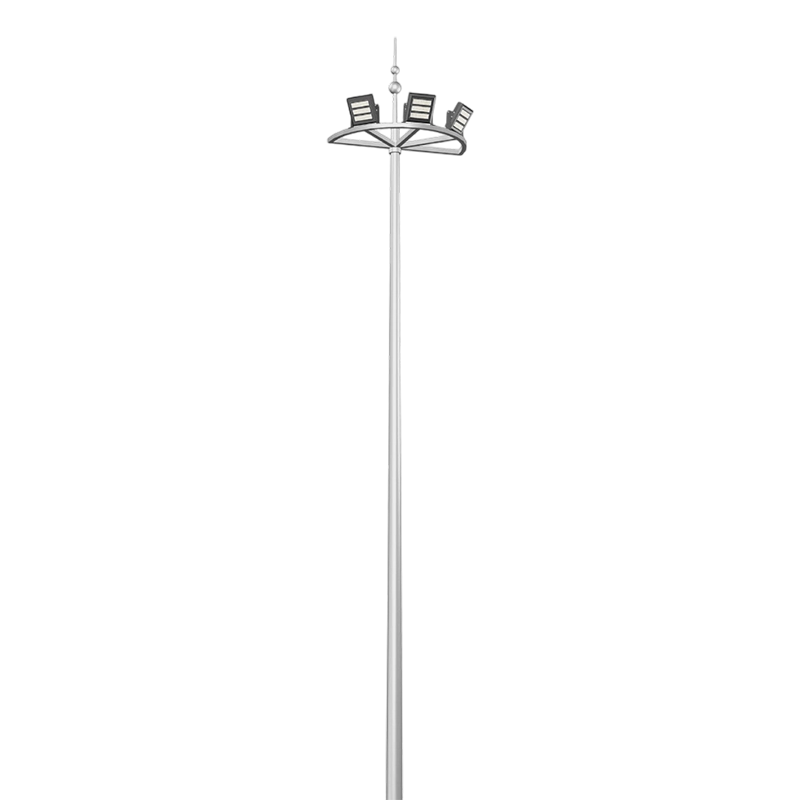
Many manufacturing sites are not just buildings. They include yards, loading bays, staff parking, perimeter roads, and sometimes rail or port access. These areas have their own lighting logic. A high-mast installation can cover a large yard with fewer poles, but it must be aimed carefully so that drivers are not blinded and CCTV cameras are not washed out. Low-level street lighting may be better for walkways and perimeter routes.
Mounting height, pole spacing, and beam shape should be decided together. A narrower beam at the right height can do more useful work than a wider beam that spills light into neighbouring property. For large sites, it is worth reviewing high-mast lighting versus traditional options before fixing the layout.
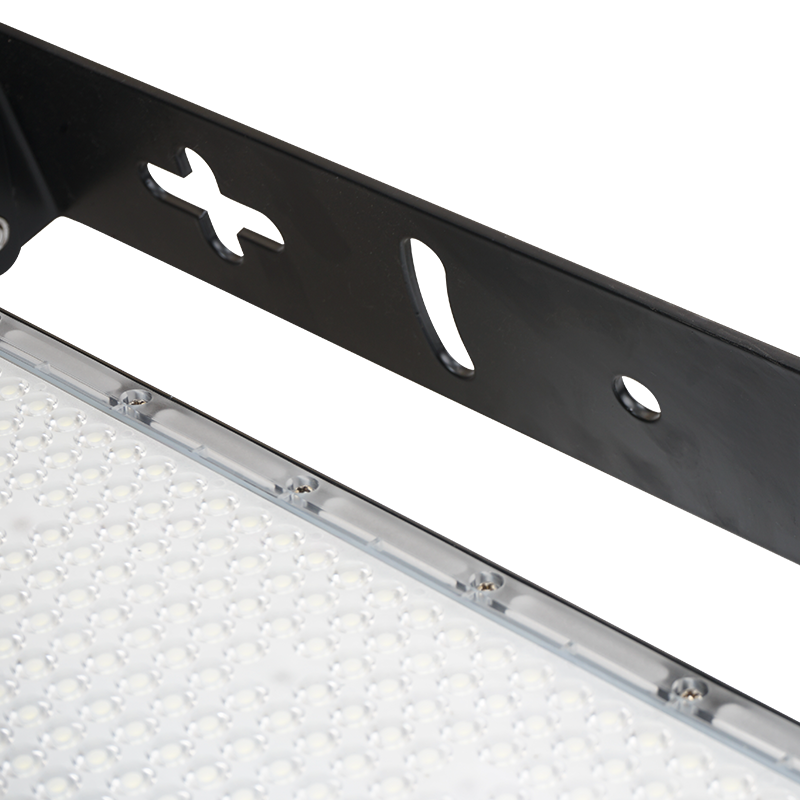 High-Efficiency LED High-Pole Port LightingFor ports and open logistics areas, this high-pole LED fixture offers efficient optics and corrosion-resistant housing to reduce lighting points.View Product →
Where a site has tall structures, ports, or open logistics areas, high-pole systems with efficient optics can reduce the number of lighting points while keeping light where it is needed. The important word is efficient in the optical sense, not just the electrical sense.
Solar and Off-Grid Lighting for Remote or Expanding Sites
Not every manufacturing site has a reliable grid connection at the point where light is needed. Remote yards, temporary compounds, and expanding sites often need lighting before civil works are finished. All-in-one solar street lights can be useful here because they combine panel, battery, controller, and luminaire in one unit. Split-type systems offer more freedom to separate the panel from the light, which helps in shaded areas or awkward mounting geometry.
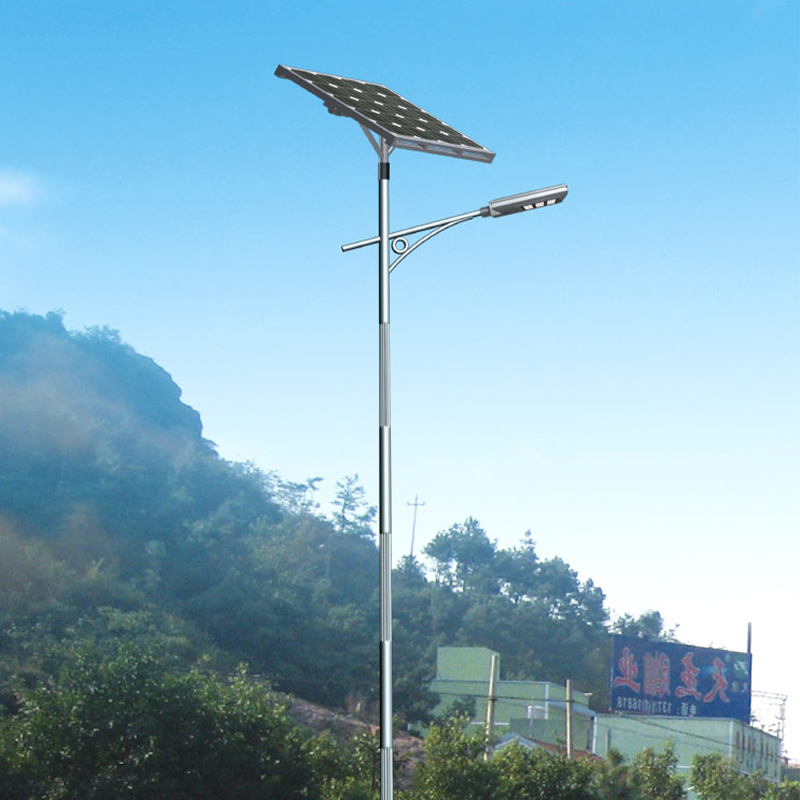 All-in-One Adaptive Solar Street LightsFor remote yards or sites without reliable grid power, this integrated solar street light combines panel, battery, and luminaire for low-maintenance illumination.View Product →
Solar lighting is not a licence to ignore load calculations. Battery autonomy, winter sun, dust on the panel, and the real hours of use all matter. We prefer to size solar systems around the worst realistic week, not the best sunny day.
Controls, Commissioning, and Maintenance
Controls are often sold as a smart feature, but their real value is in making lighting predictable. Time schedules, dimming, daylight sensors, and motion detection can reduce energy use, yet they can also create dark patches or annoying switching if they are not commissioned properly. For manufacturing lighting, the best control strategy is usually the one staff barely notice. Lights should come on when needed, stay steady while work is underway, and return to a safe baseline when the area is empty.
Commissioning deserves more attention than it often gets. Check actual light levels after installation, not just the design model. Look for glare from the driver's seat of a forklift or from a pedestrian route. Confirm that emergency lighting, if required, is independent and tested. Leave a maintenance plan with the site team, including module types, control settings, and a cleaning schedule.
A Practical Specification Checklist
Before comparing quotations, it helps to put the same questions to every supplier. The checklist below can be adapted to a single production hall or a full site master plan.
- Define the task and the hours of use for each area, not just the total site area.
- Agree target light levels, uniformity, and glare limits with the people who work there.
- Check the housing, lens, seal, and finish against dust, water, vibration, and cleaning methods.
- Confirm mounting height, pole type, and maintenance access before fixing beam angles.
- Ask how the driver and optical module can be replaced, and what spares are recommended.
- Review control settings, commissioning steps, and who will adjust them after handover.
- For solar, test assumptions about battery autonomy, panel shading, and seasonal sun.
- Request certificates, test reports, and a factory tour where the scale of the order justifies it.
A supplier who can answer these questions clearly is usually easier to work with during installation and after handover. The lowest headline price is rarely the lowest whole-life cost.
Working With a Lighting Manufacturer
The manufacturing side of manufacturing lighting matters because it determines consistency. A design that works in a sample can fail in production if tolerances drift, gaskets are changed, or heat sinking is reduced. We prefer to involve production and engineering early, rather than treating the factory as a box that receives an order. Our own work is focused on outdoor lighting, poles, solar systems, and traffic infrastructure, but the principles travel well: understand the environment, control the optics, protect the electronics, and make maintenance possible.
If you are planning a factory extension, a yard upgrade, or a new logistics area, start with a site walk and a clear brief. Bring photographs, dimensions, and the times of day when the area is busiest. A lighting manufacturer can then respond with a layout that fits the site, rather than a generic catalogue page.