


JINYUAN
JINYUAN
JINYUAN
JINYUAN
JINYUAN
JINYUAN
JINYUAN
JINYUAN
JINYUAN
JINYUAN
JINYUAN
JINYUAN
JINYUAN
JINYUAN
JINYUAN
JINYUAN
Content
- 1 What Makes a Flag Pole Light Commercial Grade?
- 2 Beam Angle and Aim: Getting Light onto the Flag
- 3 Matching Fixture Output to Pole Height
- 4 Ground-Mounted or Pole-Mounted?
- 5 Solar Versus Grid-Connected Flagpole Lighting
- 6 Specifications Worth Checking Before You Order
- 7 Installation, Aiming, and Long-Term Care
- 8 What to Send Us for a Quote
Flags fly day and night at car dealerships, memorial parks, government offices, hotels, and corporate campuses. After sunset, though, an unlit pole becomes a dark silhouette. In the United States, the Flag Code asks that any flag displayed at night be properly illuminated, and even where no written rule applies, a glowing flag simply reads as a finished piece of site design rather than an afterthought.
We have been building outdoor lighting at our factory in Yangzhou since 2002, and flagpole illumination comes up more often than most people expect. Usually the story is the same: someone bought a small residential kit, watched it struggle through its second winter, and now needs a commercial LED flag pole light that will still be working in year eight. Here is what actually matters when you specify one.
What Makes a Flag Pole Light Commercial Grade?
The gap between a residential kit and a commercial fixture is rarely about brightness alone. A commercial fixture is built for someone who will be held responsible if it fails early. In practice, that means attention to a handful of things:
- Thermal design. LED life is really a question of junction temperature, so look for a die-cast aluminum housing with a genuine heat path and a driver compartment separated from the LED board.
- Ingress protection. IP65 should be the floor, with IP66 or IP67 for coastal sites, heavy rain, and dusty industrial areas. Tempered glass lenses hold their clarity far longer than polycarbonate, which yellows under strong sun.
- Driver and surge protection. A constant-current driver rated for 100-277V input with 10kV surge protection costs a little more and saves a lot of service calls after storm season.
- Mechanical honesty. Stainless fasteners, a powder coat that survives UV, and housings that tolerate pole movement and wind loading without cracking at the mounting points.
- Serviceability. Replaceable drivers, replaceable lenses, and standard mounting threads mean a repair instead of a replacement ten years from now.
- Verifiable data. Ask for LM-79 and LM-80 reports, IES photometric files, and warranty terms in writing rather than a lumen number on a spec sheet.
Beam Angle and Aim: Getting Light onto the Flag
Flagpole lighting is directional lighting, and beam angle is the specification buyers most often overlook. A wide flood aimed at a 60-foot pole wastes most of its output on the sky and the surrounding lawn. A narrow, well-aimed beam puts the light where the fabric is.
As a working rule, poles under 25 feet are comfortable with a 40 to 60 degree optic, poles between 30 and 40 feet suit 25 to 40 degrees, and anything above 50 feet wants 10 to 20 degrees. Aim at the flag itself, not the base of the pole, and check the result at night rather than during the day. Vibration and pole sway mean the beam should cover the flag with a little margin, so the cloth never drifts out of the light on a windy evening.
Glare control matters just as much. Visors, house-side shields, and a modest tilt keep light off neighboring windows and passing traffic, which is often the difference between a design that gets approved and one that generates complaints.
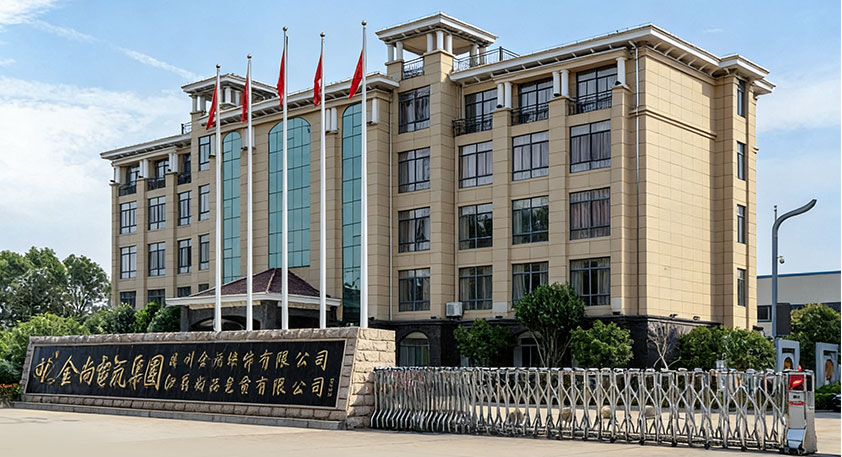 Custom Narrow Beam Floodlights for Long-Distance Target IlluminationA narrow-beam option for long-distance target lighting, with optical control and shielding choices that help manage glare and aiming.View Product →
Matching Fixture Output to Pole Height
Output, beam angle, and mounting position work as a set. The numbers below are starting points we use when a customer sends us a pole height and a flag size, and they assume the fixture is aimed at the center of the flag from a sensible setback distance.
| Flagpole height | Typical flag size | Suggested output | Beam angle | Common mounting |
|---|---|---|---|---|
| 20 - 25 ft (6 - 8 m) | 4 x 6 ft | 1,500 - 3,000 lm | 40 - 60 degrees | Ground stake or in-ground well |
| 30 ft (9 m) | 5 x 8 ft | 3,000 - 6,000 lm | 25 - 40 degrees | Single ground fixture |
| 40 ft (12 m) | 6 x 10 ft | 6,000 - 10,000 lm | 15 - 30 degrees | Ground mount or pole crossarm |
| 60 ft (18 m) | 8 x 12 ft | 10,000 - 20,000 lm | 10 - 20 degrees | Crossarm on the pole |
| 80 - 100 ft (24 - 30 m) | 10 x 15 ft or larger | 20,000 lm and up, usually 2 - 4 fixtures | 10 - 15 degrees | Multi-fixture crossarm array |
Shorter poles and monument flags often look better with a broader, softer wash than with a tight spot, which is why a wide-angle integrated fixture is frequently the right answer below 30 feet. It spreads light across the full width of the cloth and forgives small aiming errors.
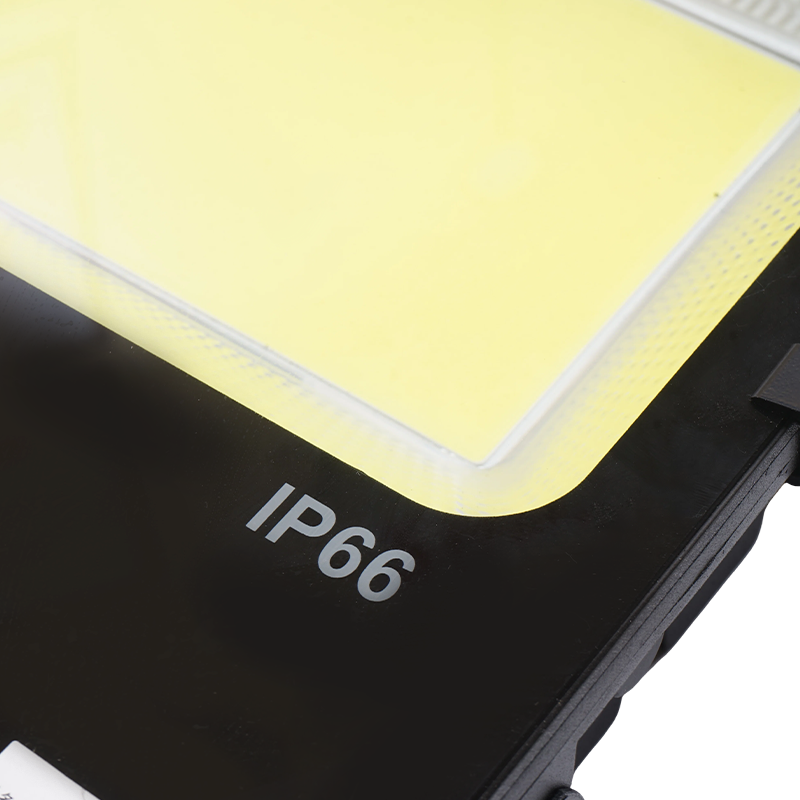 Wide-Angle Integrated LED Floodlights for Short-Pole and Monument LightingA broad, soft wash for shorter poles and flags, with integrated high-power LED construction and a wide beam that forgives minor aiming errors.View Product →
Ground-Mounted or Pole-Mounted?
Ground-mounted fixtures are easy to conceal and simple to install with a stake, a well, or a small poured base. The trade-off is angle: from grade level, the light travels a long distance and can produce glare for anyone standing nearby, so shielding and careful aim are essential. Keep the fixture back from walkways and never aim it across a road or a seating area.
Pole-mounted fixtures sit on a crossarm or mounting arm, usually between half and two-thirds of the pole height, positioned roughly a meter off the pole so the arm does not throw a shadow. This arrangement cuts the throw distance, reduces glare, and keeps everything reachable for maintenance. If the pole is tall and access is difficult, a tilting or retractable mounting arrangement pays for itself the first time a driver needs replacing.
Where a site needs flexibility, modular floodlights let you scale output by adding or removing light engines rather than replacing the whole fixture, which is useful when a client is still deciding how a plaza or forecourt will be used.
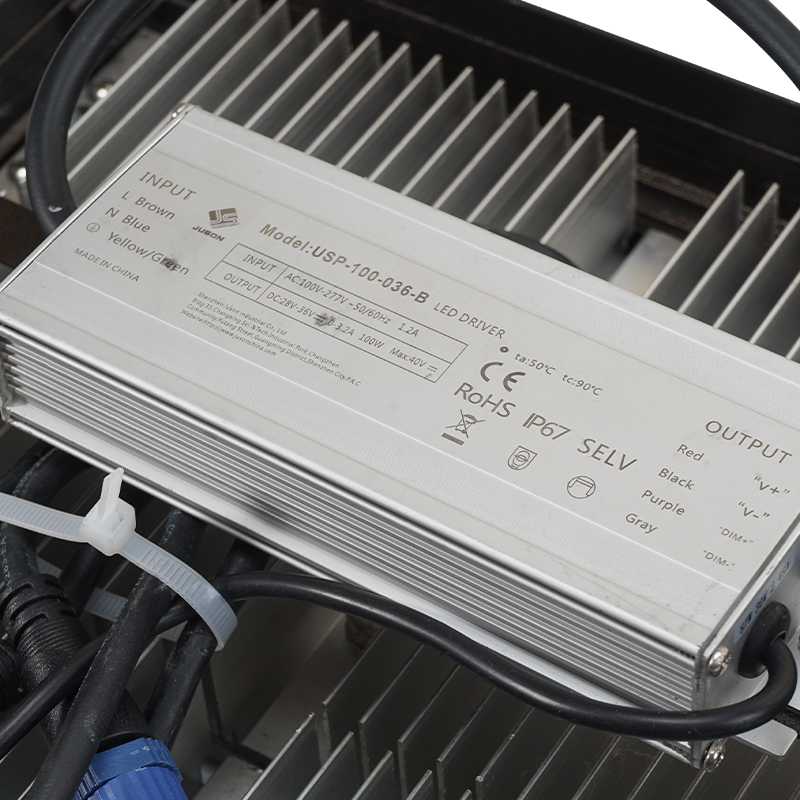 Wholesale Multi-Functional Dual/Triple-Module LED FloodlightsFor projects needing flexible coverage, dual- or triple-module LED floodlights can scale output and adjust up to 180 degrees for road or area lighting.View Product →
Solar Versus Grid-Connected Flagpole Lighting
Solar flagpole lighting has improved a great deal, but the honest answer is that it suits some sites and frustrates others. An all-in-one unit with the panel, battery, and light in a single head is quick to install and needs no trenching, which is a real advantage at a remote memorial or a site where the client refuses to cut pavement. Split-type systems separate the panel from the fixture, so you can tilt the panel toward the sun while aiming the light at the flag, and they generally handle winter and partial shade better.
In either case, ask about battery autonomy. A system sized for three to five nights without sun behaves very differently from one sized for a single cloudy day, and the difference shows up in February rather than in July. If grid power is available, a conventional fixture with a photocell or an astronomical time clock is usually cheaper over a ten-year horizon and delivers steadier output. If you are weighing the two approaches, our overview of all-in-one versus split-type solar lighting covers the practical trade-offs.
Specifications Worth Checking Before You Order
Once the optical and mechanical basics are settled, these details decide how the installation feels five years from now:
- Colour temperature. Neutral white in the 4000K to 5000K range renders red, white, and blue clearly without the cold, blue cast of 6500K. Warmer 3000K light is often preferred in historic districts.
- Colour rendering and consistency. A CRI above 70 keeps the flag looking like fabric rather than a flat shape, and a tight colour bin avoids a mismatched pair on a two-fixture installation.
- Controls. Photocells, astronomical timers, and dimmable drivers let you run the light at partial output for most of the night and full output for the hours that matter. Where a site is part of a wider upgrade, smart lighting controls can put flagpole fixtures on the same schedule as the rest of the outdoor estate.
- Compliance and documentation. Certifications for the destination market, a photometric file for the designer, and a warranty that names the components covered.
Installation, Aiming, and Long-Term Care
Aim at night with the flag flying. This is the single most useful piece of advice we give, because a beam that looks correct on a drawing can land half a metre low once the pole is up. Bring a second person to watch from the street and from the property line, and adjust until the flag is evenly lit with no hot spot at the bottom edge.
After installation, check that drain holes point downward, that fasteners are torqued to the manufacturer's figure, and that any cable glands are tight. Then leave it alone. A quick annual inspection after storm season, a wipe of the lens, and a look at the connections will catch almost everything that shortens service life. Dust and pollen on the glass cost more light than most people expect.
What to Send Us for a Quote
If you are sourcing fixtures for a project, a short message with a few details is enough for us to come back with a concrete recommendation rather than a generic catalogue page:
- Pole height, flag size, and whether the pole is already installed.
- Preferred mounting: ground, crossarm, or fixture integrated into the pole.
- Power availability on site, and the supply voltage if grid connected.
- Quantity, destination country, and any certification the project requires.
- Site photos or a simple layout sketch, if you have one.
We design and manufacture these fixtures ourselves, so the optics, the housing, and the driver are choices we can adjust to your site instead of fixed options you have to work around.
A well-planned commercial LED flag pole light is not complicated, but it is specific. Get the beam angle right, size the output to the pole, mount the fixture where it can be serviced, and the flag will still be lit properly on a windy night a decade from now.